Hey!

Welcome, and you can check out my posts. But, I don't write here anymore. So, if you are interested, come on over to https://sandhyavaradh.com/

Sunday, February 23, 2020

Beat The Heat: Elaneer/Narial Pani/Coconut Water

Image from dreamstime.com
February is near its end, and so are the winters. In fact, I feel the winter has long gone. So, what does that signify? Lots, indeed! Why, summer is the ultimate season of mangoes, watermelons, ice creams, milkshakes, lemonades, sodas, juices, sarbaths, jigirthandas and all the other delicious, lip-smacking drinks and eateries that isn't allowed on a cold, wintry day. And along with so much freedom comes the terrible, unforgiving wrath of the sun down on the city! 

Ice creams and juices don’t help beyond a certain point. They give instant relief from the heat, but nothing more. For a long-lasting, healthy, natural, replenishing freshness, nothing beats tender coconuts! Yes, tender coconuts- the hard nut that comes in shades of yellow and green storing the soothingly cool, and sweet coconut water despite the ever-growing temperatures- are the panacea for the hot weather! Technically, for those who are interested, coconut water is the liquid endosperm, of the tender coconut. 

Take time out to go to the stocks of tender coconuts that would be available around every corner, and enjoy sipping the cool coconut water straight from inside the tough nut through a straw inserted in a single hole, deftly made by the sellers. For those who aren't satisfied with just "cool" coconut water, they can bring the whole tender coconut without making the hole, and store it in their refrigerator to have a cold drink. Even the laziest goose can have a sip at the doorstep, as some of the sellers bring the tender coconuts in pushcarts! A sip of the sweet water, and the weary faces turn cheerful again. Well! When you drink it you almost actually feel a cool breeze blowing, and slowly enveloping your body. 

Tender coconuts not only make you feel cool but are also very nutritious. In fact, they are the most nourishing beverage that nature has given to the people! They contain many essential proteins, minerals and vitamins that keep our body healthy, especially during summer. Tender coconuts help stop dehydration of the body. They clear the body of toxic wastes. They also bring down the rashes and heat boils that attack us so often during the summer months. So, naturally, tender coconuts are the best solution to beat the heat during the summer for young and old. 

One of the things that make me smoothly sail through the Gujarat heat and it's unforgiving Loo winds that blow through the day is the Narial Pani sold by the fruits bhaiyya who comes to our college through the week.

So, you want to stay cool this summer, with maximum benefits? Tender coconuts to the rescue!

Saturday, February 22, 2020

The Wave Of Emotions

Image from pixels.com
She went away from home to a far land.
Didn’t realize the pain.
When people said they were ‘homesick’, she laughed, made fun and thought she would never feel that way.
Only not much later, she realized it was not so easy.
New place.
New language.
New culture.
She couldn’t even talk, and felt the void.
Felt the mind voice constantly nagging.
Tears sprang unwarranted.
A superficial smile was pinned to the face and an eternal frown in the heart.
Soon, she met nice people, made good friends.
A whole new life seemed to have begun.
Time ran.
The day became a hassle of classes and chit chats.
Learnt to stay awake late at night.
Learnt to still get up early and make it on time to the classes without having to skip breakfast.
Suddenly, one evening, life took a new dimension.
Met a falsely familiar face.
The next few days went on like a dream.
The tears had stopped.
The void filled.
The mind voice nagged on other things.
A genuinely happy smile replaced the frown.
Time flew.
The day became a constant connect to something relatable to home.
The mind took a devious path.
The mirage of heart fluttered towards the one who made her love home from far.
Then it changed.
The connect disconnected.
Afraid, she tried to mend it- in vain.
A sense of helplessness flooded.
She was disillusioned.
Ego would not let her talk.
As the week went by, helplessness turned to anger.
The heart raged.
The mind was in chaos.
Realization hit her hard.
Why try so hard to connect when there is none at all?
She went through it all only to realize that she was the one at fault.
The mirage disappeared.
The illusion vanished.
She was glad to get back her heart.
The disconnect had affected.
But not anymore.
Thinking back she realized what the problem was.
She was just too scared to be scarred.

Friday, February 21, 2020

Graying Line

The child hides behind the veil,
but as near to null is the attempt to hide light,
so is that dark hauntingly visible on the child.
A rotten history .
But as it hides behind
you have two choices-
Pray take pity on the young life?
Seek solace in hope 
that rotten as the history may be,
the future need not? 
A morally white intention.
Give out the hidden child?
Stay quiet as them seekers hunt the child that has
made blood shed and wrecked lives- 
as that is morally black?
The graying line straddles us, to
we find life through gut and conscience.

7 Statements That Seem Like Myths, Maybe Myths, But Work Out

1. Eating lady's finger makes you do math better. 
2. You become thin if you look at your shadow. 
3. Drink water in 7 sips to stop hiccups. 
4. You shouldn't ask a person where they're going before they leave. 
5. You shouldn't sleep with your head in the north. 
6. You shouldn't collect anything in your left hand. 
7. Your stomach would ache if you don't share your food with a hungry onlooker.

Do your parents say any of these? What so you think are the explanations behind them?

Wednesday, February 19, 2020

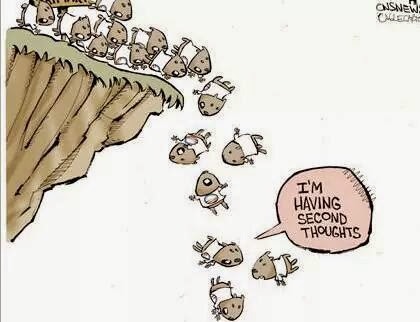
Second Thoughts

Getting us scared, jittery.
Making us sweat.
Tossing our sanity left and right.
Blowing us hot and cold.
Thrusting us deep into the abyss.
Testing our strengths and limits.
Pushing us into irrationality.
Waiting for our mortal mind to break off its soundness.
Second thoughts.

Not letting the internal war between what is and what ought to be spoil my blissful present.
Not falling prey to looming paranoia.
Not letting regret sweep over me.
Not breaking like a twig though my thoughts exert pressure.
Not letting the moment of life be jailed by fear.
Not letting doubt change my wishes.
Second thoughts.
But I shall not bow.

Tuesday, February 18, 2020

Is Reading Fiction Mere Entertainment?

Books provide us with an escape from the hardships of our time. They take us to places that we may never go. They not only increase vocabulary, creative thinking and morals, but they also give us new ideas to use in our lives. Simon Lake who is the father of modern submarines actually got the idea from a work of fiction called Twenty Thousand Leagues Under the Sea. Can you believe that? 

Without fiction books, where would we be? Quoting George Martin: 
"A reader lives a thousand lives before he dies. The man who never reads, lives only one."

Those who read fiction are capable of empathy, and develop the ability to frame opinions, beliefs and interests apart from their own. They have access to hundreds of souls, and the collected wisdom of all them. They have seen things others would never understand, and have experienced instances that others would never know. They will learn not just what it is to be like themselves, but also what it is to be like someone else. They are wise beyond their years. And, the light of experience shines from such little experience.

Fiction also allows you the ability to "think outside the box" and teaches readers to have an open mind and gives us the ability to imagine things we never thought possible. Imagining something that doesn't exist allows you to imagine how things would be if it was possible, think of ways to make it possible, and  inspire you to create and find solutions.

Fiction is a very large genre of books, and not all qualify as fantasy or science fiction.

A fictional book can have a large amount of facts interspersed with fictional characters, or thoughts or ideals, allowing us to fill in the gaps of historical reference with possibilities that could have actually occurred. Fiction gives an important link of connection to our everyday life in trying to understand and see from the perspective of others. 

The ability to "put yourself in someone else's shoes" is an ability so many are severely lacking in. Fiction allows us to hear a person's unsaid secrets and, while being immersed in their world, become a part of their progression in life. Fiction gives readers the ability to escape, and set the reset button in how the world is viewed. Every new book is from a different perspective of a different character, and the substance viewed changes with changing perspectives. There is a balance. 

Whatever the rival claims on our leisure, we still find time for a good novel. Fiction may undergo some changes with the years, but in some form or the other it is likely to remain one of our chief sources of pleasure and learning.

Monday, February 17, 2020

The Idea Of Cleanliness

The train chugged on full pace, the wind rattling the loosely fitted window panes, and I sat quietly with a Wodehouse in my hand. The loud, brash noise of the rail and its travellers faded away into a subtle, muffled background while I was preoccupied with Jeeves. Suddenly, I was jolted back to reality when someone placed a hand on my shoulder. I looked up to see a mother, and a kid, a girl about six years old, standing close to me and saying something.

"Excuse me, I was asking you if you would mind shifting seats with me? My daughter, here, wants to have a window seat. I sit right here on the aisle, diagonal to you. If you don't mind, could you let her sit for a while?" the mother asked, smiling pleadingly. The girl smiled sweetly as I shifted my gaze from the mother to her. I smiled back and got up to shift.

In my new seat, I could see much more of the train. So I closed the book, and sat looking around, the noise of the passengers and the rail becoming more obvious to me. I turned my eyes back to the mother and the girl. The girl clutched a packet of biscuits, and threw down the plastic wrapper on the floor of the train after her last bite.

"How many times have I told you that you cannot litter! Pick it up, now!" came the stern voice of her mother immediately. I allowed myself a smile, after all humans have improved, I thought.

The girl picked up the wrapper. Her mother took it and, without two thoughts, disposed it off the train window, as the wind carried it miles away.

The smile of hope on my face morphed into a smirk of disbelief.

Writing adapted from the observant tweet:

Sunday, February 16, 2020

The Testament

Title: The Testament
Author: John Grisham

Troy Phelan, a dying, eccentric, self-made billionaire re-writes his will sitting in his plush Virginia office,  determined to not include his six children in his will. His six children, despite being given a gift of five million dollars each on their 21st birthday, turn out to be broke or in debt. So, Troy decides to will off all of his eleven billion dollars to his illegitimate daughter, Rachael Lane, who is a missionary drawn away from money and other material pleasures, and doesn't want old Troy's money. No one knows of Rachael Lane's exact location except that she is somewhere off in the Brazilian forests.

The story is the game played by the greedy Phelan children, their greedier lawyers, the street-smart lawyer of Troy, and Nate O' Riley, a recovering alcoholic, who is sent in search of Rachael. The Testament is a novel that plays on the lines of both an adventure and a legal thriller. Nate O' Riley jumps right into a death-ride, plunging deep into the jungles of the vast Brazilian terrain in search of the missionary daughter, who at all costs must be brought back to keep off the Phelan heirs circling in on the eleven-billion fortune. 

I have to say, the best part of this novel is the ending. No spoilers here, so read ahead peacefully! The ending holds a special surprise, turning around the whole novel. The book has a lot of biblical references, and there are too many characters. The novel explored a lot of angles with respect to a testament and its execution.  It is definitely a page-turner. 

The Testament can be summed up as an engaging read with the usual money battles that Grisham's stories have, but with a surprise ending. 

Saturday, February 15, 2020

Lost In The Shuffle

A boy stood gazing at the road near the gate of his school. Between the boy and the gate, stood a small, scared puppy. Cautiously, the puppy approached the boy, timid in its steps, while the boy continued to gaze at the traffic on the road. Despite the puppy being near to him, the boy did not notice the puppy. Even when the puppy placed a soft paw on the hands of the little boy, there was no sign of reaction or reflex in the boy. Frantically, the puppy gave him a few more taps on his hand with its paw. Grumbling at the lack of response, the puppy retired back to the gate, and lay down, still with its eye on the boy. Hours later, the boy was still standing in the same position, still gazing at the traffic. In the meantime, the puppy had gone to a slumber. Jambu, who was the watchman to the school and had looked upon these events musingly as he sat in his usual chair, finally decided to go up to the boy to find out what he wanted. Kneeling down to the little boy’s height, Jambu began a conversation with the boy.

‘Looking at those cars, are you? Haven’t you watched them for too long now?’ asked Jambu, smilingly. 

‘Mother has not come back yet,’ replied the little boy.

‘Not to worry, boy! She’ll be here soon…’

‘On the way, she told me 2 hours ago on call. It takes only 40 minutes to get to school from the zoo. I’m waiting for her, she promised to take me to the park.’

‘Probably she is stuck in traffic, she’ll be here soon, and I’ll call you the moment her car comes.’

Quietly, the boy brought a chair and settled near the gate. Realizing that the boy was not going to go back, Jambu took his chair near the boy’s and settled next to him. 

Something felt wrong to Jambu, though he couldn’t place what it was. Time ticked away, and after several more hours, the traffic thinned. Unsure of what to do with the boy, Jambu asked the boy for his mother’s number, but the boy did not know. Voluntarily, Jambu offered to drop the boy home, but the boy didn’t reply. When Jambu was struggling with the case of the boy, an elderly woman rushed up to the gate of the school, and called out the little boy’s name. 

‘Xavier!’ she called, and hugged and cried when she saw the little boy sitting, and the puppy ran to the boy and the elderly lady. 

‘Your boy, mam, has been sitting here all day saying that his mother told him she was on the way on call, but nobody came and I was starting to get worried!’ exclaimed Jambu, feeling thankful that somebody came to pick up the little boy. 

‘Zoo accident… his mother passed away a year ago, and the last thing she told him on call was that she is on the way,’ explained the little boy’s grandma before she thanked the watchman for taking care of the boy.

Jambu stood there, the realization of the gravity of loss and attention on the little boy numbing him to a dark silence. 

Friday, February 14, 2020

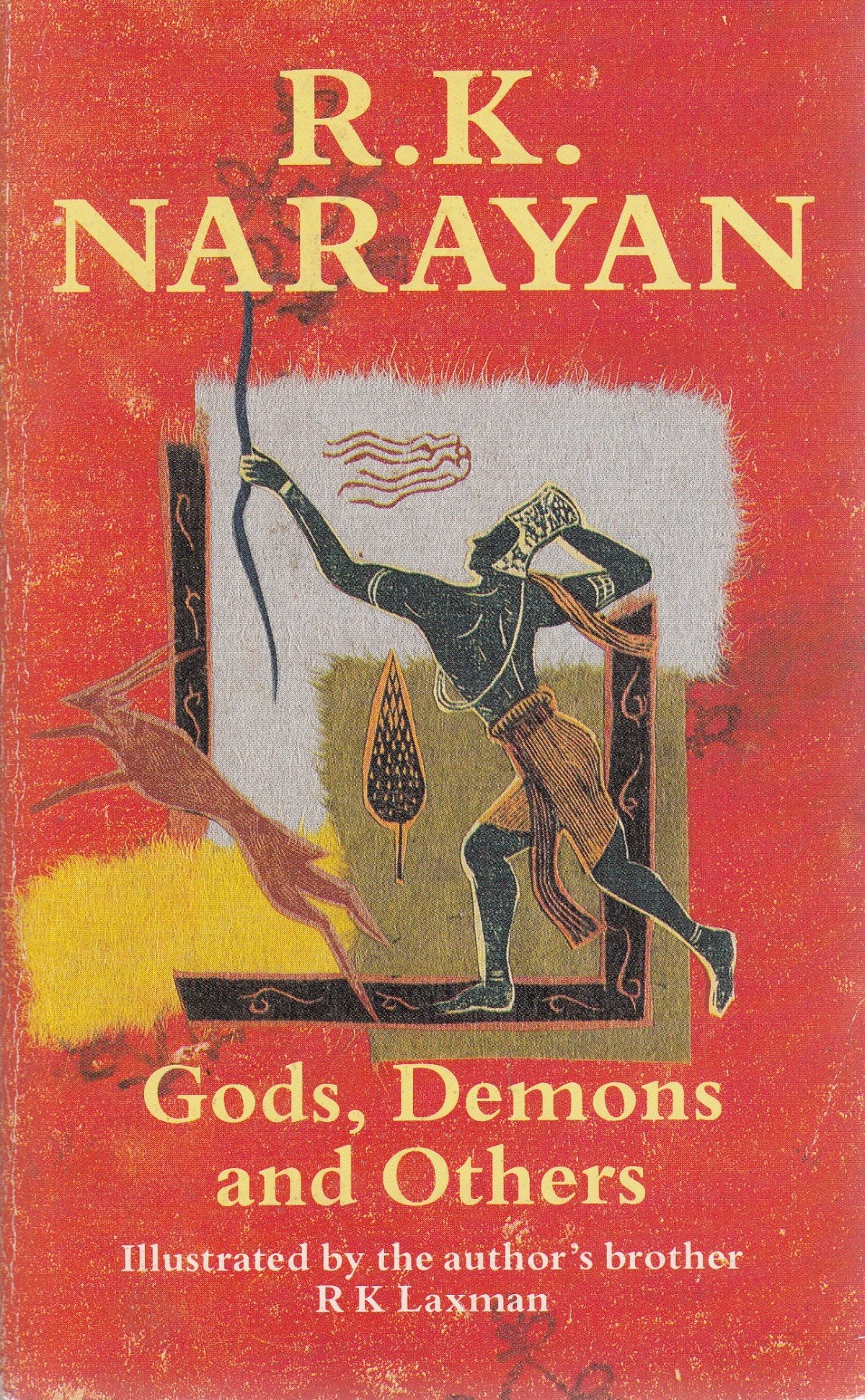
Gods, Demons, And Others

Title: Gods, Demons, and Others
Author: R. K. Narayan

India is home to some of the greatest legends and epics. With an abundance of philosophical significance, these myths, legends, and epics are an important part of the identity of India. They are of common knowledge to the people in our country, as we have heard them get passed on through the ages. So, when a contemporary author gives a retelling, it really needs to stand out to appeal to the readers. 

Usually, poets retell epics reveling in the brilliance of their language, and the tones of rhythms. But, Gods, Demons, and Others by R. K. Narayan is one of the most delightful prose retelling of some great Indian mythological stories. The stories capture some of the significant characters and personalities in the epics and myths. The stories cover fifteen main characters across different mythic stories, and are grouped into five parts in the book according a common theme of relevance their stories share. They include stories of Yayati, Vishwamitra, Ravana, strong female characters such as Savitri, Draupadi, Shakuntala, and others.

It is a brilliant, and delightful book that can serve as a great introduction to all about the Indian mythological stories. Though, the stories are in line with the original narratives, but they are not a translation. Simple and beautiful, R. K. Narayan's lucid writing captures the passion of various incidents and emotions such as war, marriage, celebrations, virtues, births and deaths through the various stories. 

It is a pleasure to read if you are familiar with the stories. And, if you're not, then it may be a wonderful start!

Thursday, February 13, 2020

Author's Chair

We had a beautiful intra-class contest in school every year during our primary schooldays: Author's Chair. We all had to write one story and one poem, and our English teacher used to read all of them over a few days, and declare a winner, a runner, and a commendable piece under each of those two categories. And, the ones selected got to wear a crown, sit on the "Author's Chair" and read out their poem or story to the whole class. 

I wrote my first story in Class IV for Author's Chair. I still remember us waiting expectantly, with bated breaths, to see if our story or poem would make the cut. My class IV English teacher was one of the most favourite teachers in school, and I remember how much I wanted a word of praise from her. I had worked so hard on my piece. While my poem didn't make it, my story won. I still so fondly remember walking up proudly, wearing a crown, and reading out my first written story on the famed Author's Chair. It is such a beautiful, cherished moment, and I could have never thought of a better way I could have shared my first story. 

We used to have DEAR sessions- Drop Everything and Read! During these sessions, every single person in the school had to drop all their work, pick up a book, and just read for an hour. We used to love it. We made sure that we already had a book planned for the session, so that we could start reading without any delays.

I had a great friends circle with a lot of readers during my high school. We used to rush to the library, and make sure we got all the books we wanted before others could. We used to then rotate the books amongst ourselves, until all of us had read all of them. We used to pre-book the novels we wanted to read the next week. The librarian teachers were one of my closest and best teachers, I could even take the liberty to say they were one of my best friends, in school. They beamed every time I entered, and kept books stacked away for me, which they felt I'd enjoy. They used to discuss the books and authors with me, and get my review and opinion on the novels. They were one of my most favourite memories in school. 

I remember, once I complained to my high school librarian that the books were stocked in a haphazard way in the library, and how it was difficult to locate the ones I wanted. She asked me smilingly: 'Is it not your library? Why don't you do something about it?' I was mildly taken aback, but she was right. I got the sense of feeling that the library is mine, and it is my school. So, I went back home that same day, made a list of the authors in the library, and made small name cards for them. I went back to her the next day to proudly tell her my idea on how to organise the library, and from that day till today the library follows the system of name cards that I made and began.

School is one of the places that can do magic, and a world of wonder, to students.  I felt happy every single day I went to school. And now, my school is one of the things I'm proudest about in my life. And, mine undeniably did a world of wonder to me.

The school did us proud. Now it's high time we return the favor, isn't it?

Wednesday, February 12, 2020

"Television" by Roald Dahl


"Oh yes, we know it keeps them still,They don't climb out the window sill,
They never fight or kick or punch,
They leave you free to cook the lunch
And wash the dishes in the sink --
But did you ever stop to think,
To wonder just exactly what
This does to your beloved tot?

IT ROTS THE SENSE IN THE HEAD!
IT KILLS IMAGINATION DEAD!
IT CLOGS AND CLUTTERS UP THE MIND!
IT MAKES A CHILD SO DULL AND BLIND
HE CAN NO LONGER UNDERSTAND
A FANTASY, A FAIRYLAND!
HIS BRAIN BECOMES AS SOFT AS CHEESE!
HIS POWERS OF THINKING RUST AND FREEZE!
HE CANNOT THINK -- HE ONLY SEES!"

This is an excerpt out of a beautiful poem by Roald Dahl. I read it after a long time today, and it made me smile so fondly. The "Television" is Dahl's famous poem that encourages and inspires people to read books, rather than watching TV. It's one of the most meaningful poems of our time. The poem is taking a comedic look at a serious issue today with young children. This alerts us of the risks of watching TV too much. TV robs our minds of the power of creativity and imagination. Kids, even though might throw tantrums, would later love you more and thank you more for introducing them to the lovely world of books. As Roald Dahl puts it:

"Fear not, because we promise you 
That, in about a week or two 
Of having nothing else to do, 
They'll now begin to feel the need 
Of having something to read. 
And once they start -- oh boy, oh boy!"

Oh boy, indeed! Roald Dahl is the children's author that any adult can also read and love. I have always been a fan of Dahl. My brother and I, throughout our childhood, kept picking up books of Dahl to read, even if we had graduated to other books and genres. 

Check out the full poem here! If you haven't read a Roald Dahl yet, I suggest you pick up a copy of Charlie And The Chocolate Factory to get lost in the wondrous world of Willy Wonka and his oompa-loompas! Happy reading!

Tuesday, February 11, 2020

Jogging Everyday: How Does It Feel?

My Ticwatch E is pretty cool!
I wake up in the morning, feeling fresh. And as I get ready, I put on those running shoes enthusiastically, and go for jog breathing in the clean, morning air, my brisk jog countering the general cold. After a good thirty minute jog, I hit the shower, and have a healthy breakfast- fruits, oatmeal cereals, milk. The day ahead is happy and energetic.

Okay, now, that's a great shot, hopefully in the future life of Sandhya, but let's cut the daydream, haha.

I bet all of us have those fancy pair of running shoes that we got with the optimism of living a lifestyle far removed from what we do live in. I will conveniently avoid the next statement about how often most of us use (or, don't use?) those pair of shoes though. I have a habit of waking up at around seven in the morning, so it's a great time to actually exercise. And, I do- yoga, floor exercises, indoor cardio. But, I still cannot make myself wear those shoes and get out of my room into that cold, windy, dreary morning. The days I successfully make myself walk out of the door into the open, and do go for a jog, you'd probably see me the next day, impishly limping down the hostel staircase with a slightly embarrassed grin. Yeah, that's the stamina.

A wise friend, clearly wiser than me because she executes what I am just writing as a post, told us during a general chit-chat yesterday, on how to make yourself get out there in the morning. 

1. Don't think about waking up. Just get up when the alarm blares. DON'T THINK. The moment you start thinking, you're never going to go out there regularly.

2. You can't get up, and then try to decide what you're going to do. That's not going to work either. Before you would have made up your mind, you'd find yourself crawling back into bed between the warmth of the sheets.

3. Whether you do go out for that jog comes down to if you really want to do it.

Ouch. The third one hurt, but when does truth not hurt! I feel at the end, that's the takeaway. If you really wanted it that much- all that brisk jog, great stamina, great fitness, energetic day- you'd do it. So, the key is to probably decide that you want it.

To increase stamina, and promote good fat burn, it's important to exercise sensibly. A random burst of cardio or high-intensity workout now and then is not actually going to help. Let's say out of 100, you start with an energy level of 90/100 in the first 10 minutes, and then it drops to 50/100 in the next 15 minutes, and then it's a sad 15-20/100 throughout the rest of the workout. You'll just be tired, and exhausted, and wouldn't have really done much to fat-burning. Instead, even if you are bubbling with energy, start out at a level that you can try and maintain through till the end, with little portions of cardio spaced in between. This is the kind of workout that promotes the right aspects for which you are working on.

Honestly, I am not that bad. I do have a general sense of activity that I do through the day. I seem to have a clear aversion to hitting the gym, unless I see no other way. But, I am starting to get a feeling that I can live my daydream with a little more effort. So, why not!

Are you living your daydream? If not, now may be a right time to start.

Monday, February 10, 2020

The Son

Title: The Son
Author: Jo Nesbo

A determined Sonny Lofthus, "the Son", is all set to get out and avenge the death of his father who was a policeman. Sounds a typical action-thriller? Really, but not really. The Son is gripping, and an unputdownable read, that takes you through an unnerving, action-packed ride, and keeps you on the edge. With a villain named "The Twin", and an unidentifiable police mole, the Son is rooted to the cause of ridding the world of characters detrimental to society. 

Nesbo's pace of the story is brilliant, and so is the suspense of the sequences in the novel. Half-way you think you know who the unidentified police mole is, and then you change, and then you change again, and then again, till  it catches you by surprise at the end of the novel!

I loved it. It was a proper thriller read. Nesbo's character development of Sonny is absolutely brilliant. It is almost like an antithesis developing between the characteristics of an empathetic Sonny and the Son. The story keeps you hooked, and feeds information about the characters drip by drip, making you stay and not wander off from the story. 

The narrative in the books shifts between the two main leads, Sonny about his mission, and Simon Kefas, the policeman attempting to track Sonny. The characters are real, with abundance of flaws and strengths. The shifting perspectives between the two main leads builds up a tension and thrill that lasts till the very end of the book. There are also a host of twists, turns and jumbles, taking the story into a complicated knot, but also neatly sorting them all out and leaving no knot undone at the end.

The book is an absorbing read, that will definitely make you indecisive on who to root for: the police, or the Son? 

Sunday, February 9, 2020

What To Read This Week

What fiction I'd suggest for different age groups to read if someone asked me right now? Well, someone did. So, I thought I'd put it up for all to check it out! Here's a list of five books in each category, true to the spirit of the tagline in my blog: what to read! Have fun, read and enjoy! Also, let me know if you liked it and want more suggestions!

Ages 8-11:
1. The Little Prince
2. Five Children and It
3. The Secret Garden
4. Swami and Friends
5. Wind In The Willows

Ages 12- 15:
1. A Wrinkle In Time
2. The Indian In The Cupboard
3. Treasure Island
4. Sophie's World
5. Hatchet

Ages 16-20:
1. The Pickwick Papers
2. The 39 Steps
3. To Kill A Mockingbird
4. Stupid Guy Goes To India
5. Don Quixote

Others: 
1. Daisy Miller
2. Bleak House 
3. The Trial
4. Parthiban Kanavu

These are my picks of the fiction that you can read through this week. Warm, exciting, and brilliant - they set the right mood for the week to come! 

Saturday, February 8, 2020

Mooting In Law School - A Weirdly Satisfying Experience

Mooting. 

Oxford University Press defines it as thus:
"Mooting is the oral presentation of a legal issue or problem against an opposing counsel and before a judge. It is perhaps the closest experience that a student can have whilst at university to appearing in court."

There's always a cycle of emotions that I go through in law school every semester with respect to mooting. It comes in specific stages.

Stage 1: I am sure I don't want to moot. Nope, not mooting this semester.

Stage 2: I read the problem, it's really interesting, but I think I shouldn't moot. Let me concentrate on other things this semester, haha!

Stage 3: Or, should I? Too tempting, but nope, let me just get other things done.

Stage 4: Okay, I think I'll go just as a Researcher. 

Stage 5: Did you ask me if I wanted to do it with you? Cool, let's do it!

And, there we are with a moot problem and two weeks to get our arguments in place. Even if it is an intra-college round, moots have the ability to exert a lot of pressure. It is probably that same pressure that lets us perform with abilities that we didn't really know we had. Nobody I know ever, ever used the two weeks they get for research. Honestly, all my research and drafting of my memorial happens the last 2 days. Even if I start research one week before, I feel that all the effective research cleverly evades me until it's the D-day. 

Then, why moot? The day you pick your arguments that you have drafted, and stand before the judge in your moot courtroom, as they target every small thing you say and try to bring your case down to ashes, and the way you try to defend it- it's just a great feeling. It's a pleasure to defend what you have argued, and there is a sense of enjoyment and satisfaction that sweeps over you after you are done pleading your arguments in the oral round. 

Whether you've been hammered with questions that you weren't able to answer, or whether you defended all your arguments successfully, it leaves you owning what you did and feeling nice about it. 

Most of us go through a point in the last week where we regret picking up the moot (let's be honest). But, coming out of it successfully gives a satisfaction for me that nothing else really manages to. Mooting, that way, is a weirdly satisfying experience for me. That's why perhaps I manage to perform when under pressure. That's why perhaps that pressure itself is pleasurable as it pushes me to do much, much better.

And, after all that mooting in first rounds, we go back to stage 1: we are sure we don't want to do the second round, haha, who wants to take so much pressure! 

But, when the interesting problem comes out again, we are left thinking: Or, should I?

Friday, February 7, 2020

Focus Points For Growth As A Society


Any government has multiple roles and responsibilities. Topping them is the duty to provide healthcare facilities to all, and also empowering the nation through measures taken towards education for all. 

Good health and basic education are the fundamental keys to development. While good health is indispensable for life itself, a good education is the one that can take the society forward. A healthy body and healthy mind, makes people more cultured and mature. It promotes healthy thoughts, and makes people broad-minded. Education is the key to tackling various social issues that we face in the world today. In a world where advancement and newer technologies spell the future, it is important that a nation promotes active learning and empowers the youth. It is important that the government prioritizes and utilizes its resources in providing these two basic necessities to the nation. 

Art and culture is something that makes the society. Culture is what the society is, and art is what such a society expresses in its own ethnic forms. Since they are inherent traits of any society, they are capable of surviving even if the government doesn’t spend too much resources on them. Art and culture are passed on from generation to generation. They are important too, but do not take a place above crucial factors such as health and education in the priority table. 

Finally, what is the use of a culturally rich nation which is way backward when it comes to parameters such as health and education. What we should understand is that education promotes art and culture. Not the vice-versa. So, by spending more resources on health and education, we not only enhance the literacy level but also the cultural aspect of the society. Thus, the government should definitely spend more resources on health and education than on art and culture.

Thursday, February 6, 2020

The Vicar Of Wakefield

Title: The Vicar Of Wakefield
Author: Oliver Goldsmith

The Vicar Of Wakefield tells the story of a tempestuous period in the life of the Primrose family. Dr. Charles Primrose, the Vicar of Wakefield, lives a simple, happy life with his wife Debora, and children Gegore, Olivia and Sophia. He is well-off as he invests wisely on a fortune inherited from a distant relative. On the day of George's wedding to Arabella Wilmot, Charles Primrose receives the news of losing all his money and becoming bankrupt due to the absconding of his investing agent with all the money. The wedding is cancelled by Arabella's father who believed that the Primrose family would not be able to provide care for his daughter. George, who had studied college in Oxford, moves to the city to look for a job. And, the rest of the Primrose family shifts to the countryside into a modest living. The book details and describes the troubles, and the happiness that the Primrose family encounter as they try to live a full life. 

The characters are a perfect sample of the era that the book is set in. Set in a Victorian timeline with vicars and their estates, it reflects the cultural mindsets of that era. Those who read a lot of old classics of a similar time period, will feel a familiarity with the ideals of these characters and their storyline. 

It is a novel that stresses on the strength of family and relations, and reinforces the belief in love, faith and determination that holds the bonds between the family unbreakable. It is a novel on the lines of sentimental family drama. It is an old classic, and the novel has been referred many times in many other classics like David Copperfield by Dickens, and Frankenstein by Mary Shelley. For those of us who love classics, it's a gem in the shelf!

Wednesday, February 5, 2020

Education: In Consonance With Holistic Personality Development

We all go to school to get ‘educated’. We all ‘learn’ something in school. Before we try to analyse whether today’s educational system is inclined towards ‘skill development’ or ‘holistic personality development’, we must ask ourselves- what is education? 

Education is the process of learning that facilitates acquirement of knowledge and enables development. Skill development is the process of developing those skills that help us perform those various complex jobs that we have to, in life. And holistic personality development is the process of developing those qualities and perspectives that make sure our ‘skills’ are humane and useful to others. 

The need for a holistic education system is definitely gaining a lot of supporters in the current world. Parents want their children to not just acquire a set of skills, but learn to use them in a way productive to the various causes of humanity. The definitions of terms such as ‘success’ and ‘ambition’ are sincerely being re-evaluated. No more is success just pure profit for the self. If personal gain comes at the cost of another, or cost of a greater good, it is not considered to be success. In simpler terms, it is now seen as how much you give to the society, instead of how much you take from it. 

‘Learning’ has also taken a new dimension. Einstein in one of his speeches, on the role of school in development, says that it is more important to teach how to ‘acquire a skill’ than to teach the skill itself. 

What is the point of learning in rote the mere contents of a textbook? Thirty years back, knowing facts and historical points, and being on the know-how of something may have been a cool skill. Today, all it takes is a single google search! The world is changing at a pace so fast that the skill set required to adapt to the contemporary necessities is almost never constant. Therefore, more than putting pressure on children to excel in one particular skill, it is better to teach children how to learn a skill, because the skills that you teach them today may not really be needed tomorrow. 

To conclude, today’s education is shifting towards a more holistic system than a mere skill development process, due to the increasing relevance of exponential technological advancements, and also seeing the world from a humanitarian perspective that can help in tackling many of the current global problems that we face today.

Tuesday, February 4, 2020

Screenplay Writing

Image from Powtoon
Stories have always captured my attention. Fiction has been the sweetest, most precious gift in my childhood. So naturally, I went around making up stories in my head all the time- some of them heavily influenced by what I read, and some of them just plain original born from the grey cells of my brain. But, it has mostly been novels. When I tried writing my own stories, they were also in a novel-type format, with conversations and long drawn detailed descriptions, and I loved it.

Several years back, my dad sent a link to an article on No Film School which talks about (Big Spaceship) Victor Pineiro’s crash course on how to write a screenplay. And, since that day, that one article has constantly been on my bookmarks bar. And, I’ve looked at it every time only to want to try it out.

So, during the December holidays in 2019, I started trying it out, and it’s pretty cool. Here is why the crash course is brilliant.

1. Gives insights. It beautifully gives you a way to structure the idea that wafts around in your head. It gives you a way to tame your wild imagination in order to actually write it out, especially if you are writing a screenplay. 

2. Insights are actionable. I hate people who advice in an abstract manner when something needs a concrete solution. So, when giving insights on how to write a screenplay, Pineiro sticks to insights that are actionable, and step-wise follow worthy advice. I loved them. 

3. Page-line(like timeline). One of the most important things is to introduce characters at the right time, and bring right events at the right time. You own your story and how you want to say it, but the rough page-line, as I'd like to call it, just gives you an absolutely sensible perspective. 

4. Words with meanings. Plot, theme, logline, story, scene, sequence, acts: there are so, so many words that we use when we think of the components of a story. But, do we clearly and exactly know what they are? The crash course gives you that, and personally I really liked that. 

5. Examples. It doesn't just explain things, and give you an insight. The slides give examples that we know, and can easily relate to and understand. 

Nothing is set in stone. You can bend rules, you can make rules, and you can own your style. I myself experiment a lot with story writing in different styles and perspectives. All said, I still loved the universality of this crash course that fits almost every story. 

Do check it out! Also, I hope soon you'll get to read a completed screenplay from me!

Monday, February 3, 2020

How Do We Write In The Present World Of TL;DR

The world today is driven by audio-visuals. Paintings, photographs, films, music- they rule the game. When people claim to have read an article or a book, I can bet they have not most of the times. It is a world where very few love descriptive, lengthy texts. Its is a world fast-paced, and one that required the impact of words to match their pace. 

So then, are words powerless? Of course, they are not! But, words now need to fit within a square box. 100 words; 200 maximum. I don't believe anybody who is not specifically there for it would read it otherwise. I see comments saying TL; DR to blog posts. They aren't even ready to write the long of it: too long, didn't read. So, that's how the world runs today, nobody wants to read a long post. What started as a brilliant  concept of Twitter is now the norm of the brain in today's world. Is it sad? Not really. Writing evolves, and styles do too. It is a happy challenge for those who court words and want to create an impact. Random thoughts, but valid ones. What do you think?

Sunday, February 2, 2020

The Trial

Title: The Trial
Author: Franz Kafka

Josef K., a senior bank clerk, on his 30th birthday morning is arrested by two unknown men for an unspecified crime. The arresting agents, however, do not take K. away. Instead, K. is told to await instructions from the Committee of Affairs. Josef K. on his 31st birthday is executed informally by two men in the name of "law" in a place in the outskirts of the city. And, the story follows the life of Josef in the period of a year in between his arrest and death, where K. undergoes a trial so hard on him that is summed up in the final lines of the book. 

"‘Like a dog!’ he said. It was as if the shame would outlive him."

In an incomplete novel of The Trial, Kafka spins a brilliant satire on the law, and its legal process. Throughout the book, K. maintains his innocence, but is clueless on how to prove it. The whole story exudes a helplessness that the readers are bound to feel along with K. K devotes hours of his time and energy to show his innocence, or to at least find someone to take his case as seriously as he does. At every turn, he is told presenting his case is a formality that will ultimately have no effect on the predetermined outcome, guilt. The helplessness that the book exudes due to K's frantic efforts, is supplemented with a horrifying doubt as to the unspecified crime brought on K's conscience, and the assumption of all that K has no hope. The book is one that will raise unanswered questions.

The parable 'Before the Law' is one of the most famous parts of the book, and as a law student and reader, I had heard of its fame before. But, only when I read it did I truly understand why it is so highly praised. The story leads us to the case of K. whose judgement is determined through accusation rather than the trial. 

A dark satire: the story is dreary and sad, but it hits you where it aims to. It isn't an enjoyable read. In fact, it makes you uncomfortable, and leaves you out of focus with so many themes incorporated in the story. It is difficult, oddly horrifying and satirical, but it is brilliant. 

I've heard Kafka isn't easy. And, it is true. Neither can you keep off the story, nor can you take it easy. And, through compelling and brilliant writing, Kafka lets you see the aftermath of a disaster born out of unfairness. The book took me through an overwhelming ride, and at the end of it I just sat there for a while, trying to process the ride in silence. 

It is a title that is definitely a must-read. 

Saturday, February 1, 2020

Parasite (Gisaengchung)

Movie: Parasite (Gisaengchung)
Language: Korean
Directed by: Bong Joon Ho
Written by: Bong Joon Ho, Han Jin-won
Starring: Song Kang-ho, Lee Sun-kyun, Cho Yeo-jeong, Choi Woo-shik, Park So-dam, Chang Hyae-jin
Music by: Jung Jae-il
Running time: 132 minutes

Father Ki-taek, mother Chung-sook, son Ki-woo, and daughter Ki-jeong of the Kim family struggle to make ends meet for a regular living, with no jobs for any of them. What seems a boon when an offer comes their way to Ki-woo, to tutor the daughter of the rich Park family on the recommendation of a friend, soon turns into a string of lies. The well-rehearsed lies, and some well staged plans, lead to the whole Kim family being employed with the Park family, without the Parks knowing the connections between them. There develops a symbiotic relationship between the Parks and the Kim family, and the lives of these two families placed in disconnected worlds cross over. But, the parasites discarded by the Kims, as a part of their hatched plans to get employed, return to threaten their newfound lives, making the heart of the story. 

The movie captures the differences in privilege with a honesty that is haunting. The dependence, and the troubles born out of truth and lie is almost parasitic. Privilege till the end remains a dream for the Kims. Their attempts to be employed without lying fail. But when they lie to live, the lies bury them deeper. The details in the film are intricate and well-knit, pushing you to a space of familiarity, and slight discomfort on seeing blank truth, at the same time. 

Parasite is a brilliant film. The Korean drama feels extremely true to its title, and it is so real that it keeps you at the edge till the very end. The story is simple, but the sequences are beautifully placed that it leaves you guessing all the time. You know some things would happen as you watch the movie, and they do- but never at the moment that you think they would happen. The film is bounty with twists and turns, and leaves you high on expectations at some points only to hit you with that unexpected tangent of events.  

Parasite refuses to fit into a pre-decided confinement of a single genre. It is thrilling to the point that your brain spins with the score of possibilities, and it is also with consistent comedy, leaving you at the end with a feeling of a roller-coaster ride I could bet you haven't been on before. 

Friday, January 31, 2020

The Power Of Habit

31 January, 2020. 54th day of blogging everyday, and the 31st post this year. I feel so good, and so happy for myself. So, I thought I'd do a small post today on the power of habit that has sailed me through. And, what have I learnt? The power of habit is something beyond amazing. Excuses and self-pity pale in front of habits. Such is their power. Do we not brush everyday? Do we not eat? Do we not sleep? Do we find excuses not to do any of these? Or, do we feel any pressure to do any of these activities? The habit that's ingrained in us takes care of it all. 

At the beginning, I doubted if I'd have something to write every day. And, I was thinking what if there is nothing to write about. But, that's the whole point. You cannot write nonsense everyday. You are pushed to think beyond what you assume your capacity is. You are forced to tread planes different than what you are comfortable with. And, you compel yourself to enter the cycle of becoming better and doing more. I found myself reading more the moment I started writing regularly. I had to explore things, and not keep my mind stagnant in order to be able to write the post for the day. 

There were days when I knew exactly what I wanted to write, and was excited to put it out there for all to read. There were days when I was extremely tired to write. There were days which were too hectic that I was worried if I'd find the time. There were days when I had lots of time, but doubtful on what I should write about. But, the one common thing on all those days was that I knew I wasn't going to bed without a putting up a post that I am happy about. 

There were some days when I wrote three different posts, and wasn't happy with them, so I ended up writing a fourth one and putting it up. Some people may like a post, some people won't, some may like other posts, and it is not up to you to worry about it. There were days when I wrote stories that I personally was feeling proud about writing, but was not sure how it'd be received. But, the one important thing is to make sure that you love what you have written. Because if you don't like what you are writing, then I doubt if anyone else would. 

Habit is a powerful thing, and you have seen it in full play the last 54 days on my blog. This streak is one of the things that I feel happiest about this year 2020! And, it is all set to continue. I'll see you all everyday, and the next mini-milestone celebration stop would be halfway through the year, hopefully!

Also, have you read The Power Of Habit by Charles Duhigg? It is known to be a wonderful book, and I have read it a long while ago partially. I hope I'll read it again, and get back to you with a review sometime soon!

Just get into the habit, and then the habit will take care of the rest! Uh, clarification: only good habits, please!

Thursday, January 30, 2020

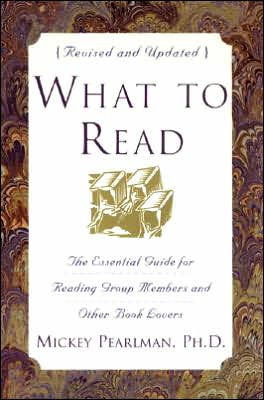
What To Read

Title: What To Read
Author: Mickey Pearlman

My blog gives a list of books to readers and a review of each book, for those in question of what to read!

But, ever read a book on what to read? Let me introduce you to Mickey Pearlman's What To Read, an essential guide for reading group members and other book lovers. It is one of the most extensive reading lists, covering genres such as classics, children's classics, thrillers, fiction, non-fiction, adventure, biographies, family, romance, and health, and ranges the spectrum of books from American, Asian, English and so on!

Every chapter is a reading list of a particular category, and there are thirty eight extensive categories. Every category has a list of books, each with a one-para blurb that tells you what you should expect from the book. 

Mickey Pearlman wrote in a note to the reader: 

"I hope you will keep this guide in your briefcase or book bag when you visit your local library or bookstore, and that you will use it when your book club is deciding what to read."

Whether you read the note or not, that is exactly what you'd do with the book. And, that's what I did too. This was one of the books that I constantly went back to for book suggestions, and I used to make a list of the books I liked or wanted to try when I used to go to pick books from the library to read. The lists were so exhaustive, and had such a beautiful range of books that had something for all, and I loved picking up the threads and suggestions from this book.

I remember the library uncles, who helped us with the location of the books and other things, were surprised at the list I used to ask them to get for me. I remember them asking me where I even get such peculiar, interesting lists from. I remember the knowing smile they used to give me whenever I entered the library with a long list of suggestions that I had picked from this book! It introduced me to a lot of books that I might have never come across otherwise. 

With a classy introduction, and cool tips on when, where, what and how to read, the book is a must-have for all readers who want to explore and read more! It's an oldie-goldie, check it out!

Wednesday, January 29, 2020

Gift A Sapling

Image from Pinterest
As kids, we never really thought too much about having to get someone a meaningful gift. A 5 Star or a Silk chocolate for my best friends stood out from the eclairs that I gave to the rest, and it the was the best gift. But now, we receive gifts, we give gifts, and as much as chocolate is still special, we feel the need to give something that the other person can retain and use. Fancy gifts may look fancy but after a point they make no difference, and nor are they of any actual use. So, what do you gift someone?

If it's me who is to be gifted something, books are the best and simplest option. There are so many genres, so many collections, and so many new releases that keep coming up. And, a reader never stops reading. So, books are a one-stop-all-time solution to gift to those who read. What about the rest? You can still get them books, hoping they might start reading, but sometimes you want to make them happy and also gift something that they will use. Some gifts are a no-no for some people. For example, I know a lot of people who'd hate to get clothes for gifts, or accessories, as it has a high personal taste to it, and cannot be used if it doesn't fit in with their profile or taste. 

For sometime now, I've always thought that it'd be a great idea to gift somebody a plant or a sapling. Such a gift would be thoughtful, meaningful, fond, and something to retain and remember- which is precisely what a gift is meant to be. My friend and I were researching on what plants we could buy if we did buy, and we found so many varieties with respect to shapes, sizes, properties and prices! There are flowering and non-flowering, fragrant and  non-fragrant, those that need sunlight, those that can grow indoors without direct sunlight, those that require very less water, those that repel insects, and so on. I'm sure there are a lot of plants available according to the situations of those you are going to gift. 

Not just would you be gifting them a sapling, you'd be gifting them an opportunity to be disciplined and more responsible because a plant needs to be tended to. An act as simple as watering it every other day would suffice, but it still needs to be done responsibly. I think it would be a gift that would make the giver and the receiver feel full in heart. And, you'd be gifting them something you'd always be remembered by. 

So, this 2020 when you need to gift somebody, think about whether it is possible to gift them a plant! Or, you can start by gifting yourself one, and getting to know more about them. I think they are a wonderful idea for gifts, amongst many other wonderful ideas. So, if you feel like you've run out of ideas on what to gift to a loved one, here you go!

Tuesday, January 28, 2020

Shoe Dog

Title: Shoe Dog
Author: Phil Knight

Nike. There couldn't be a more familiar name to all of us. We all know Nike, we all buy Nike, and we all wear Nike. And, we see Nike stores on the street in every city, every country, and every corner of this wide(or, small?) world. But, do you know how Phil Knight began it all?

Phil's ambitious idea started through a seminar paper on entrepreneurship, and he had written a reserach paper about shoes, and the paper had evolved from a run-of-the-mill assignment to an all-out obsession. Now, we shouldn't take those brilliant ideas we actually write for our semesters that lightly, should we? The idea interested him, then inspired him, and then captivated him. What seemed so obvious, so simple was also so potentially huge!

"Being a runner, I knew something about running shoes. Being a business buff, I knew that Japanese cameras had made deep cuts into the camera market, which had once been dominated by Germans. Thus, I argued in my paper that Japanese running shoes might do the same thing." 

The professor thought Phil's idea had merit, and gave him an A. But that was that. At least, that was supposed to be that. But, there began the spark through which Nike shines today. Shoe Dog is a brilliant memoir: honest, bare and beautiful. The narrative feels extremely real, and feels grounded to actualities of what would be faced when somebody starts off with an idea. With personal and professional anecdotes and experiences, the book tells you what you need to get up there and get your idea shining. 

Phil tells you the importance of a team. Nothing can be done alone just because you have a brilliant idea. One needs the courage to do what very few can and offset his/her own imperfections with a team like Phil's which is obsessively driven, loyal and quirky. That's when the idea blooms. Phil repeatedly stresses on the success of 'his team', and the importance to give credit where it is due. It is important to have faith and embrace their skills. 

Why do I keep talking about the honesty of the narrative? The one word that comes to my mind when I reflect on the book is: honest. Phil is not just talking about the life of an entrepreneur, but also that of a human. He has a personal life with a wife, kids, pain, joy, happiness, losses, and everything. You cannot separate that from your professional life looking at a long term perspective. Not everyone can afford to quit everything to work on their idea initially. It is next to impossible. And, that is where the honesty in the book meets out, where juggling the work-life interdependence and balance is beautifully portrayed. The chapters where Phil writes about the financing of the company, especially through the first decade, was just incredible.

What is the take away from the book for all of us? It is something we do know, but tend to forget very easily. In Phil's own words:

"I would tell them: Have faith in yourself, but also have faith in faith. Not faith as others define it. Faith as you define it. Faith as faith defines itself in your heart."

This book literally tells you what Nike has been telling you all this while: Just Do It. I think it is a brilliant memoir. It doesn't focus on just the success, and doesn't fill you with the awe and stardom that usually would be expected by big brands to project. It is also very well written, in a way that smoothly pushes you forward from page to page, keeping your interest piqued. 

I thoroughly enjoyed the book. And, whether or not you want to know about Nike, and whether are not you are looking forward to know about the life of an entrepreneur, I think this is a book for all to read and learn from. 

Monday, January 27, 2020

How A Story Idea Wins

Image from everypixel
One thing sure to say was that my life as a kid was pretty imaginative, and heavily influenced by the books I read. And, I read them all day, everyday. The more you read, the more you start thinking. And, somewhere inside you a story is born. Then another, and another, and before you know you have idea after idea, making you struggle with choosing one to actually continue writing with. That’s what happened to me at least.

I have so many 20-40 page writings on ideas of stories that I began with but never completed. They didn’t make the cut. But, what makes an idea for a story win?

There are two aspects here: a story, and a plot. One without the other is pretty much useless, and the idea will not materialize. The ‘story’ refers to the strong need of something by your protagonist character that will move the story forward. And, the ‘plot’ refers to the protagonist wanting something. 

So, the idea must have a theme that can be expressed in one word (like Realization, Revenge, Family, etc.) with the Hero wanting something, needing something, and having a flaw that he/she would learn to overcome through the story. Then there’s a villain, who can take advantage of the Hero’s flaw. And, there’s a setting, timeline, climax, action, low point, and triumph. That’s what will make your story. 

Not only are these important factors that will help in an idea actually materializing, these loglines and general themes help in a more structured way to present a story. However, everybody has their own way. Whatever way one writes, there are some simple good traits to a great story:

  1. The central idea is simple and clear.
  2. All the main characters are introduced within the first-third of the the book.
  3. All the characters have a role/purpose, and have relevance in the story.
  4. All the characters have an ending, just like they had an entry. No character is left hanging without the readers understanding why they vanished, and what happened to them.
  5. There are strong sub-themes/sub-plots in the form of mini goals that the characters want to achieve through the story. These take the story forward smoothly, giving valuable insight into the characters.
These are some of the basic elements that I’ve always found in stories which I have thought to be brilliant. And, while writing and developing my ideas, I always make sure I give meaning to what I bring on, be it themes or characters. That’s how an idea wins. 

All the stories that are lying incomplete with me are either because I had a story without a plot, or a plot without a story. One day, maybe, I’ll get to finishing them up!

But hey, I’m already teeming with new ideas! What about you?

Sunday, January 26, 2020

Sri Pingali Venkayya- The Man Behind Our Tiranga

I wrote this essay for a competition when I was in school. I did not know who Pingali Venkayya was before that, and felt pretty ashamed when I came to know that he is the man behind our national flag- Tiranga. I thought that I might have already put it up on my blog, and wanted to share the post today. But when I found that I hadn't, I wanted to share the essay, on account of India's 71st Republic Day, today! Happy Republic Day, and happy reading! Jai Hind!

Every free nation of the world has its own flag. It symbolizes the ideals that a country fundamentally stands for. At all national meetings, festivals, and occasions, it is the national flag that flies high. It is by the national tricolour, the tiranga, that India has its identity. Waving the national flag creates a sense of unity and patriotism in the country. Be it a cricket match, or a national event, the tricolour flag of India flies proudly. It is hoisted in the Red Fort every year by our President and Prime Minister during Independence Day, 15th August, and Republic Day, 26th January. And, this flag is a slightly altered form of Sri Pingali Venkayya’s design of the Indian National Flag.

Sri Pingali Venkayya was born in the village of Bhatlapenumarru, Krishna district, near Masulipatnam, Andhra Pradesh. After finishing his schooling at Machilipatnam, he went to Colombo for further studies. He first met Mahatma Gandhi while he served for the British in the Anglo-Boer war, fighting for the British, in South Africa. He was kindled and inspired by Gandhi, and was also greatly influenced by his ideas. He became a Gandhian.

During the duration of five years that Sri Pingali Venkayya stayed in North India, he actively participated in politics. After the 1906 Congress session with Dadabhai Naoroji, Pingali Venkayya manifested himself as an activist. 

During the National Conference of the Indian National Congress, Sri Venkayya came up with the proposal of having a unique flag for the Indian National Congress. Mahatma Gandhi liked and approved of Pingali Venkayya’s idea. He asked Venkayya to design a flag himself. Sri Pingali Venkayya proposed the tricolour(tiranga)- saffron, white and green- with a chakra or spinning wheel in the centre. This design was the basis for the National Flag of India. 

Our National Flag, in the form that it is now flown, was adopted during the meeting of Constituent Assembly held on the 22 July 1947, a few days before India's Independence from the British on 15 August, 1947. It served as the national flag of the Dominion of India between 15 August, 1947 and 26 January, 1950, and became the flag of Republic of India after that. The term "tricolour" or “tiranga” refers to the Indian national flag.

What do the three colours, that Sri Pingali Venkayya created for the Indian flag, represent?

The saffron colour represents courage, the white colour represents truth and peace, and the green colour represents faith and Prosperity. The saffron represents the Hindus, the white represents the Christians, and the green represents the Muslims, creating a unity among the three major religions of the Indian population. The Indian National flag is a perfect model representing an “Independent”, “Republic” and “Secular” India. It is the pictorial representation of the Nation.

Sri Pingali Venkayya definitely has to be attributed for creating the idea and design, on the basis of which our present National Flag of India has been created. It has been so many years since the adoption of our Indian flag, and still the flag is hoisted up creating a strong bond among the Indians. The tiranga unites the diversity of India.

Knowing about Pingali Venkayya’s contribution to the nation, and the important relevance it has in our nation today, will serve the purpose of institutional memories of the nation and the Freedom Struggle, to keep the youth of India motivated and inspired to stand up to basic values. This will help the youth to participate actively in Indian politics, and also be responsible citizens of India, upholding the constitutional values that India's flag stands for.