![]() |
| Credits: art by Mom |
Hey!
Saturday, May 16, 2020
Slow Shift: From Paperback to E-books
Thursday, April 23, 2020
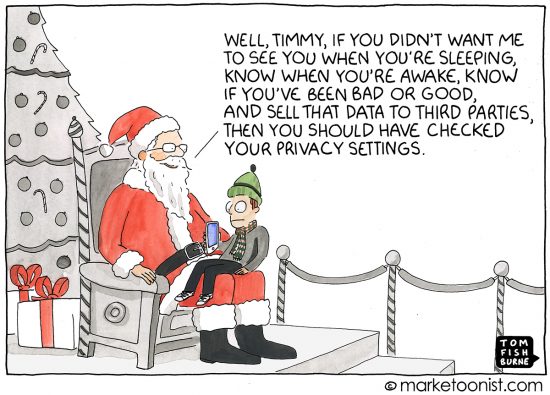
A Quick Reminder: When Did You Last Review Your Privacy Settings?
Monday, April 13, 2020
A List Of Necessary Reminders
Sunday, April 5, 2020
Can You Live Without Your Phone?
have to say google accounts with sync across all devices is pretty cool- especially when your phone crashes in less than a second stubbornly refusing to power up again— Sandhya Varadharajan (@sandhya_varadh) April 2, 2020
Wednesday, March 25, 2020
Unconscionability In Contracts
1. Procedural Unconscionability: A contract or a term is procedurally unfair if it has resulted in an unjust advantage or unjust disadvantage to one party on account of the conduct of the other party or the 5 manner in which or the circumstances under which the contract has been entered into or the term thereof has been arrived at by the parties. (Recommendation of Law Commission of India, 199th Report)
2. Substantive Unconscionability A contract or a term thereof shall be treated as unfair if the contract or terms thereof are by themselves harsh, oppressive or unconscionable. If the court as a matter of law finds the contract or any clause of the contract to have been unconscionable at the time it was made the court may refuse to enforce the contract, or it may enforce the remainder of the contract without the unconscionable clause, or it may so limit the application of any unconscionable clause as to avoid any unconscionable result. (Recommendation of Law Commission of India, 199th Report)
Monday, March 16, 2020
Regulation Of Seed Sale Price In Tamil Nadu
Tamil Nadu has a population of approximately 6.8 crores. Of the total population of Tamil Nadu, around 51.60% live in the villages. With more than half the inhabitants of the state living in a rural setup, it is logically inferred to any prudent mind how important the sphere of agricultural balance and prosperity is, knowing well that agriculture is the primary rural occupation, and is the backbone foundation of economic development in the rural areas.
When it has such stature and importance in the running of the lives of all, it is only natural that there is a genuine and considerable legislative effort to protect the occupation, and those primarily involved in it, from any gross and unconscionable injustice that would severely affect the flow of the occupation and hinder development.
In India, various laws exists to protect the rights and interests of the farmers, who are the primary subjects involved with agriculture. Some of the Acts and Rules include the following: Seed Act, Seed Rules & Amendments, Seed (Control) Order, New Policy on Seed Development Plants, Fruits and Seeds Order, Plant Quarantine Order, Protection of Plant Varieties and Farmers Rights Act, the Protection of Plant Varieties Rules, National Seed Policy, Seed Bill Regulatory measures specific to transgenic seeds, etc. These are primarily National legislations applicable to the whole of India, which intend to regulate and protect various aspects of this field such as quality, production, sale of agricultural products and necessities. It is pertinent to note that each state has their own commissions/rules/procedures, adhering and under these national frameworks, to suit the requirements and demands of their land.
Through careful, diligent and active steps, India has managed to become self-sufficient and has achieved the goal of food security. But, the state of farmers in India and their condition of poverty has neither improved nor shown any sign of progress. A shocking study published in The Tribune (updated as on 2017) reveals that every third farmer in India belongs to the Below Poverty Line (BPL) category. It is high time for us to stop a moment and reflect why and how, when the national food security has been achieved, the primary role players in the scene- the farmers- are left to be in still in the condemned state of extreme poverty.
Therefore, it is to be kept in mind that the aim of the legislations are double-fold:
to work towards achieving a goal in the line of progressive national interest,
to work in the interest of the betterment and development of the primary stakeholders, the farmers (specifically small and marginal farmers).
Seeing there is a clear lack of legislations to regulate the prices set by the private sector industries in the sphere of seed production and sale, there is very little scope for remedy through a judicial seeking. Therefore, to remedy the gross loopholes of the present situation, the best possible route would be to approach the Government for sensible regulations of the same.
The Seeds Bill, 2004 which seeks to replace the Seeds Act, 1956, and to provide for regulating the quality of seeds for sale, import and export and to facilitate production and supply of seeds of quality and for matters connected therewith or incidental thereto, has still not been passed.
PSCA has recommended setting up a statutory body for fixation of price of seed by incorporating appropriate provisions under Clauses 5, 11, 15, 22 and 25 of the Bill.
Therefore, a plausible solution to this growing problem would be:
To set a dynamic upper limit for the costs for the private sector seeds considering their gains from the patenting of hybrid varieties and appropriation of gains;
To not allow arbitrary setting of prices that are unconscionably greater than the prudent market prices;
To make provisions for a said legal authority to analyse technical developments by the private sector companies to the seeds, and supervise the price regime. It is to be noted that the what is advocated is not a complete and iron-hand control of the prices of the private sector that will work as disincentive to healthy competition, but only a prudent regulation with more than decent scope for their profits;
To enhance the powers of the Seed Inspector to be able to check and report grossly high prices;
To regulate the royalty fee in the cases of proprietary technologies and GM seeds, taking into consideration costs for R&D, etc.
These would not only work towards national interest of food production and security, but also the greater interest of the farmers who are the primary stakeholders.
Thus, the balanced aims of the upcoming policies between these two will ensure a steady progress in not only in agricultural development, but also economic development and better human standards of living.
Saturday, March 14, 2020
Beat The Heat: How To Stay Hydrated
Friday, March 13, 2020
Forensic Science and Medico-Legal Jurisprudence: A Reflection Since Ancient Times
Saturday, March 7, 2020
The Concept Of An Extended Workplace Under India's POSH Act
“any place visited by the employee arising out of or during the course of employment, including transportation provided by the employer for undertaking such a journey.”
- Government organizations, including Government company, corporations and cooperative societies;
- Private sector organisations, venture, society, trust, NGO or service providers etc. providing services which are commercial, vocational, educational, sports, professional, entertainment, industrial, health related or financial activities, including production, supply, sale, distribution or service;
- Hospitals/Nursing Homes;
- Sports Institutes/Facilities;
- Places visited by the employee (including while on travel) including transportation provided by employer;
- A dwelling place or house.
Monday, February 24, 2020
"We, The People Of India"

Friday, February 7, 2020
Focus Points For Growth As A Society
Sunday, January 26, 2020
Sri Pingali Venkayya- The Man Behind Our Tiranga
Monday, January 20, 2020
A to Z: On How To Create A Sustainable Change
| Image from Sustainability Illustrated |
Apple fell on Newton's head, and then suddenly we all realized the concept of gravity.