Hey!

Welcome, and you can check out my posts. But, I don't write here anymore. So, if you are interested, come on over to https://sandhyavaradh.com/
Showing posts with label startups. Show all posts

Thursday, June 18, 2020

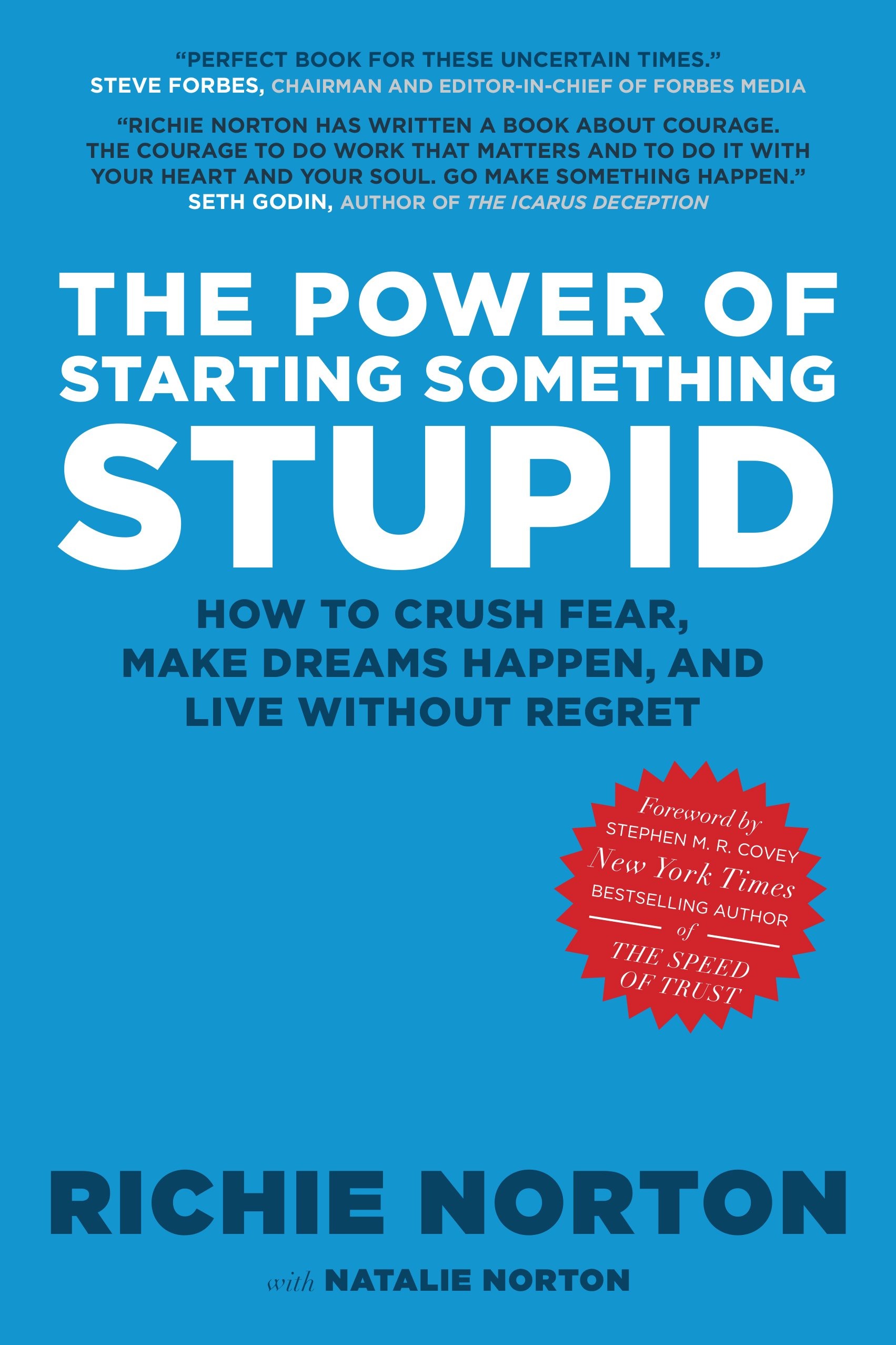
The Power Of Starting Something Stupid

Title: The Power Of Starting Something Stupid
Author: Richie Norton
“If you really want to do something, no one can stop you.  If you don’t want to do something, no one can help you.” - James A. Owen
Do you have some ideas and think that you must be crazy to think of something like that? Do you think your idea is just stupid and impossible? Well, Einstein once said: “If at first, the idea is not absurd, then there is no hope for it.” Richie Norton, in this fabulously easy-to-read book, attempts to break some of the mental barriers that stop you from living your crazy dream!

So, what does this book teach you? Alternatively, on what things can you can look forward to getting insight and clear your misconceptions about?

  • One, as the sub-title suggests: how and why to crush your fears, to dream and make your dreams come true, and to make sure you don't regret  not following them later. 
  • Two, how to stop blaming and, rather, overcome lack of time, lack of money, lack of education, or pretty much anything else that you want to blame on lacking. 
  • Three, differentiating and the need to differentiate future goals from present actions, and looking at the future as the accumulation of your actions that you do today.
  • Four, how to stop under-valuing your ideas, and discarding them off as 'stupid'.
  • Five, acknowledging flaws and vulnerabilities (in both yourself and your idea), as the first step to overcoming/rectifying them- so that you can successfully convert your 'stupid' idea into one that wins. 
The Power of Starting Something Stupid is more about having the courage and confidence to acknowledge an idea inside you, to work on it, to build on it, and to make sure that your commitment lasts till the very end to see it emerge as a success. The book is highly conversational in tone, and it feels like Norton is giving out advice that is actionable. It is an easy flowing read, that may seem simple and apparent at the face of it, but contains many actionable insights that can make you think better about the ideas in your head.

The book emphasizes the need to have determination, avoid procrastination, and be steadfast on your idea. While it asks you to be confident, it also asks you to do away with unnecessary pride that would hinder the implementation of the idea. It asks you to think rationally and beat your fears to dust. Norton asks you to own your ideas and make sure they win, through planning, and execution. The anecdotes and the real-life accounting that you find all over the book makes it a very interesting and smooth narrative for the reader!

It is an interesting read that will lead you to your stupid ideas, and tell you how to lead them both to success!

Tuesday, January 28, 2020

Shoe Dog

Title: Shoe Dog
Author: Phil Knight

Nike. There couldn't be a more familiar name to all of us. We all know Nike, we all buy Nike, and we all wear Nike. And, we see Nike stores on the street in every city, every country, and every corner of this wide(or, small?) world. But, do you know how Phil Knight began it all?

Phil's ambitious idea started through a seminar paper on entrepreneurship, and he had written a reserach paper about shoes, and the paper had evolved from a run-of-the-mill assignment to an all-out obsession. Now, we shouldn't take those brilliant ideas we actually write for our semesters that lightly, should we? The idea interested him, then inspired him, and then captivated him. What seemed so obvious, so simple was also so potentially huge!

"Being a runner, I knew something about running shoes. Being a business buff, I knew that Japanese cameras had made deep cuts into the camera market, which had once been dominated by Germans. Thus, I argued in my paper that Japanese running shoes might do the same thing." 

The professor thought Phil's idea had merit, and gave him an A. But that was that. At least, that was supposed to be that. But, there began the spark through which Nike shines today. Shoe Dog is a brilliant memoir: honest, bare and beautiful. The narrative feels extremely real, and feels grounded to actualities of what would be faced when somebody starts off with an idea. With personal and professional anecdotes and experiences, the book tells you what you need to get up there and get your idea shining. 

Phil tells you the importance of a team. Nothing can be done alone just because you have a brilliant idea. One needs the courage to do what very few can and offset his/her own imperfections with a team like Phil's which is obsessively driven, loyal and quirky. That's when the idea blooms. Phil repeatedly stresses on the success of 'his team', and the importance to give credit where it is due. It is important to have faith and embrace their skills. 

Why do I keep talking about the honesty of the narrative? The one word that comes to my mind when I reflect on the book is: honest. Phil is not just talking about the life of an entrepreneur, but also that of a human. He has a personal life with a wife, kids, pain, joy, happiness, losses, and everything. You cannot separate that from your professional life looking at a long term perspective. Not everyone can afford to quit everything to work on their idea initially. It is next to impossible. And, that is where the honesty in the book meets out, where juggling the work-life interdependence and balance is beautifully portrayed. The chapters where Phil writes about the financing of the company, especially through the first decade, was just incredible.

What is the take away from the book for all of us? It is something we do know, but tend to forget very easily. In Phil's own words:

"I would tell them: Have faith in yourself, but also have faith in faith. Not faith as others define it. Faith as you define it. Faith as faith defines itself in your heart."

This book literally tells you what Nike has been telling you all this while: Just Do It. I think it is a brilliant memoir. It doesn't focus on just the success, and doesn't fill you with the awe and stardom that usually would be expected by big brands to project. It is also very well written, in a way that smoothly pushes you forward from page to page, keeping your interest piqued. 

I thoroughly enjoyed the book. And, whether or not you want to know about Nike, and whether are not you are looking forward to know about the life of an entrepreneur, I think this is a book for all to read and learn from. 

Monday, January 13, 2020

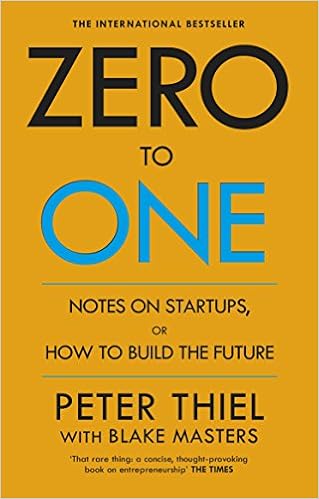
Zero To One: Notes On Startups, Or How To Build The Future

Title: Zero To One: Notes On Startups, Or How To Build The Future
Author: Peter Thiel with Blake Masters

Flip open the book and it starts with a bang for an opening, that'll leave you nodding your head, agreeing with the author. 

"EVERY MOMENT IN business happens only once. The next Bill Gates will not build an operating system. The next Larry Page or Sergey Brin won’t make a search engine. And the next Mark Zuckerberg won’t create a social network. If you are copying these guys, you aren’t learning from them." 

And, this is literally what the whole book is about. There are two tones to the book. One, where he is actually talking about the subject. And two, where he is giving his own opinions about a variety of things and projecting a contrarian philosophy. The book starts off with a very rhetorical tone of why we should start thinking new and not keep "copying", which is the "the challenge of the future" as he puts it. Then it moves on to insightful details on the economics of building a monopoly, dealing with sales, markets,  lean methodologies and also the culture of the companies. The examples ranging from all the top companies we know in the world give us a good understanding, especially on how to think and not what to think. 

The book mostly is of the tone and content of something that you would agree with. If you are a person who generally has a sound understanding and good logic, most of what is said feels like a good and much needed recap of something you already know, with some addition of jargon and methods. 

As brilliant as the book was to read, I felt myself not in sync with what the author was saying in a few parts. When he talks about "copying", it is not possible to dismiss as something he is projecting to make you think new. It almost feels like he is dismissing the events that are not just copying but comes with a lot of development as copying. And, though it is important to understand how we need to go from "Zero to One", I think it is equally important to acknowledge that development happens after the initial push of the guy who did the "Zero to One".

Another thing I felt myself dissenting about is how the author feels about focusing on just one subject and dismissing a "broad curriculum". While this may work for some, and that population of people is pretty less, I think studying over a broad spectra is what that pushes you to be innovative. I, for one, prefer a wide range because I find more scope in terms of how you can contribute. Life and our needs are not restricted to a particular field. In fact, all the good innovations have happened over an inter-disciplinary field, or even a multi-disciplinary one. So, though it's important for us to dig deeper into a subject, it's not up to everyone to do it. People versatile with multiple subjects are equally important. And, I find the author himself deriving inspiration in his book from a wide area of subjects!

The book is a brilliant collection of thoughts, and huge doses of truth that you may know on the sidelines of your brain that will push you to think. Here is one of my favourite lines from the book, especially relevant to a student:

"By the time a student gets to college, he’s spent a decade curating a bewilderingly diverse résumé to prepare for a completely unknowable future. Come what may, he’s ready—for nothing in particular."

In today's world of competition to grab that dream job, or a lustrous career, it is important to know and understand that the resume is not everything, or at least should not be. 

The book also covers various aspects, optimistically suggesting a better future where we do go from zero to one, instead of hitting a stagnation. It talks about the fundamentals of a startup organization that is important to ensure that it doesn't crumble, and also how to look at success and failure. It's a thought provoking book that I enjoyed reading. 

My takeaway from the book: Think, think, think. But, not necessarily like others. 

Sunday, December 15, 2019

Landscape Analysis- Parameters and Scope

Image from https://bit.ly/2rPzscF

Take any legal startup. There are some basic questions that come to our mind. 

What category of services do they offer?
Who runs it, and how long has the company been around?
How much do their services cost, and how long do they take?
Where do they get money from?
How many clients have they handled? Are there any big-shot, known names?
Who else does what they do, and for how much? 
How are they better than their competitors?

These, essentially, make our parameters of analysis. Given a legal startup, we dissect to find the answers to all of it- what, who, how, why, when, how much and who else. With this background, on the available data, it may be possible to further explore their milestone achievements/failures and their plans of expansion/closing down.

The scope of this experiment of a landscape analysis shall, at least initially, be restricted to legal startups based in India. The main aim of a startup is to solve an issue or to make a job easier for the customer. So, it entirely depends on the preference of the target audience. A legal service has to be analysed not only keeping the abilities of the company or its team in mind, but also the behaviour and the acceptance of the Indian customers. The functioning and utilization of a potentially brilliant startup is undoubtedly heavily shaped by the circumstances special to this country.

Therefore, an experiment to dissect such startups is what is attempted here, keeping in mind the parameters and the scope explained above. Stay with me, till I get back soon with the next post in the series!

Saturday, December 14, 2019

Landscape Analysis- Aim and Categories

‘Startup’ is the word of our age. From being a concept that was neglected for regular day and desk jobs, the present generation is set to thinking about how they can contribute to solve problems by coming up with their own solutions. And, there is a race for coming up with the best solutions for the same problem, with the society adopting a natural selection process of what’s best for them. 

The legal field has also seen the mushrooming of startups in the legal technology landscape, and some of them have gained popular success. In a landscape analysis of these startups, our aim is to take a bird-eye view of the categories of startups in the legal tech landscape and how effectively they provide solutions for the problems they set to solve. 

But first, what is legal tech? It is the use of technology to provide legal services. It can be the simplest software interface like an app, and can move on to use of complex AI programmes to cater the proposed legal services. 

As of today, in India, several legal startups have emerged, and they fall into one of the following categories-

Online legal service providers- These are very similar to traditional approach to lawyers, except that they are online. You can approach with any legal query online, and a lawyer will solve your query online for a fee. Some of these service providers have a subject-centric focus like providing startup-centric legal services, real estate centric legal services, etc. 

Searching and booking lawyers online- For those who have no idea how to approach and who to approach for a lawyer, legal startups have come up with the idea of a central window to search, review and book lawyers according to your need. 

Single window services for documentation and drafting- Why pay a lawyer thousands for drafting a simple contract, most of which has standard clauses? These startups aim at providing customized contracts at a fraction of the time and cost. 

Legal research tools (mostly case law finders)- These are tools aimed at simplifying the lives of lawyers. No longer does one have to run behind fat law books and work over days to find out relevant case laws, and other cases that have cited/relied on them.

Now that we have an idea of what exactly these legal startups are trying to provide, in the next post in this series, we’ll take a look at what parameters we would use to analyse them, and what is the scope of such analysis. Stay tuned!