Hey!

Welcome, and you can check out my posts. But, I don't write here anymore. So, if you are interested, come on over to https://sandhyavaradh.com/
Showing posts with label academics. Show all posts

Friday, September 4, 2020

The Hidden Silly Side Of Higher Education

Title: Academia Obscura: The Hidden Silly Side Of Higher Education
Author: Glen Wright

I bought and read this book in 2018 as soon as it was published, but I never put up a post on it, thanks to my inactive stint during that time. 2018 was a year that saw just one post from me- on a library very dear to me that closed. So, I decided that not having read it now is no reason to introduce this crazy book to those who don't know about it. 

@AcademiaObscura is a popular twitter handle, but this book- Academia Obscura- is probably everything you want to drop your project hours to read instead. And, that's kind of how it was written too. When you pick to see who really the author is, you get the answer immediately.

"Glen Wright is an academic. Sort of. Actually, he started his PhD in 2012 and is yet to finish. In the meantime, he started Academia Obscura, a blog about the lighter side of academic life."

This man wrote a crazily relatable and funny book on academics, and you won't be able to thank him enough for it! Academia Obscura is an encyclopedic compilation on everything that you can ever find silly in academics- and there are tons and tons of it! Footnotes, peer-reviews, language of the writing, cliched phrases that we use to bridge the lack of content- it's all in there! Filled with extremely cute and heartwarming drawings, from Wright, who in his own words says:

"Occasionally there are figures that appear to have been drawn by people like me, whose artistic inclinations never surpassed shaky stickmen and who struggle to write their own name on the whiteboard."

If you think academics is all "stuffiness"and "elbow patches", then this is the right book to pick up to change your mind. It explores the love of an academic on his subject, and at the same time takes a dig on how the strict structural formalities can bend the patience and the capabilities of the best of academicians.

Everything in the book is simply put, but would tickle your bones with humour. Most of what you would read is something that you would be going through or would have gone through, or at least would know someone who has gone through a similar patch. That way, this book is incredibly relatable and real.

I love it. And, I can guarantee a hundred percent that you will, too!

Monday, May 11, 2020

Mind-Map


Expression through words is one of the most beautiful forms of art. But, humans by nature are undoubtedly visual creatures. Even while reading a piece of literature, poetry, any report or description, there is an image that our brain tends to associate with the text. Sometimes, one of the highest praises that a classic literature gets is on how it paints a ‘vivid picture’. Which is why, a mind-map is most successful in translating thoughts on paper. 

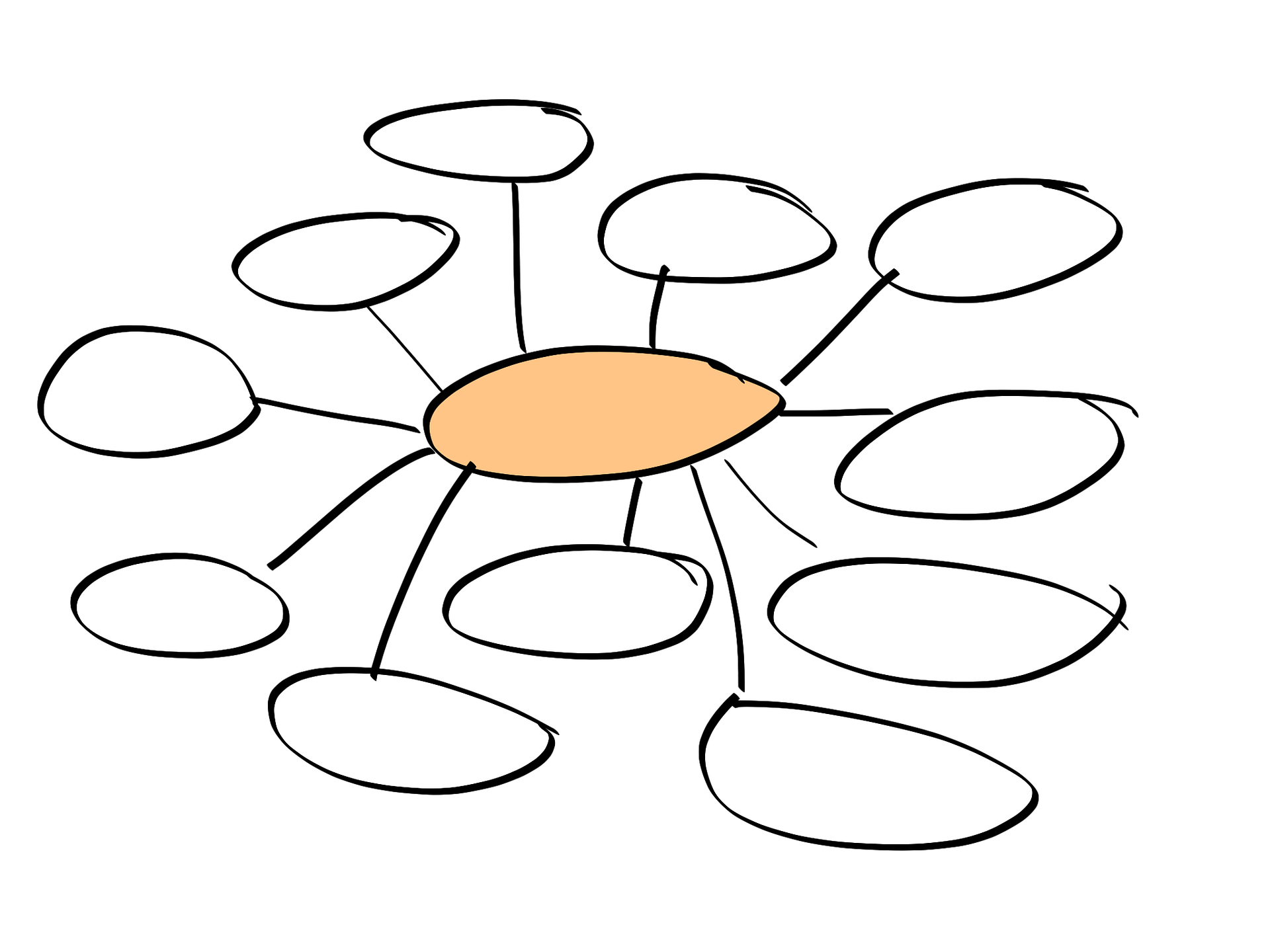
We all know what is a mind-map, even if some of us may not call it that. It could more or less be described as a pictorially graphical layout of ideas, concepts, and their sequences branching from a central, core thematic approach. It is literally mapping what's in the mind in respect of a chosen theme or subject. 

Before I write anything, I usually have a mind-map. From my academic research to casual essays, there is always a theme, and I brainstorm ideas around all aspects of the central theme using a mind-map. But, why should you use a mind-map?

1. You get a clear picture of the content you are going to translate into writing.
2. You immediately get to know if you have a lack of content on a subject, which would leave you with unanswered question areas on which you can hypothesize your perspectives. 
3. It gives you further insight into which questions need more research on. 
4. You get to roughly know how much emphasis and words to allocate to every aspect. This is very useful when there is a word limit, and ensures that you don’t harp long on a trivial aspect and write only two lines on an important one.
5. You brainstorm each aspect, and it is easy to spot what you have missed.
6. You successfully avoid repetition. 

A writing translated from a mind-map clearly shows high on planning, and also results in a coherent and easily comprehensible work. This is true even for creative writing as an art, and I have personal experience with that. A mind-map doesn’t have to be in a rigid format- it is more like a rough sketch for you to get an overall feel of ‘I know what I’m doing’. 

So, try it out, experiment, and find your own formula as to how to organize what you write! 

Saturday, April 25, 2020

5 Things That Make You More Efficient While Doing An Academic Project

Fresh out of an academic University submission for the subject of Public International Law today, I realized that there were a few things that actually make your life simpler while doing a project. There are many things that we juggle with when we set out to do a project- there are questions for which you have already done the research and you have enough data to answer, there are those questions that you have no idea about as yet, and there are those other questions which you are in the process of gathering information. 

When you have a research structure with more than 6-7 questions, each having their own set of sub-queries that prompt you research on that line, it can get overwhelming somewhere in the middle if you don't do it in an organized manner. It's not that you won't be able to finish it, but certain practices definitely help you put your project together much faster. 

1. Bookmarks

Simple. Yet it solves a ton of problems. Just bookmark all the sites you visit in one folder as you read it. This makes sure that it is always there, and you never face that situation where you came across brilliant data but now lost it among tons of other open tabs. Talking of tabs, that's what the next point is about. 

2. New Window

Please use the option of "open a tab in new window". I know this is more of a habit, and many people keep fifty open tabs in the same window. I, for one, can never, ever, do that. It just takes me for a spin. I like to have a pictorial location in my mind about where a content I'm reading is in the browser. Using more windows helps you sort out. Use one window for a research question, maybe. Or, use one window for ongoing research, and another window to have those research data that you have finalized on, maybe?

3. Rough-Paper Document

The best way to collate all that you have got on a subject is to open up a draft document for you project. When you find something that is useful, copy-paste with the link below. This way you have the relevant data, and also the sites you took them from. 

4. Rough Citations

As you are typing out your project- make draft or rough citations. Put the citation number then and there, and insert the link you need to cite from in the footnote. This makes your job a thousand times easier while citing. I feel figuring out where to cite and matching it with what to cite all at the same time in the end is such a big mess. 

5. Basic Formatting

Always, always write with basic formatting. Do not skip that apostrophe, comma, capitalization thinking you'll do it later. Check the requirements for the font style, size, line spacing, alignment, and start writing after setting them all right. Going around adding that apostrophe in don't in the end, or fixing that capital letter in names/beginning of sentences is very annoying to do. And, don't use short forms. Just write properly. By trying to save time, you'll end up wasting more in the end.

6. Citations

Citations really are the bane of academic writing. For all those of you who read it till the end: here's a bonus! If you already aren't aware: use Citethisforme that might just make doing citations a tad bit easier. 

All the very best, try to be more efficient next time. But don't be like me: just because I am efficient enough to do a project in an hour when it is supposed to take 3 hours, I use it like a short-cut to guilt-free postponing. Don't do that. Try these, they really help make your project-time that much lesser.

Saturday, January 4, 2020

Academic Jokes On Twitter

Having done a bunch of projects, research papers and a publication in law school, academic jokes became highly relatable at one point through my semesters. Academia Obscura is one of my absolute favourites when it comes to "the hidden silly side of higher education" on twitter. Here are some of my favourite tweets from them.

"How to find manuscript typos
1. Click Submit"

"Academia in a nutshell: being knowledgeable in a narrow domain that nobody understands or cares about."

"Footnotes are the bane of academic writing."

So, when they came out with a book on the same lines, I got it to read. And, if you think academics is all "stuffiness"and "elbow patches", then this is the right book to pick up to change your mind. It explores the love of an academic on his subject, and at the same time takes a dig on how the strict structural formalities can bend the patience and the capabilities of the best of academicians.

Everything in the book is simply put, but would tickle your bones with humour as it is highly relatable and real. Most of what you would read is something that you would be going through or would have gone through, or at least would know someone who has gone through a similar patch.

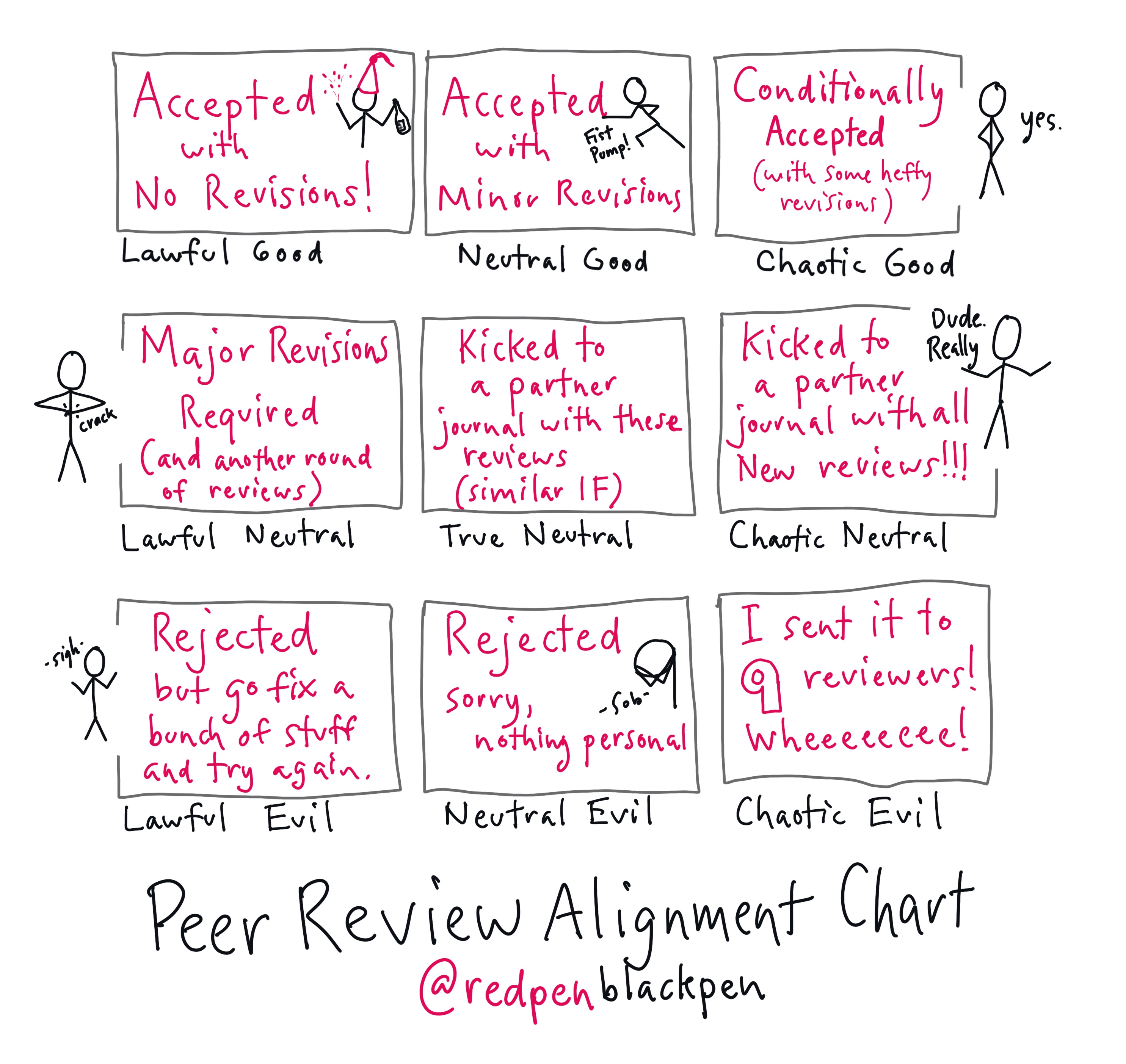
Another great account on twitter to get small comics/illustrations (that are sometimes so true that it pushes you to borderline guilt) on academic jokes is RedPen/BlackPen.

There are several other similar handles on twitter, but these two are my absolute favourites. If you have your favourite handle for academic jokes, do share in the comments! 

And (uh-hmm subtle promotions?) you can follow me @sandhya_varadh!