Hey!

Welcome, and you can check out my posts. But, I don't write here anymore. So, if you are interested, come on over to https://sandhyavaradh.com/
Showing posts with label Indian. Show all posts

Friday, September 11, 2020

Paneer Burji Gravy

We had another packet of paneer after I made momos the other day. So, that called for another paneer dish. And, this time I made paneer burji gravy for dinner. This is a simple, creamy dish that can be had with rotis, and it takes only 20 minutes to make it. Here's the recipe that'll serve four people.

What you need: 1 tsp jeera, some chopped ginger, 4 medium sized tomatoes, 2 onions, 1 cup water, garam masala, cumin powder, coriander powder, turmeric, cashews, one cup thick curd, one packet of paneer, fresh coriander leaves

How to make:

1. Take a thick bottomed vessel and add some cooking oil. Let it heat up a little, then put the jeera and let it splutter. 

2. Add chopped ginger and onions, and saute for 2-3 minutes till the onions turn pinkish/transparent.

3. Cut up the tomatoes in big pieces and add them to the pan. Cook till the tomatoes start losing water and become squishy. It'll take around 3-4 minutes. Turn off the gas.

4. Take the mixer. Add the fried tomatoes, onions and ginger into it. Add 5-6 cashews to this. You can add red chillis as per taste if you want, I didn't. Grind into a smooth paste.

6. Put the paste back into the same thick bottomed vessel. Add a cup of water, and cook in low flame till the raw smell of the paste goes away for 4-5 minutes.

7. Add a pinch of turmeric, 1/2 tbsp garam masala, 1/2 tbsp coriander powder, and cumin powder as per taste. Also, add salt as required. Let the gravy cook for 5-6 minutes.

8. Grate the paneer, and add the grated paneer to the gravy and gently mix the paneer and gravy. Do not break the paneer further by being too hard or too fast while mixing. Add a little more water after checking the consistency, only if needed. Let the mixture cook for 2-3 minutes.

9. Add a cup of fresh, thick curd to the gravy, and give it a good mix. Let it cook for a minute.

10. Check salt, and add as per taste. 

11. Add finely chopped fresh coriander leaves. Switch off the gas.

The dish is done. It is creamy, not very spicy, and has a fresh taste. It is extremely simple to make. One lesson that I have constantly learnt with such dishes is that if you want to increase the quantity, always increase the number of tomatoes and onions proportionately. Do not add water in hope of increasing the quantity as it always messes up the consistency.  So, increasing the amount of tomato-onion paste is what you should be focusing on while trying to increase quantity. 

I have always like paneer burji dishes, whether dry or with gravy, because you feel like there is no dearth of paneer! The best part is you can add more to it if you want- like chillies/chilli powder to make it spicier, or garlic if you like it. You can also add crushed methi to make this dish more rich in it's texture and flavour. Whatever you add or leave out, this dish comes out nice in all versions!

So, do give it a try!

Thursday, August 13, 2020

Paneer Paratha

An alternate picture- because I didn't
really hit it up with the toasty smell
of parathas. At least, we can smell
the weekend!
I tried making Paneer Parathas today, because its recipe seemed way too simple to not try. However, the result was a little different from what I had expected. Let me tell you how I made it!

What you need: atta, oil, paneer, onion, ginger, garam masala, cumin powder, chillies (if you prefer), coriander leaves, salt.

1. Prepare chapati dough (take the required quantity of atta, add salt, add a spoon of oil, mix it well, and slowly knead it by adding small quantities of water every time until it becomes a dough)
2. Grate paneer; finely chop onions, ginger, and coriander leaves. Put them all in a big bowl. Add garam masala, salt and cumin powder to taste. You can add finely chopped green chillies to this if you prefer. Toss them all well so that the masala and salt coat well.
3. Divide the stuffing and the dough into corresponding equal amounts. 
4. Roll out the dough, then keep the stuffing in the centre and fold the sides to cover the stuffing. 
5. Flatten out the dough again as much as you can- to the point that the stuffing doesn't come out. 
6. Cook them well on the tawa. Add generous amounts of ghee to enhance taste.

I did all of these steps, and it was great while doing it- seemed right. But I think the amount of stuffing that we prepared versus how it tasted was kind of misleading. We used 300g of paneer and one big onion primarily for the filling, and it definitely looked like it was more than enough for 4 people, and in fact it looked like there was a lot more than we needed. But, in the end result, I had only one feeling while eating it: where did all the filling go?! Somehow the filling wasn't at all enough to feel the taste well, I thought. 

Factoring in today's experience, the amount of paneer that seems to be required takes me by surprise. Probably, we're better off doing a paneer dish to pair with rotis, rather than making a paneer paratha. Anyway, doing it was still fun, and it looked really nice while doing it. My dad was just telling me today: appearances are deceptive! Also, I don't have a picture to show you. But, you have another picture up- a happy reminder!

But I am sure, that with the right quantity (which seem to be a lot) of stuffing, the dish would have been very, very tasty. So, if you wanna try- you know what to look out for! 

Tuesday, July 28, 2020

What Is It About The Rains And Bajjis?

What is it about the rains that makes us crave for those bajjis and pakodas? Even half an hour into a constant, incessant pitter-patter, our thoughts abandon all productive activities and seek comfort in the dream of bajjis, fried crisp and eaten when it's still hot from the frying pan. As the temperature drops thanks to the soothing rains, our bodies crave for the hot and spicy fried fritters. There is an undeniable connect, to all Indians in their own ways, when it comes to a rainy day and bajjis/pakodas. In truth, the thought of bajjis is hardly comforting. It only paves way for even the laziest human alive to get to the kitchen and fulfill the cravings on the rainy day. 

I happen to be a person who'd most likely fantasize about chocolates than bajjis. That is only mostly. However, with the mellow sound of the constant rain today, my mind wandered to the comforting thought of hot, crisp bajjis without the slightest trace of shame while struggling with the not-at-all-perfect bicycle crunches during my workout session. 

What is it about the rains? Why does it make us crave for these crisp fritters? What is it about the rains that makes us head to the kitchen, light the stove, and prepare for the fritters, a source of instant gratification? Why do the crispy bajjis give us so much comfort and happiness as the rain pours happily outside? 

Is it one of those things that no one knows how it started, and yet it continued for years together naturally influencing us in its ways? Do we get these bajji/pakoda thoughts because that is what we have grown up seeing? What makes these bajjis so gratifying on a rainy day? 

If you are expecting answers, I don't have them. All I have is a bemused thought, and a happy smile after snacking on these comfort fritters. The satisfaction it brings on the seemingly dull, rainy day is something that we all know. But, what do you think: what is it about these rains and bajjis?

Wednesday, June 17, 2020

Dal Bati: A Modest Attempt


I first saw this semi-brown hard bread served with dal in my college. I neither knew what it was, nor knew how to eat it. And so, the first several times that I found this in the mess, I just skipped it because I couldn't understand at all how we were supposed to eat it (after a few weird attempts of trying to bite it or just dip it in dal and eat it). A friend saw me struggling once, and actually taught me how it is eaten. And, from then one, this has been one of the most satisfying, tasty dishes I have ever had. 

Dal Bati is a delicious Rajasthani dish, most typical in the arid areas of Rajasthan. In fact, it is the dish that the Rajasthani cuisine is most famous for. The popular combination to eat this is dal-bati-churma. The bati is the hard bread that is crushed while eating and is mixed with the tasty and spicy dal, while also accompanied by the semi-sweet churma. I absolutely love this wholesome combination that I got introduced to during my semesters. With the college shut down for a couple of months now, a conversation with a friend about dal bati made me try it out today!

Traditionally, batis are made in the fire and ashes of wood and cow dung- which gives it the authentic smoky flavour. However, in other places and at home, it is usually made in a grilled oven or tandoor. The hard knead dough is made into even-sized smooth, round-ish balls of dough which are then placed in the oven till they are baked inside out! But today, I've tried to make them without an oven, as I don't have one at home, and the recipe for making batis without an oven can be found here! I am not discussing the process of how it is made, so those interested can look up on page that I have linked. 

Considering that doing it on a stove was basically a substitute for oven, which in itself was a substitute for the traditional cow dung fire, I was skeptical as to how it would turn out. But, the pictures speak for themselves! Even if may not be as great as the authentic ones, for a first time it was as good as the my college benchmark. I feel really happy that it turned out well!

While preparing, kneading the dough thoroughly is very important. Simply put: better the keading, better the batis. The secret to batis that taste and smell absolutely delicious seems to be the ajwain/omam (carom seeds). They made them smell wonderful and made them feel like how batis should be. Heavily doused in hot, molten ghee, and with a tasty dal to eat it with, batis are sure to steal your heart! 

I had fun preparing it, and felt really happy eating it! If you are skeptical about trying without an oven, don't be- it turns out just fine!

Tuesday, June 2, 2020

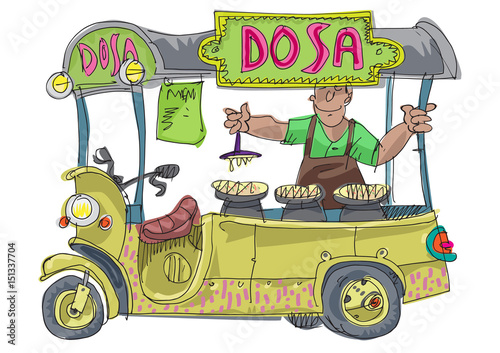
Why Do We Splash Some Water On The DosaKal?

Image from Adobe Stock
Dosai (or more popularly dosa as you'd say it if you were talking in English), is a wonderful dish. I haven't met a single person who hates dosas. There are so many varieties and variations that one can do with a dosa. It's one of those dishes that you'd never be tired of having daily. 

I can make decent dosas (quite well, actually). I have earned the badge of being consistently good at it, thanks to the critics at home- brother, mom and dad. My grandmother is a huge inspiration for me. She is the ultimate dosa master in our family, and she makes such wonderful dosas. I always aim to be as good as her, and that is why I think I have the interest and the motivation to try and make every dosa well. 

So, how do you make a dosa? You take a scoop of batter and pour it in the centre of the hot tava on the stove, and then quickly work your way in circles from the centre to the outer edge, spreading the batter to a thin, round looking sheet of batter. You put some oil on the edges, and then when the base is cooked, you turn the dosa over to the other side. That's it. Seems easy? Not that easy, though it will come to you easily if you have interest. 

Before making the next dosa, we usually sprinkle water on the tava(called DosaKal). I never understood this part alone. Why do we splash water on the DosaKal? When I asked my dad he gleefully pointed at the noise that the water makes on sprinkling on the tava, the famous whoosh that you hear when people make dosas. But is that the real reason? I did some googling to discover that people do it so that the tava doesn't get overheated. Now, this makes absolute sense to me. 

One of the most important things to successfully make dosas is to have the DosaKal in the right temperature range. It can't get too hot, and it can't lose too much heat- everything about the making the dosa is about cleverly managing the DosaKal! I felt really happy to understand why I was doing what I was doing. It makes so much more sense now. 

Everything that we do as a part of a process does have a reason. It is up to us to find out the reason before we conclude anything about it. The reason may be relevant or not in today's set up, but it is not without reason that something is/was followed. All it takes is a little interest to find out why!

Tuesday, May 5, 2020

Traversing (Personally Unknown) Territories

Moot got over? Coming for that seven-cheesy pizza (large, with that 1+1 offer).
Mid-semester happening? Need to cheer up, shall we have fries and cold coffee? And hey, repeat that order.
Mid-semester got over? Let's get that scrumptious veg lasange, mon ami. Need a break.
Mid-semester results came in today? Good? Damn, let's celebrate. Not that good? Come on, time to cheer up! All with some mouth watering mysore masal dosas.
Weekend? Let's just get out of the campus. 
Weekday? Long day, can we at least have something nice to eat?
Birthday? Hey, wait up, you got to take us to the most expensive place that we'll choose and your dad, of course, will pay the bill. 

In college, every little thing is an excuse to go out and eat (my semester budgets stand testament to that). College gave me an opportunity to explore food like I have never done until my schooldays, and fair enough because that is primarily what college days are for- eating. Dessert to me until schooldays was vanilla ice cream, and falooda. But after I got to college, things were in for a fancier outlook. They wanted cheesecakes, caramel puddings, and freak-shakes. I learnt what a waffle, a sizzler, and a momo is after I got to college, and I was genuinely surprised that people were surprised about me not knowing. Why would I, haha? We used to eat gulab jamun with ice-cream after a meal, usually.

Finding friends who also didn't know much was the greatest fun. It was great going to restaurants where I didn't understand what the dishes in the menu card were. Google really is your best friend. Okay google, what the hell is a gnocchi?

Five years of college- that seemed way too long when I was wrapping up class 12. That's like the time I took to go from class V to X. Crazy. But time ran. I am in my third year of law school, and I can't believe three years of college is already over. COVID-19 has further pushed us to cut back on the time left. Also missing aloo cheese parathas with an extremely generous amount of butter smeared on it from my college night mess . Every day is an excuse for it, we didn't even need to look for an occasion! 

Let's stay in, stay safe, and pray we get over with this terrible spell. I hope I get to go back to college soon, and I also hope I get to have as much fun in the rest of the two years! 

Monday, April 27, 2020

A Slice Of Poetry And Life

My second language in school was always Tamizh- from class one to ten. Ten years of exposure into the language, and we still used to make so many spelling errors, and read a little slowly, at least most of us. Though hours on end was spent memorizing for my Tamizh exams, the classes and the learning were always fun.

I really enjoyed many of the pieces of poetry that we read through our syllabus in school. Tamizh is a beautiful language, and there have been stalwarts who played with its beauty in the most mesmerizing, meaningful manner. One of my most favourite poems is a poem written by Andagakavi Veeraraghavar which is a standing example of the beauty and richness of the language.

When I was in class nine, we were given an assignment to portray a personality through a recital of something famous they did or any characteristic dialogues by them. I had chosen Bharatiyar, or fondly Bharati, who was also known as 'Mahakavi' for being the torch bearing pioneer of modern Tamil poetry. I recited the poem below for my project. This is one of his most classic, famous poems, and I have attempted to translate the broad meaning for those who do not know Tamizh- though my translation does no justice to the poem. 

தேடிச் சோà®±ுநிதந் தின்à®±ு - பல
சின்னஞ் சிà®±ுகதைகள் பேசி - மனம்
வாடித் துன்பமிக உழன்à®±ு - பிறர்
வாடப் பலசெயல்கள் செய்து - நரை
கூடிக் கிழப்பருவ à®®ெய்தி - கொடுà®™்
கூà®±்à®±ுக் கிà®°ையெனப்பின் à®®ாயுà®®் - பல
வேடிக்கை மனிதரைப் போலே - நான்
வீà®´்வே னென்à®±ு நினைத் தாயோ?

Scavenging for food and feeding yourself every day, chit-chatting around and gossiping through many stories, getting disappointed and tossing over a plethora of troubles that come on the way, also acting in ways that disappoint others, hairs graying slowly and growing old, dying after a spell of life with much slandering, like so many men who live their lives this way- did you think that I'd fall prey to their ways?

The word "kootru" on the third last line has two meanings- one, slanders or utterances, and two, the death God Yama in Hindu mythology. So, Bharati plays with the language and talks of a death after a life harsh utterances and the death after the arrival of the fearful death God Yama.

Back in 2004, my father and his friend, both ardent fans of Bharati, were discussing this very poem, and as my father fondly recalls, their friendship "blossomed over this conservation". My dad's friend, Rakesh Vaidyanathan uncle, went back after the conversation only to unleash his strand of creativity- with a simple and yet very beautiful translation of this poem by Bharati that you can read here.

Search in despair for their daily bread,
gossip trivials and rumors spread,
sad in mind and suffer much pain,
inflict suffering on others in vain,
grow old and feeble, wrinkled and grey,
die and dis-appear, as destiny's prey
funny men, so silly and ill,
fall like them, you fancied, I will?

Bharati was a man way ahead of his time- someone bold enough to not change his ways for others, unabashed to talk truth, and a great visionary and reformer. The teacher liked my recital a lot, and I was one of the people who got shortlisted through the class activity to see a live Tamizh stage play. Later on, I went to write a review of it in Tamizh, and also was one of the five winners of the best reviews. 

It is a sweet memory. Tamizh teachers in school are some of my favourite! And I will forever remember our fun during Tamizh classes in school!

Monday, March 9, 2020

The Power Of Coalition

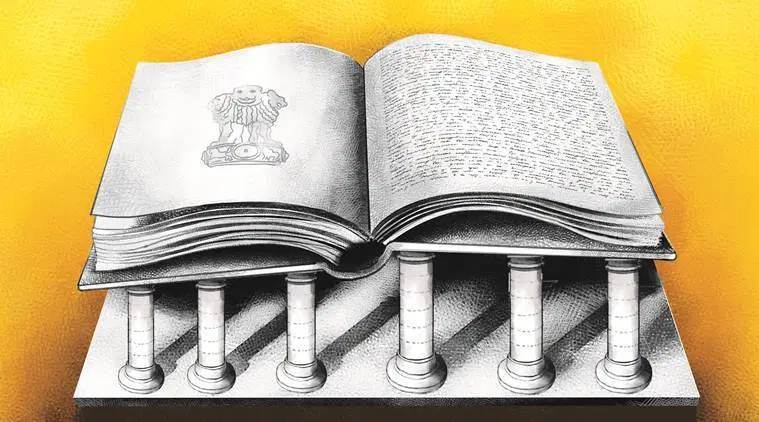
Image from Indian Express
India is a vast country accommodating an abundance of sociologically variant groups, co-existing in glaring inequalities. It is an indisputable fact that one of the key factors to bring a change towards the positive direction, in terms of lifting the seeming parlance of equality into something that actually exists, is the nature of the government, playing an important role in steering the country towards development. And, it resonates clearly that a coalition is much more effective in creating a change that is harmonious to development. 

Why is it right to think that a coalition government possesses the potential to reconstruct the steep pyramid of inequality into a platform of equality accessible to all? There are a numerous reasons to the same, but considering the scope of this essay, two concerns that very important for India shall be analysed. 

The first concern where the coalition government walks over a single party government is the field of economic development. The economy of India can be characterized as a developing mixed-economy. The 1990s in India is rightly termed as the ‘Era of Coalitions’. The ex-RBI Governor Dr. Venugopal Reddy, in a speech to the audience from Hudson Institute, Washington, USA, said that the highest growth in India from 1990 to 2014 was clearly during coalition governments. The consensus-based decisions that happen in a coalition government greatly help in the Indian context. A coalition produces better economic results than a single party with a strong majority. When the economic status of the country progresses, it is an empirically proven point that gender equality is promoted and the gender gap is reduced, with the right policies in place. Thus, the country inches closer to, not one, but two prominent ideals- economic development and gender equality. 

The second concern addressed by a coalition, better than a single party, is that of social stratification. The fact that a coalition government is an amalgam of multiple parties with widely varying ideologies is often considered a defect. It is seen as a hurdle to progress because of the long-drawn process of framing policies, incorporating all their ideologies. But, it is important to note that the same may be seen as one of the greatest strengths of this form of government. The varying ideologies bring out balanced policies, and ensure that they do not act as a boost to just one or few sections of the society. By framing policies that are less discriminatory and more accommodating, it is only a natural consequence that the gaps of social stratification will begin to close slowly but steadily. 

All systems have their own merits and defects. So, how do we decide which system is better? One method is looking into the matrix of risks versus benefits. When benefits outweigh risks, it is upto us to step up to the challenge of deciding to create a positive change. For a country like India, equality is still a far away goal, and a coalition government might be the first little right step towards it.

I wrote this essay for an event, but eventually did not send it through. Arguments for and against a coalition government is clearly possible, and this essay was written from the standpoint of the topic we were given: The Power of Coalition.

Monday, February 24, 2020

"We, The People Of India"


The most significant and beautiful part of our extensive and elaborate Constitution of India is its Preamble. We, the people of India, gave to ourselves a wonderful, forward-thinking, and progressive nation when we imbibed the fundamental traits of being a sovereign, socialist, secular, democratic republic nation that will forever strive to uphold justice, equality and fraternity in our Preamble to the Indian Constitution. And, "we, the people" gave all of this to ourselves, according to the preamble itself. And, are we sure we all know the preamble well?

We, the people, have committed to ideals that we will hold on to as citizens of India. We, the people, still can't be sure that all of us know what the preamble actually says. What a shame! My law school has a huge display of the preamble in our campus, and it is one of the most favourite spots of all in the University. On to one side, there is the library that holds the wisdom beyond, and under the preamble, is a humble space for all to think, act, and imagine freely true to the ideals of liberty and justice enshrined in the Preamble. 

The Preamble serves as a guiding light for the Constitution and judges interpret the Constitution in its light. It indicates the sources from where the constitution has come: the people of India. It declares the freedoms which the people of India intended to secure for all citizens, and the basic type of government and polity which is to be established. In another words, preamble as such is widely accepted as the quintessence and spirit of our Constitution, as it embodies the fundamentals as well as the vision and commitment of a newly liberated nation, after its passing through the inevitable birth pangs of national independence from an oppressive and colonial regime. 

Kesavananda Bharti v. State of Kerala is an important, landmark judgement in India. D.G. Palekar, J. held that that "the Fundamental Rights are an elaboration of the Preamble, as an overstatement and half- truth". Undoubtedly, the Constitution is intended to be a vehicle by which the goals set out are hoped to be reached. In the opinion of H.R. Khanna, J. "the preamble is a part of the Constitution and walks before the Constitution”. S.D. Dwivedi, J. expressing his concurrence with the conclusion arrived at by A.N. Ray, J., held that the "Preamble was a part of the Constitution because the heading “The Constitution of India” was placed above the Preamble". It is also helpful to note that Justice Dwivedi has held the Preamble to be a part of the Constitution and then also referred to it as a provision of it.

Such is the importance of our Preamble, and it places upon us a self-assigned duty to uphold India's constitutional values as its citizens. It is also sad truth that most barely know what the Preamble says, and what those words mean in their true spirit. The Preamble is not a legal document for just lawyers to quote, judges to refer, and law students to study. It is, in fact, everything that the Indian nation is, and should be. 

Feeling a little doubtful about the Preamble after reading this post? Let's go back, and read it once!

Friday, February 14, 2020

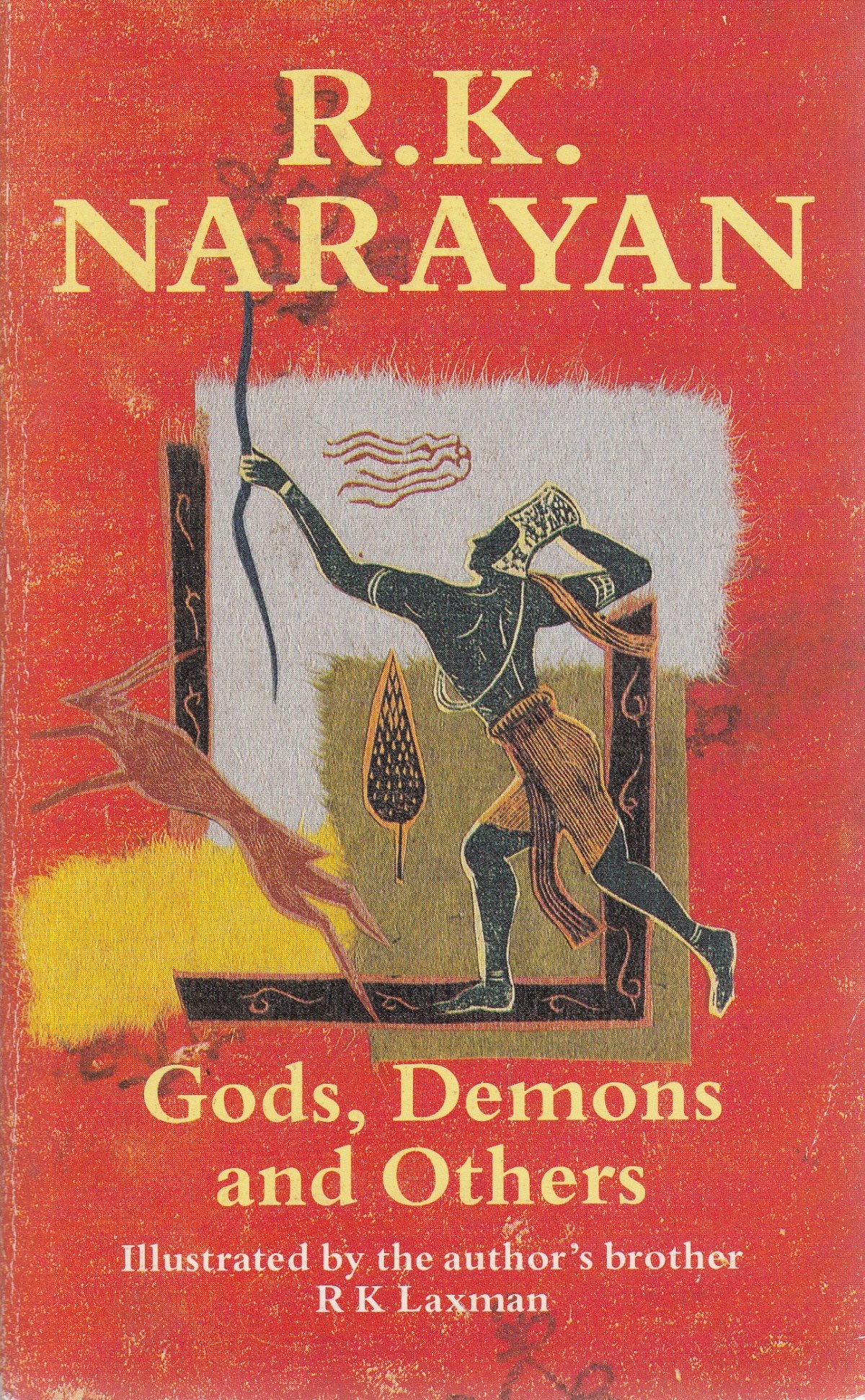
Gods, Demons, And Others

Title: Gods, Demons, and Others
Author: R. K. Narayan

India is home to some of the greatest legends and epics. With an abundance of philosophical significance, these myths, legends, and epics are an important part of the identity of India. They are of common knowledge to the people in our country, as we have heard them get passed on through the ages. So, when a contemporary author gives a retelling, it really needs to stand out to appeal to the readers. 

Usually, poets retell epics reveling in the brilliance of their language, and the tones of rhythms. But, Gods, Demons, and Others by R. K. Narayan is one of the most delightful prose retelling of some great Indian mythological stories. The stories capture some of the significant characters and personalities in the epics and myths. The stories cover fifteen main characters across different mythic stories, and are grouped into five parts in the book according a common theme of relevance their stories share. They include stories of Yayati, Vishwamitra, Ravana, strong female characters such as Savitri, Draupadi, Shakuntala, and others.

It is a brilliant, and delightful book that can serve as a great introduction to all about the Indian mythological stories. Though, the stories are in line with the original narratives, but they are not a translation. Simple and beautiful, R. K. Narayan's lucid writing captures the passion of various incidents and emotions such as war, marriage, celebrations, virtues, births and deaths through the various stories. 

It is a pleasure to read if you are familiar with the stories. And, if you're not, then it may be a wonderful start!

Sunday, January 26, 2020

Sri Pingali Venkayya- The Man Behind Our Tiranga

I wrote this essay for a competition when I was in school. I did not know who Pingali Venkayya was before that, and felt pretty ashamed when I came to know that he is the man behind our national flag- Tiranga. I thought that I might have already put it up on my blog, and wanted to share the post today. But when I found that I hadn't, I wanted to share the essay, on account of India's 71st Republic Day, today! Happy Republic Day, and happy reading! Jai Hind!

Every free nation of the world has its own flag. It symbolizes the ideals that a country fundamentally stands for. At all national meetings, festivals, and occasions, it is the national flag that flies high. It is by the national tricolour, the tiranga, that India has its identity. Waving the national flag creates a sense of unity and patriotism in the country. Be it a cricket match, or a national event, the tricolour flag of India flies proudly. It is hoisted in the Red Fort every year by our President and Prime Minister during Independence Day, 15th August, and Republic Day, 26th January. And, this flag is a slightly altered form of Sri Pingali Venkayya’s design of the Indian National Flag.

Sri Pingali Venkayya was born in the village of Bhatlapenumarru, Krishna district, near Masulipatnam, Andhra Pradesh. After finishing his schooling at Machilipatnam, he went to Colombo for further studies. He first met Mahatma Gandhi while he served for the British in the Anglo-Boer war, fighting for the British, in South Africa. He was kindled and inspired by Gandhi, and was also greatly influenced by his ideas. He became a Gandhian.

During the duration of five years that Sri Pingali Venkayya stayed in North India, he actively participated in politics. After the 1906 Congress session with Dadabhai Naoroji, Pingali Venkayya manifested himself as an activist. 

During the National Conference of the Indian National Congress, Sri Venkayya came up with the proposal of having a unique flag for the Indian National Congress. Mahatma Gandhi liked and approved of Pingali Venkayya’s idea. He asked Venkayya to design a flag himself. Sri Pingali Venkayya proposed the tricolour(tiranga)- saffron, white and green- with a chakra or spinning wheel in the centre. This design was the basis for the National Flag of India. 

Our National Flag, in the form that it is now flown, was adopted during the meeting of Constituent Assembly held on the 22 July 1947, a few days before India's Independence from the British on 15 August, 1947. It served as the national flag of the Dominion of India between 15 August, 1947 and 26 January, 1950, and became the flag of Republic of India after that. The term "tricolour" or “tiranga” refers to the Indian national flag.

What do the three colours, that Sri Pingali Venkayya created for the Indian flag, represent?

The saffron colour represents courage, the white colour represents truth and peace, and the green colour represents faith and Prosperity. The saffron represents the Hindus, the white represents the Christians, and the green represents the Muslims, creating a unity among the three major religions of the Indian population. The Indian National flag is a perfect model representing an “Independent”, “Republic” and “Secular” India. It is the pictorial representation of the Nation.

Sri Pingali Venkayya definitely has to be attributed for creating the idea and design, on the basis of which our present National Flag of India has been created. It has been so many years since the adoption of our Indian flag, and still the flag is hoisted up creating a strong bond among the Indians. The tiranga unites the diversity of India.

Knowing about Pingali Venkayya’s contribution to the nation, and the important relevance it has in our nation today, will serve the purpose of institutional memories of the nation and the Freedom Struggle, to keep the youth of India motivated and inspired to stand up to basic values. This will help the youth to participate actively in Indian politics, and also be responsible citizens of India, upholding the constitutional values that India's flag stands for.

Sunday, January 19, 2020

How Accountable Is A Bank For What You Keep In The Bank Locker?

Most, if not all, of us have bank accounts. And, one of the most common facilities that a customer opts in the bank where he/she has an account is availing the "Locker" facility. But, what if one day, somehow mysteriously your stuff in the locker go missing? Can you hold a bank accountable? Can you ask them to compensate you? Or, are you left to cry in a corner?

A banker and a customer share many types of relationships depending on what type of service the customer avails. When you have a locker in your bank branch, the locker is treated as a fixed, immovable property, thus creating a lessor-lessee relationship between a banker and a customer. A lessor is someone who leases or lets out a property to another. To put simply, bank is like the landlord for that cubical space of the locker you keep your stuff in, and you are just using the leased out property. 

Section 105 of the Transfer of Property Act defines the term "lease". There are four key criteria for an act to qualify as a valid lease.

1. Lease can be with respect to ONLY immovable property. Here, as already said, the vault/locker is treated in law as a fixed and immovable property. 

2. Possession of the immovable property must be transferred from the lessor to the lessee. Now, how is this happening in the case of the bank locker? All of you who have a locker facility in a bank, or have seen the locker of a bank, would be aware that when you avail a locker facility, the bank provides you with a vault wherein there are two keys, or a double lock which has to be opened. One, is a key that you would possess, and the other is a key that the bank will keep. It is virtually impossible for the bank to open your locker without you and your key. Thus, this is qualified to be called a "transfer of possession" under law as you have the access to the vault and the bank does not. 

3. Possession is transferred for peaceful enjoyment for a specific duration. Simple enough. When you have a locker, you are allowed to keep whatever you wish so long it is not anything illegal. And, this facility is not forever. You are bound by a specific duration as agreed by the contract signed between you and the bank at the time of availing such facility. 

4. Possession can be transferred only in favour of some rent/premium. The bank doesn't offer their locker for charitable purposes. Nor do they give it to you for free because you are their valuable customer. If they did, it wouldn't qualify as a lease. The bank charges the facility usually through premiums, or periodical rents. 

Satisfying all the conditions required by the Transfer of Property Act, there is no question or doubt on the fact that the locker facility is a lease. Then, if there is anything missing from what you kept in your locker in the bank, is the bank responsible?

The law says no. A lessor is not responsible for anything that happens in the immovable property when the possession and enjoyment of the property is with the lessee. Unlike a pawnor-pawnee relationship, or a bailor-bailee relationship, the lessor-lessee relation gives more freedom to the lessee to do what he/she wants with the property, but at the same time reduces the liabilities of the lessor. So, if there is something gone missing, what is to be done? An FIR or stolen/missing property can be filed by the bank and the customer, and wait for the investigations to come. But, a customer can't proceed with any action against the bank, unless negligence from the bank's side can be proven. If, for example, the bank had allowed access to your vault negligently without confirming identity to someone who is not you, then maybe there is a chance to make a case against the bank. Unless you can pin on something that is under the bank's control and which the bank ought to have done, there is no way a bank would compensate for your loss.

Then, why do so many people avail the bank locker facility? I guess it's because there is a general feeling that the property you keep in bank lockers are definitely more safe than keeping at home, because of the additional security there, which makes sense as the banks account and keep track of every move of those accessing lockers. 

To conclude, it is important to know the various different rights you have with your bank, and also know what rights you don't have. 

Tuesday, January 14, 2020

Trying "Lapet!" Instead Of Pongal-o-Pongal

Image from Businessworld
Today was the festival of Makar Sankranti, as known in most parts of India (Uttarayan in Gujarat, Bhogi Pongal in Tamil Nadu, Bihu/Lohri/ and a bunch of other names given in various other parts of India). These festivals are the harvest festivals celebrated all over India by different names, and are celebrated over two or three days. 

Studying in Gujarat, a popular practice in Northern and Western parts of India during Uttarayan or Sankranti is kite flying, and I got to try that. My University had a stock of it, and they gave us all the kites and the thread as a part of celebrations on-campus. 

All you need to do is get your kite up in the air, pull or leave the string of the kite at the right time, and see it soar! Sounds simple? Not really, take my word. Conceptually, I felt pretty strong and seemed to understand what those expert-kite-flying-friends made look simple. But, when I tried on my own, my brain just forgot what I understood, and I swear it was just frantic pulls at the string that sent it crashing down. Oops. But, I wasn't alone, so yay we tried, and it so much fun! 

One of my friends was teaching me where to make the holes, and how to tie the thread. That part is easy. Then you get the kite up in the air. This is by far the most difficult, and I should say it requires practice. 'When the kite is looking up, you pull. That's how it goes up,' I told myself while trying to get the kite up and also remember the rules. But, somehow my brain always got it wrong and pulled it when the kite is looking down, and within no time the kite was on the ground. 

Kite flying is not just about flying. They also try to cut off others' kites. It's a game. And, it requires a lot of skill. So, when you want to cut someone's kite, you take your kite and the thread above theirs, and let them roll it, until their thread gets caught in yours and then you pull it sharply. It's not simple at all. And, there it goes, as they shout "Lapet!", meaning "wind it up" to signify that the opponents have to just roll back their threads! My friends cut 5 other kites with a loud, cheerful cry of Lapet!

It was so much fun. And, the kite flying ended with a special lunch in the University mess with Undhiyo, Jalebi, Gujrati Dal and Pooris. And, tomorrow there is an offer near my college at a Tamil Restaurant for a special meal of VenPongal, SakkaraiPongal, Medu Vadas and Payasam, which I can't wait for! 

Wish you a very happy Pongal!

Monday, December 16, 2019

Vatha kuzhambu

Image from ticklingpalates.com
After living two and a half years in college with a friend circle that predominantly consists of people who are not from the South, I got a fair insight into what they actually know about Tamil food. Idli, dosa, sambar, uttappam and medu vada seem to be widely popular. But, others like paruppu vada, masal vada, keerai vada, bonda seems to be in the shadow. Some people know of rasam. One day they made aviyal in college, and I was so excited. It was made nicely and a lot of my friends really enjoyed it.

Every time, I hear one of them talk about Tamil food, I feel really tempted to not only tell them how many beautiful dishes they have no clue about, but also make them taste it. However, it's very difficult to find good South Indian places around my College, and even if we do find one I'm always skeptical about making them try the pongal or rasam or adai, in the fear that they would consider that to be the standard of the dish.

My love for thayir sadham (curd rice), or generally most South Indians', is something unheard of there. How would I ever make them understand the happiness that a "thalicha thayir sadham" can give? It is an experience that needs to be had. And, my favourite side to have with curd rice is the vatha kuzhambu. 

There are many south Indian dishes like sambar and rasam. But only one dish can make a cup of curd rice disappear instantaneously. This one dish is the golden drop Vatha Kuzhambu. Vatha Kuzhambu is a broth made with thick tamarind pulp. The best way to eat it (obviously, according to me) is to take a handful of curd rice and top it up with a couple of drops. The subtle taste of seasoned curd rice topped by a drop of the spicy and tangy vatha kozhambu is so soothing and tasty that we wouldn’t mind another cup of curd rice for it.

None of the other side dishes can match the home-made Vatha Kuzhambu which tickles the taste buds and leaves you wanting for more. Vatha Kuzhambu can be used as a side-dish or can be mixed with rice and eaten. There are two reasons for it to be called the golden drop. One, it has a deep, slightly brownish colour of gold. Second, it is supremely favoured by all tamil foodies. A drop of this dish takes you to the seventh heaven.

And, there are so many more dishes I would want to make them eat- idiappam, set dosa, adai, morkozhambu, all our karis and kootus, and so on. I hope one day they get to taste it all, for it is an experience in itself!