Hey!

Welcome, and you can check out my posts. But, I don't write here anymore. So, if you are interested, come on over to https://sandhyavaradh.com/
Showing posts with label Science. Show all posts

Tuesday, August 18, 2020

Brave New World

Title:
Brave New World
Author: Aldous Huxley

In the year AF(After Ford) 632, which would be an equivalent of the year 2540 in our calendar), men and women are no more born with natural abilities. Instead, in the dystopian World State city of London, kids are genetically engineered in artificial wombs where their abilities are handpicked according to the need to the world. The childhood is one closely monitored and led on the lines of requirement of the different classes they were engineered to belong to- the intelligence class and the labour class, with a clear establishment of hierarchy between the two. 

The society no longer has happy citizens, rather undergoes a mandatory feeding of the soma drug by the State to keep it's citizens peaceful. While the State tries to establish this Utopian system, Bernard Marx, a psychologist and sleep-learning specialist, raises his criticisms in his own arrogant, fearless way about the State's wrong methods of ensuring peace and calm. The story is of this one man, an individual, who questions and challenges the wrongness of the need-based, engineered production of humans thrown into a hierarchy based on intelligence, and the advancement in psychology and sleep-learning put to the negative use of manipulating citizens, and many more in that world that seems a nightmare to him. 

Is it utopian? Is is dystopian? I think it is the dystopian version of utopia, where men start claiming their 'right to be unhappy'. At the end of the day, where there isn't natural choice or selection, there is a dystopian angle to it- be it happiness or sadness. Huxley gives a mind-blowing science fiction- and the scariest part is it is not really much of a science-fiction anymore. True, it is still an exaggeration from some of the events that happen now, but probably our AF 632 isn't really far off. Take anything, from mood stabilizing pills to genetic modifications and designer babies, Huxley was bang on about literally every development that we have to. And, to have such a foresight, by whatever means, is just plain crazy. 

 It's a book that feels half-true, and the other half seems like a prediction. It's unputdownable, building the  ultimate dystopia in utopia. It's impossible not to marvel when you read this book. It is not entirely dark, it presents a perfect picture above that is yet to be tainted. Yet, it is all about knowing all the while that you read it- that it is tainted. 

It is a masterpiece! I absolutely loved it. It is a must-read!

Tuesday, August 4, 2020

The Chemistry Book

Title: The Chemistry Book: From Gunpowder to Graphene, 250 Milestones in the History of Chemistry
Author: Derek B. Lowe

Elements and their interactions with each other make up every single thing in this Universe, including us. Their properties, abilities, and the various conditions for their states of stable nature are fundamental to our existence, and the existence of the entire Universe. Every material is made up of some chemical element. The world functions as an integral of all sciences, the most fundamental of which can be called Chemistry. Chemistry is what is called the 'central science', and for good reason!
"Chemistry really does occupy the middle ground between physics and biology, claiming territory from each of those sciences as well as its own."
From a period ranging from c. 500,000 BCE with the discovery and understanding of the phenomenon that creates Crystals, to a projection into the future expected results in 2030 when the world is on a steady way to understand Artificial Photosynthesis, Derek Lowe has you covered in an exciting and simple chronological narration of milestone discoveries in the history of chemistry. 

Lowe says, "The study of chemistry is older than human writing.Humans have been playing with fire, understanding how a spark can be created, making weaponry from metals- and all of these are essentially "chemical explorations", as the author shows you in this book! Every chapter of this book is small, concise, and very interesting. It shows you how a compound, or an element, or any chemical substance or process came to be- including when it was discovered, who all worked on it, what it is used for, and any interesting story associated with it. Every chapter runs for around 2-3 pages, making it an easy and insightful read that any beginner in Chemistry needs. 

This book is for all of us. We all breathe oxygen, exhale carbon dioxide, use vessels made of aluminium, use aspirin for headaches, wear nylon clothes, decorate our homes with pretty porcelain flower vases, and the list can go on and on- but how much do we know about any of these chemical substances? That is essentially what this book helps in- you get to know how a chemical substance came about, and why we use it the way we do. 

Derek Lowe is a professional chemist himself, and has an expert blog In The Pipeline. Chemists like him are part of the processes for the next important discoveries that the world is to see in the upcoming decades. 
"The story continues. I myself am a professional chemist and wrote this book on nights and weekends. During the day, I’m in the lab, as are thousands of chemists around the world, helping to write the next chapters. Readers are welcome to visit my website, In the Pipeline, where I talk about the kind of work I do and give updates on the field’s cutting-edge advances."
It's the kind of book where you can read one or two chapters a day, and that is what I have been doing! The information that you learn, bit by bit, about the things around you makes you understand this world much better, and gives you a good perspective behind why things behave the way they do. Do check it out, it's an interesting read! 

Monday, June 22, 2020

5 Fun Reading Lists With Something For Each Of Us

Have you already read all the books on your list? Looking for good resources to fill up your reading list again? Check out some of these brilliant reading lists that can get you going for the next few months. Also, most of these resource links have further links inside them to guide you to several more interesting reading lists on their website! 

1. For those who love the solved and unsolved mysteries of Science, and the men and machines behind it, check out this wonder list of The Greatest Science Books of 2016, a treasure compilation by none other than our favourite brainpicker! Popova writes in her introduction to the list:
"The question of what makes a great book of any kind is, of course, a slippery one, but I recently endeavored to synthesize my intuitive system for assessing science books that write up to the reader in a taxonomy of explanation, elucidation, and enchantment."
The books in this list seem very interesting, and are essentially a part of my to-read list. Hope I can get to them soon, covering a few of them before college reopens!
 
 2. For the authors, writers, and all those who love the craft of literary expression: how about Hemingway's list of essential books for aspiring writers? Because, Hemingway believed and said:
"As a writer you should not judge. You should understand."
Writers can also check out this list of 24 books that shaped one of the greatest writers, Gabriel Garcia Márquez. This list looked so wholesome and endearing that I had to include it all in my own to-read lists!
 
3. Are you in the a-book-a-day-keeps-the-gloom-away phase? The Reader's Digest list on 18 classic books that you can read in a day is absolutely wonderful. This is a list I can endorse, having read some of the brilliant classics in the list such as The Little Prince, The Strange Case of Dr. Jekyll and Mr. Hyde, Animal Farm, Fahrenheit 451, The Great Gatsby, and many more!

4. Are you curious what other authors are themselves reading? I came across NY magazine's article- 23 Authors on 26 Books They’re Reading to Escape the Present Moment- a list that was chosen during these tough times to read, and escape to the better world among books, and also part of an "ongoing effort to provide productive distractions from what’s happening outside of your windows and on your screen" from the magazine! Do check them out, there are some very interesting titles from Hemingway to Austen to Phyllis Grant, and so many more! It's a fresh list, and something you should definitely check out.

5. Do you have young kids, brother or sisters around you? Do you want good books they can read during this lockdown? You can check out my reading lists where you'll also find a review for each book. You can also see my post on Literature For Young Girls, my all time favourite books, and other reading lists.

Check these links out in leisure, and do follow my blog to keep getting new suggestions and book reviews! Happy reading!

Sunday, March 8, 2020

What Is A Blockchain?


Ever heard of the fancy word blockchain used a lot nowadays? Maybe, you glanced it on the morning newspaper headlines about bitcoins. Or, maybe you just saw the word on an article with a confusing content. After looking at that word multiple times, and not really taking any effort at all to understand what it is, I finally decided to look it up so that I can at the least understand what the article I was reading was talking about. Let's take a basic look at what the word means. 
"A blockchain is a distributed database that acts as a peer-to-peer ledger system."
Okay, if you are like me, you won't know what that line means. Ledger system? Peer-to-peer? Distributed database? What in the world, really?!

So, to put it in a simpler, more understandable form, and to express how I understand it in its most basic way: A blockchain is essentially a list of records, called blocks, that keeps adding on further and further with increasing data, that are linked through cryptography. Each block contains a sort of mark of time and detail of transaction, and this cryptographic hash of the previous block is linked to the next block. Also, this cryptographic chain of blocks, by its complex design, is resistant to modification of the data.

The next question after this basic understanding is: SO? To answer this question, let's look at how the CEO of Ubiquity, a blockchain startup, expressed it, in one of the articles.
"The blockchain allows any individual or party to independently verify that a transaction or record existed in a certain form at a certain time." 
So, a blockchain works similar to torrents or what is called as a peer-to-peer system, where thousands of computers around the world are connected and running the same software, working with the same data, and tracking the data all the way back to its origins. The storage of these transactions ensures that a block or' node' that basically holds some of the transaction and time data, should be replaced by other blocks. The data stored on this block is not only stored on this server, it has network-wide backups, so the overall architecture makes sure to avoid a single point of failure.

That is the most basic information that I gathered today, without confusing myself too much. And, this was enough to comprehend all those articles, without feeling like neglecting a word that may have a major impact on the meaning of the article. And, a huge disclaimer is that blockchain is not probably as simple as this! But, it is just a little better than just knowing the word. 

Hope you got a basic understanding, if you didn't. And, if you know more, then please do add it in the comments! 

And, if my basic understanding needs correction, I'd be happy to learn! Let me know through the comments below! 

Sunday, November 19, 2017

The Laws Of Perspective

I started with the course “Lectures On Digital Photography” by Marc Levoy. It is a course which was initially taught at Stanford for interested on-campus students, and then later at Google. Now all the lectures are available for free completely on Google Sites. Here’s the link: https://sites.google.com/site/marclevoylectures/home

Fifteen minutes into the first lecture, Mr. Levoy talks about one of the most important aspects of art- perspective. He talks about perspective in a scientific way. When you capture an image of a real object on a plane, be it as a painting, one of the earliest forms, or photography, which came much later, there are two important ways to look at it.


One was the natural perspective that Euclid explained in his book on Optics. The natural perspective discusses the distance between the eye and the object, and the angle the object subtends to the eye.

In simple terms, the natural perspective tells you that farther objects subtend smaller angles.

The other type is the linear perspective theory created by Filippo Brunelleschi. This basically tells you that closer objects are projected larger on a picture plane.


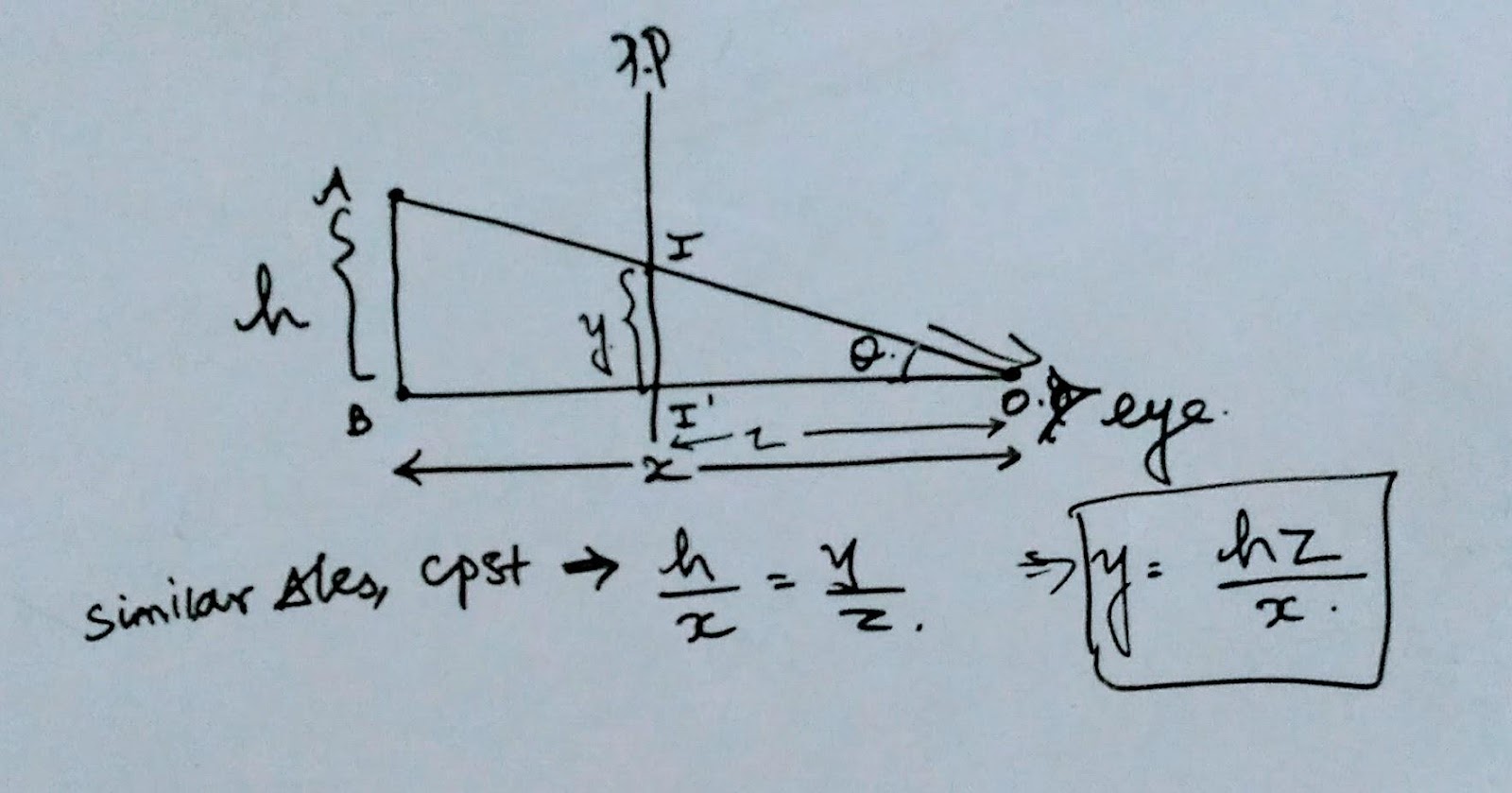
Using this simple mathematics as derived from the linear perspective theory, the approximate size of the projection on the plane as compared to the actual size of the object can be determined. In the above picture: y is the height of the projection; h is the height of the object; x is the distance of object from the eye; and z is the distance of the picture plane from the eye.

This was of key importance in the paintings during the Renaissance as the painters attempted to produce or showcase depth on a plane sheet. It was generally concluded from the linear perspective theory that all objects away from the painter must converge at a farther point.

So, how is this theory of perspective related to photography? Well, for photographers to choose an optimum focal length for the right aperture that would capture the scene, the way they envision, it is necessary that they have a general sense of perspective. It is not required, and is not possible, to do mathematics every time. But it is necessary to rather have a ‘feel’ of the right perspective that they need for a particular shot.

There is a tamil saying that translates into “Your hand doesn’t measure what your eye doesn’t”, which sums up the the topic of discussion here: perspective.

Tuesday, August 29, 2017

Why I Did Not Get My Hogwarts Letter


I was introduced to Harry Potter, and the world of wizards and witches when I was eleven. And ever since, I’ve always waited for my Hogwarts letter- most sincerely. People thought it was fiction but I knew it wasn’t just that. What I couldn’t understand though was why I did not receive my Hogwarts letter. Years on end, I peeped through the window to see if I could spot an owl approaching. No such luck.

Now, while pursuing B. Sc., LL. B., I finally found a convincingly probable answer to the question that has bothered me for the last seven years.

This semester we have a paper on Microbiology and Genetics. And, today, while winding up with the genetics topic, our professor showed us a video by National Human Genome Research Institute- Harry Potter and the Genetics of Wizarding.

Thanks to Prof. Eric P. Spana's wonderful lecture in the video, I got the reason why I might not be the one. For all those out there wondering why you didn’t get your letter- read this! The answer lies in your genes.

Let’s look at it this way: Why does Hermione Granger get the letter, but not us?
Brief answer: de novo mutations.

Let ‘W’ be the representation for the alleles of wizards/witches.
Let ‘M’ be the representation for the alleles of muggles.

To be a wizard/witch you need to have at least one dominant wizard allele ‘W’ or a recessive allele ‘ww’ gene.
Mr. and Mrs. Granger both are pure muggles(non-magical human beings).
So, both Mr. and Mrs. Granger are homozygous muggles: MM

Doing the Mendelian Cross:

Parents:                                   MM            x            MM
                                             (muggle)                  (muggle)
Gametes:                                  M                             M

Filial Generation 1:                                  MM            -----------------------> (Muggle)

So, how did Hermione, who was supposed to have only MM genes and be a muggle, become a witch?

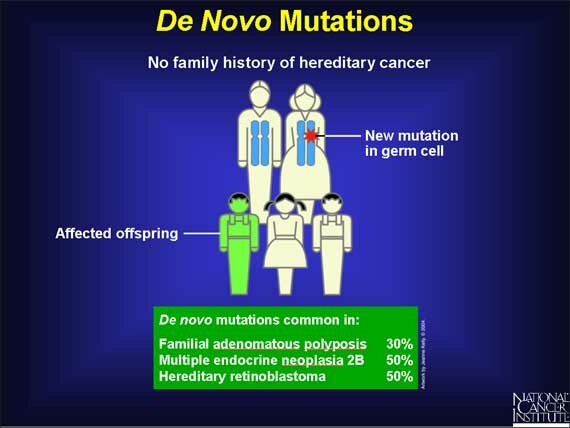
De novo mutations are mutations that occur in an egg or sperm cell before fertilization or immediately after fertilization. ‘De novo’ literally means ‘of new’ in latin and refers to such new mutations.


De novo mutations may explain genetic disorders in which an affected child has a mutation in every cell in the body but the parents do not, and there is no family history of the disorder. Thus, even if there is no hereditary history whatsoever of magic use, the offspring can have a mutated gene affecting it, thus making the progeny magical.

Hence, Hermione got through to Hogwarts thanks to the mutation in her genes. This answers why she’s a mudblood.

But why not us too?

Well, de novo mutations occur at a frequency of ~77 per generation but only one of them occurs in a gene. So, analysing the past year students of Hogwarts we find just one person who is a mudblood in a given year. So for a wizarding or magical trait the frequency of de novo mutation in that gene is approximately 1 in 750,000 (considering the population of UK since Hogwarts is in UK).

That is a really slim chance. And, most probably we aren’t that 1 in 750,000 if we still haven’t got our letter.

That is why Hermione is a witch and we aren’t.

To know that our seven years of faith can be broken in one class of genetics with a little help from pure statistics is terrible. I can’t still stop waiting for the letter even after knowing the harsh truth.

And to conclude, and console myself for the rest of my life, I just figured a new argument:
Maybe, my letter was tied to Errol.

Saturday, March 8, 2014

“Surely You’re Joking, Mr. Feynman!”


Title: “Surely You’re Joking, Mr. Feynman!”

Author: Richard. P. Feynman

“Surely You’re Joking, Mr. Feynman!” is all about Feynman’s experiences and his Science career. This book contains many funny anecdotes. The fun Feynman had in MIT is wonderfully written down. The book also describes how he moved on from MIT to Princeton to Los Alamos and Cornell along with a ‘touch of Brazil’(as put forth by the author). The book ends with Feynman’s narration of his life as a Physicist.

In the book, there were many parts that I enjoyed. The part when Feynman creates his own symbols for sin θ, cos θ, and later realizes that he cannot create symbols on his own while he teaches one of his friends, as they were known only to him and were not universally accepted, is the one I love the most.  

Another part I liked was an incident which took place when Feynman was in MIT. There were two or three students who always kept studying and had double doors to their room to keep out noise. This seemed a little too much for the other students and one of them removed one of the doors and hid it. Considering this a nice idea, Feynman removed the other door and hid it in the basement. This created a ruckus, the next morning, and the three students were highly distressed at seeing both the doors missing. This issue was taken to the fraternity, and the guy who removed the first door was caught. Everybody immediately assumed that he had removed both the doors and asked him for the other door. Feynman, then, voluntarily accepted that he had removed the second door. But, nobody believed him. To the contrary, they asked him to keep quiet and told that it wasn’t the time to joke. Hence, Feynman concludes saying that, many times when truth was told people rarely believed.

But why is the book titled “Surely You’re Joking, Mr. Feynman!”? The answer is part of an anecdote in the book. In Princeton, Feynman had experienced a few embarrassing situations. The dean had invited all the freshers for tea. The dean’s wife had asked whether he would like lemon or cream in his tea, and Feynman had replied that he would like both! The dean’s wife had been very surprised and embarrassed, and had said, “Surely You’re Joking, Mr. Feynman!” And that is the story behind the title.

I enjoyed reading this book very much.

Sunday, January 19, 2014

What Einstein Told His Barber

www.goodreads.com 
Title: What Einstein Told His Barber
Author: Robert L. Wolke
'What Einstein Told His Barber' is not a book of what Einstein told his Barber! It's just the title to arouse our curiosity. The book is very interesting and highly enjoyable. It answers the many questions in our minds about Science. Here are some information that I have learnt from this book and that I enjoyed very much.
1. Why while pouring water from one glass to another container, the water comes along with the glass and then pours down- this is because of a special tendency of liquids to stick to the container in which they are stored. While transferring from the glass, we are able to see this tendency of liquids visibly.
2. When a cup of coffee is spilt, we see a brown ring and almost no stain in the centre part- this is because coffee, even though we see it as a dark brown liquid, is just a mixture of brown coffee particles and water. so, when spilt the water pushes all the particles outward and retains itself in the centre. Soon the water evaporates leaving only the dark brown particles that it pushed outwards. This looks like a dark brown ring with almost no stain inside.
3. If we travel at a speed more then the speed of sound, would we hear the radio near us(suppose we are travelling in a car)- yes, we would hear the radio as the radio is also travelling along with us in the same car, at the same speed. But if the radio was at the back of the car, we most probably would not hear it(This would most probably be due to the wind roaring against us!)
So, these are a few that was very interesting to read. We get to learn a lot of things in general about Science. It's a lovely book and I especially like the title What Einstein Told His Barber.