Hey!

Welcome, and you can check out my posts. But, I don't write here anymore. So, if you are interested, come on over to https://sandhyavaradh.com/
Showing posts with label learning. Show all posts

Tuesday, September 29, 2020

The 10 Most Viewed Posts In The last 6 Months

Here's a list of posts that were most viewed in the last six months! With some of them it was not really a surprise that they had so many views, but some others did catch me by sweet surprise! If you haven't checked out one of these posts, do check them out!

1. Three Men In A Boat : I have to mention this here- This post is also my all time highest viewed post with 19.9K views, and 50 comments, all thanks to Class IX CBSE non-detailed reading prescribed as this novel. I have the funniest relationship with the readers of this review- with more than half of them thanking me for saving them for their "Hitler" teachers! I wrote this review way back in 2011, and the review is as childish, simple, and sweet as I was back then! But, till today- it's my most viewed most on any given time frame!

2. Parthiban Kanavu : This book is a beauty. I love Kalki. And, I am so grateful for the translation by Dr. M. S.Venkatraman for bringing us this classic in a language we can comfortably read!

3. Normative, Positive, Others: In The Analysis Of Law : I was a little surprised by this one, because it was slightly more academic in contrast to the majority of art/literary based posts, or the fun posts, that I usually write! Also, it set me to thinking if I should write more of these small, concise academic posts. What do you think?

4. The Room On The Roof and The Vagrants In The Valley : Not surprised, this has also consistently been a top-viewed post on the blog since many years now.

5. Iah: A Musical Feature : I am so very, very happy this featured among the most-viewed posts in the last six months. I am really happy that a feature on my musician-friend met a wide audience!

6. Murder In Beltour : This story-series that I wrote has been so well-supported, well-received by all. So many people took out the time to comment and text me on what they liked. I am elated.

7. Gripped In Doubt : This short story that I wrote also received a lot of attention, and people came forward to tell me how much they enjoyed it. This post making a cut in the most-viewed definitely has put a smile on my face. 

8. From Doon With Death : One of my favorite reads this year!

9. Tanmay: A Poetic Feature : Another young, talented poet-friend I featured! I can only say, thank you readers for supporting all of us!

10. A Quick Reminder: When Did You Last Review Your Privacy Settings? : When was it? If it was way too far back in the past that you don't even remember- go check now!

Is there a post of mine that you enjoyed specifically? Let me know in the comments!

Saturday, September 12, 2020

Failing To Succeed

Title:
Failing To Succeed: The Story of India's First E-Commerce Company
Author: K. Vaitheeswaran

We all read success stories all the time, but rarely does anyone write the story of a failure. Yet, it is probably in the stories of failure that we can discover what can go wrong, what we should have done or not done, and what are the inherent risks in doing any activity. Business is definitely top on the list. Vaitheeswaran shares a detailed story of his company failing to succeed, which is also the story of India's first e-commerce company.  

What started as a fascination for the “brilliant business called e-commerce”, soon led to six entrepreneurs- Vaitheeswaran and his five friends- founding the first e-commerce company of India 'Fabmart' in 1999. As the American company Amazon.com was becoming increasingly popular outside India, India was still very new to the whole world of e-commerce. We were still in a stage when people were getting used to the idea of internet. Fabmart's founders, after a lot of deliberation, decided to stand out from other e-commerce industries of that time, and launched Fabmart with music instead of selling books which companies like Amazon and Rediff were doing. 

"In those days, 80 per cent of music sales in India were in cassettes, and only 20 per cent were in CDs. It is a reflection of the enormous changes over the past fifteen years that while India’s first e-commerce site launched with music cassettes, in less than twenty years, music has jumped through cassettes, CDs, iPods and now almost all music is free or streamed."

A big dream needed sound funding, and that was when Reliance opened up to invest in start-ups, and Fabmart was one of them. 
“We signed a simple agreement with Reliance Industries and got going with our dreams.”
When all seemed to go well, and the big dreams were getting bigger- everything went topsy-turvy for Fabmart. Fights in the company board that seemed to be too tough to put to rest, and a steady loss and eventual dry up of all funding for the company including the funding by Reliance, pushed India's first e-commerce company to the brink of collapse. Fabmart became Fabmall, and eventually became Indiaplaza- falling lower by every passing year. 

As the detailed analysis of all the wrong turns and wrong events are discussed by the author, the book feels like a lesson on the bitter struggles for funding, ever-changing scenarios that surround start-up culture, setting and developing the right metrics, and the importance of the rapport between the founders to ensure they are all equally invested in the company.

"It is very important that co-founders have sufficient stake in the business to keep them motivated, cover for the high risks through significant future upside and to also ensure they have control in running the business."

Vaitheeswaran mainly discusses the two confusing and difficult problems for entrepreneurs: profitability versus profits, and growth versus profits. He says that most companies usually push the idea of profits to the unpredictable future, though they all seem 'operationally profitable' and are slated to 'break even' in the next couple of years. Here's an excerpt that sums up the author's view on this conundrum.

"In several of these start-ups, the founders have sold part of their shares at high valuations and personally profited. This can unfortunately create a situation where a founder is no longer motivated to ensure that the company also profits as soon as possible and thereafter only the investors are concerned about where their investments are going. In extreme cases, the investors are forced to step in and directly take charge of the company affairs as has already happened in some Indian start-ups."

He quotes a popular tamil song "varavu yettana selavu pathana"  to explain profitability vs. profits: where profitability is an idea and profit is a solid metric. He emphasizes throughout on this clarity as an essential for success. 

Vaitheeswaran was the pioneer of e-commerce in India. Even more than 10-15 years ago, Fabmart implemented the things we know as normal today- including PIN-based payment gateway, e-wallets, electronic gift certificates, loyalty programmes, cross border gifting, cash on delivery systems, customized merchandise, and a unique business model that combined both offline and online stores.

Many such lessons are discussed in detail, and the book is a rare story of what can lead to failure. There is a treasure hoard of discussions and lessons that we can take away! This is a great read.

Thursday, September 10, 2020

Why It Is Important To Maintain An Editorial

In my earlier post on 10 Things You Can Blog About, I had mentioned how keeping an editorial list ready to publish on your blog can take your writing a long way, because then you'd have something to go up anyway, and you would be stressing about what to write for what would go up on another day. Primarily, this will make sure you aren't writing for the sake of just putting up something. 

Keeping a running editorial also ensured that I have a post for every single day, especially since I have been blogging for almost the last 9 months in a row. There are some days when I have other things to do, or some other work has to be given priority, and I might not have the time to work on a post as much as I'd like to. So, I always had a set of well-written posts that that could go up even on those days. But, did I warn you of a challenge that comes up with it?

Having a nice set of posts that are ready to go up each day also requires maintaining such a line of posts so that you don't have trouble for content later. Imagine you have 10 posts, and you have been posting one each day without writing anything new. You wouldn't even realize 10 days pass by, and will be caught in surprise on the 11th day. Sometimes, you make do with random thoughts in your head, written in a hurry. And, that is precisely what you want to avoid by maintaining the editorial. 

Take an example- like today. My mind was off on a couple of other things for the past week, until I come to realize that I have exhausted all the happy, leisurely posts that I had written. I hadn't read anything new either. So, I write a post on the thing that is on the top of my mind right now- why it is important to keep up an editorial. 

 The key to a good blog is writing regularly. For daily bloggers and writers, and generally all content creators, I think having a set of ready content all the time is very important. It ensures both consistency and quality with no compromises. It is a lesson well learnt, and I am looking forward to this weekend when I rebuild this precious life-saving stream of content that helps me on the days I am truly busy.

Sunday, September 6, 2020

Where Do You Stream Music?

I have been using YouTube Music recently, instead of Spotify, and that is so much better. If you have a free Spotify account, then you basically spend listening to two minutes of ads for every three or four songs that you listen, and that is terrible. The worst part is, it literally counts the number of songs before it throws up the ads again, so it's not like ads pop-up every few minutes you listen to those songs. So, even if you are just shifting through songs on a radio, the ads are bound to hit you up. I have been listening a lot on my laptop during this lockdown period, and YouTube Music has definitely been better. Though, there are ads here too, these ads are literally just 5 seconds. Also, you have the option to skip to another song without having to compulsorily go through the ad!

Free Spotify also does not have half the good songs that you want to listen to. This hurdle is mostly overruled in YouTube Music. It has pretty much had every song that I have looked up for, and so far so good! There seems to be a disadvantage on the phone that if you come out of the app, the YouTube music stops playing/gets paused. This is not so on my laptop that supports android apps! It keeps playing on as I do my other things, and that is really convenient for me!

Free Spotify does not allow you to download songs offline. But YouTube music allows a certain number of downloads for free. It just makes it easier if you want music on the plane or on a train, or generally while travelling because that is when network is an actual problem.

I used to use Saavn, and I genuinely think it was much better than the free Spotify, though less appealing in how it looked. I have also heard that Amazon Prime Music is good, but I have never really tried it. But I think I am starting to like YouTube Music, and might just forget about Spotify in a while. 

Which streaming platform do you use? Do you have better suggestions or a playlist for us? Share it in the comments below!

Saturday, August 29, 2020

Taglines

Taglines. They bring a world of difference to whatever we go. In fact, I think sometimes the taglines talk more than the name or the title. 

Nike- Just Do It
Apple- Think Different
Coca-cola- Open Happiness

My most favourite library in Chennai that I grew up reading all the books I had read till my schooling was Eloor. The library branch in Chennai shut down, but they had a tagline that is still very close to my heart, and that which rang true with the very essence of that huge, wonderful library: For love of good books! Eloor did absolute justice to its tagline.

Taglines are not just for companies or brands. They can be for anything, including blogs and even blog posts. They all tell you something about the brand/blog/article/post/whatever that is you are viewing. A tagline is supposed to help anyone get to know very quickly, in a manner catchy, short, and sweet, what they should be expecting.

When I started this blog, I definitely wanted to have a tagline and I looked into defining what my blog was primarily going to be about. I write a lot of things, but what gives my blog its primary identity is the books I read and the reviews I write for them. I read regularly and I write a post on every book I read. My blog is just a huge repository of all that I have read since 2010! And, what does that give my readers? A reading list across varied age groups! Because I grew up with these books, the books are in the natural progression of an actual reader, and it feels like an index of books with a review by me on each book. 

And, that is why, I chose the tagline that tells you exactly what to expect. It is a blog on 'What to Read'. Taglines can be of various tones. It can talk about the spirit, the function, the motto- anything! But, a tagline helps immensely. For all the bloggers out there, do you have a tagline? If you do, share it in the comments with your blog links! And, if you don't, go with what you feel, and: get set thinking! 

Happy Saturday! 

Thursday, August 27, 2020

The Process of Thinking

A lot of who I am today is because of my school, as I have previously told in several of my posts. There was a brilliant system in place that pushed us to think, be creative, and produce genuine work however shoddy or error-ridden it might be initially. We were allowed to try our hand, and add a dash of our own colours to everything we did or learnt. All forms of art, expression, academic interests were equally supported, and that made us all so confident to 'be ourselves'.

Giving importance and acknowledging the thought that a child has put behind the work he or she submits can change the whole way we are moulded to think. I am not restricting myself to creative arts, music, painting, dancing, and the likes. Not at all. I have seen teachers who have appreciated kids for approaching a math problem from a innovative or different angle even though the final answer on the paper might not have been the right one! Reprimanding for a wrong answer when the method was actually to be appreciated can make the child stop trying to think innovatively, and instead might push the child to just stick to the traditional methods to avoid the possibility of mistakes. 

This taught us that to think about the process, and be innovative in the process and how we approach a subject is more important than thinking just about the results. In fact, innovative results are a mere consequence of an innovative thought process. So, when they focused on the right thing, we learnt the right lessons.

I agree that at the end of the day we all want results. Nobody cares how you did something. What we want is results that work. But, we should reserve such an attitude to probably professional activities where results are of the highest importance to everybody involved, and there are goals to be met. However, with children and young creative artists- it is important to teach them the right lessons, nurture and help them grow as thinking individuals, and also for us to look at their work with the right lens.

So, as teachers, as parents, as sisters and brothers, as fellow human beings who see the work of each other and comment on it- we should first look into what work, what process, what thoughts go into something, and give it as much weight, if not more, as you give to the end result!

As the picture says: think, innovate, be yourself. I thank my school and my parents for teaching me that!

Wednesday, August 26, 2020

A True Artist (In My Imagination)


I am not great at sketching. Probably because I rarely draw, and I have very less patience. The enthusiasm with which I start sketching frizzles out in a while, and then I'm in a rush to just get done with it. Oops, sounds like just how it shouldn't be! But sketching is also a lot of fun. 

I sketch once in a while, and it's usually simple things in my memory. For example, you can see my sketch that I've put up with this post. It was just one out of the experiences that I had in Mumbai last year- with a lot of ice golas and desserts in it! The drawing definitely (and obviously) looks unpolished because the artist is a highly unpolished one. But, the main point that I'm trying to make is: it is a lot of fun to just recreate your own sweet memory! 

Do you remember how in The Little Prince the pilot, in his childhood, attempts to draw and is discouraged by adults because they thought he wasn't really good enough at it? Remember: don't let them steal your magnificent career as a painter and an artist, at least in your imagination.

Sometimes, we do things just because they were momentarily fun to do, and not because we are passionate about it, or think that we have a career in it, or because we are good at it. Simply, we like it. If not all the time, we enjoy it at least that one day or one hour that we do it. And, we don't do it often, but that one-off time is still happy enough! One such things is sketching for me. I cannot call it a hobby, I cannot call it a talent, and yet I do it sometimes and it makes me happy!

I drew this on Adobe Sketch. Do you have that one-off activity that you really enjoy? How do you like my (undoubtedly brilliant) sketch? Let me know in the comments below! 

Tuesday, August 25, 2020

Correcting Grammar

People tend to make grammatical errors, structural errors while talking in English. I have seen people who don't correct at all whoever it is, and I have also seen people who immediately correct anybody at all who makes a mistake. I don't agree with both. 

Correcting a person immediately can have many drawbacks.

1. It cuts off their flow.
2. It can make them less confident about what and how they were going to say what they were saying.
3. It can be mean, sometimes (even if you don't do it with mean intentions).
4. It shows you have no idea why a person might not be great in that language.

On the other hand, if someone close to you is making an error constantly, there is no harm at all in openly talking to them and correcting them. In fact, they'll understand better and might not face such a situation again. At any point of time, the correction must be said in a manner that is educating for the other person, rather than making it sound like you are just out there to find faults. 

I have had friends who have been more than happy, and in fact have voluntarily asked me to review what they speak and correct errors if I find any. And, the same applies to writing. It is alright to move with the person and their way of expression, as long as you get what they are trying to say. Remember, you might just be worse in so many other languages. Languages are many, and everybody is not required to be an expert in the same language.

You should definitely take the opportunity to teach people, and help them become better and learn more. What matters is how you do it. Wait for them to finish what they are saying and reply to their questions or statement before you correct them. It is important to acknowledge the content first, before you jump into correcting their structure. Your correction has to encourage them, not demotivate. It has to make them more confident about what they learn, and not make them lose the little confidence they have. 

Most things in the world work that way, especially when you teach someone: it's not about what you teach, it's about how you do it. 

Sunday, August 23, 2020

Brighten Your Post With The Right Pictures

Two things play a major role for someone to even start reading a post.
1. Title
2. Image
Pictures are important. Photos, images, illustrations, graphics- they all bring attention to a post. They spark the interest in the reader to go ahead and read the post. In fact, even before we look at the title, we look at the image associated with the post. Our eyes naturally fall first on the picture and then move up to see the title. That is why it is essential to have a catchy title, and also a catchy photograph. 

Photos can be funny, moving, informative, descriptive, beautiful, and much more- and each of these type of pictures have their own role and contribution. What type of picture you choose for your post will also influence the tone with which the reader will look at what you have written. For example, for a serious subject,  a funny cartoon might tone it down a bit. If that is the intention, then it is one of the greatest tools to put a subtler impression on your readers. But, if it is not the intention to make it more subtle, then a funny picture can actually derail the whole tone of your article/post. The other way round is also true. A very serious picture for a funny/humorous post can make the reader confused about whether the writing was actually meant to be funny. Long point short: pictures speak a lot more to our subconscious minds than we care to notice.

There are many resources today for finding pictures. One must always be careful of the credits that go to the picture. Also, not all pictures can be freely edited or modified. Some pictures are allowed for reuse while some others are not. Some are allowed for reuse with credits while some others can be reused freely without crediting or linking back to the artist. Some pictures are allowed to be modified while some are not. So, one has to check these things before using photos digitally. 

We all search on the web and just insert photos from there without thinking. A good way to filter pictures on Google according to your preferences is to use the "Tools" under Google Images where you can filter pictures according to the user rights enabled for them.


This is especially useful for all students who use images for projects, and also bloggers like me who constantly look for good pictures for articles and posts. I learnt of this pretty recently, and thought I should share it (just in case someone didn't know about it- like me)!

Pictures brighten up your post, and you should definitely use them to your advantage! But always give credit where you can (even if the image doesn't need credit)! Happy writing!

Wednesday, August 19, 2020

The India They Saw

Title:
The India They Saw
Author: Sandhya Jain and Meenakshy Jain

The India They Saw is a series of 4 volumes of books by Meenakshy Jain and Sandhya Jain. Volume I talks of the ancient India as seen through the eyes of travellers and foreign visitors to the land, describing everything from the landscape to the kingdoms to the richness in education and culture, including the social practices of the time- all set within the time period between 5th Century BC to the 7th Century AD. Volume II covers the events between 8th-15th centuries, still covering the ancient Indian descriptions and accounts of the Greeks, Romans, Arabs, and the Chinese. Volume III starts with the coming of Vasco da Gama, and covers the European accounts of India in the 16th and 17th centuries. The final and fourth volume covers the accounts of English travellers and missionaries in the 18th and 19th centuries. 

I just started this book today, and it is very interesting. The compilations made are very beautiful, truly bringing to you in a chronological order the India they saw. While reading, one can spot the similar accounts, owing to different travellers and writers observing the same kind of practices in the same time period across many parts of the country! The travellers are also unanimous in one more thing- their sheer awe on the high cultural and spiritual progress that they saw in India, unlike any other place. 

The India They Saw presents the historical Indian view from a beautiful angle, and it is so well arranged through the four volumes, covering in total from the 5th century BC to the 18th century. Some of these travellers and their accounts take you back to what you read in your Social Sciences during middle school- a fun way to learn history.

I feel this is another book which can be read in small doses and interesting snippets, from which you can learn a lot over a period of time! Do check it out!

Monday, August 17, 2020

A Natural

On tip top toe,
she smoothly slid-
on warm-black, wooden
floors, for figuring
a devilish dance
move.

A momentary
sway- unstable,
catastrophic to the eye,
showed her way
down.

Flat on the ground.
Leg twisted.
Back aching.
She got back up,
back to smoothly
sliding.

Up and down,
up and down,
over and again,
a repeated course,
until the body
sore.

Till- on warm-black, wooden
floors, figuring the
devilish dance move,
whirling pirouettes,
so graceful, so very
perfect.

On tip top toe,
she smoothly slid-
across the stage,
to a perfect click.
And, in the audience,
one said to another,
"Isn't she a natural?"
How right they were,
the audience can always place
one who doesn't
give up. A natural
fighter.

Saturday, August 15, 2020

"Wake Me Up When September Ends"

I tweeted months ago that the song of the year was Wake Me Up When September Ends. Well, I thought it would be a good joke. And, honestly, I wanted it only and just a joke. And, here we are at half a month more to actually being in September!

The dynamics of how we look at the world and its activities have drastically changed. And, the change is for everybody in every field- as a teacher, student, graduate, businessman, leader, sportsman, actor, helper- literally everyone. Some of us are fortunate enough to be better placed than others, and it is up to us to do what we can to help others to the extent we are capable of helping. 

I think one of the fundamental changes that I have been witness to, as a student, is how classes are conducted. It's all been shifted to an online medium. No more do I have to spend a thousand rupees getting physical copies of bare acts this semester, because the official copies of it are all available online. I find many students who take notes online, although I am not comfortable with it. Online classes are making teachers send you extended reading links and their relevant syllabus slides on time, instead of postponing it till the last minute. Traditional methods of evaluation with pen and paper tests are being pushed and changed because of the inherent impossibility, and more research-oriented, and knowledge-based testing through projects are becoming the answer to the problem of evaluation. 

Things are changing, but so must we. The mindset of both the students and teachers are still trained in the traditional ways of how we are used to doing things. And, I think I do see a change happening after months of trial and error. 

Online mode is a very accessible and important way to help the environment and other significant causes relating to accessibility. Even after this pandemic ends, and normalcy returns, I think we should all think about a more efficient use of the online resources that we do have. It can save paper as good as it can save time and fuel, and energy. If recorded lectures are made available, then it can complement to varied student needs. Textbooks, reference materials, bare acts- all of them can be allowed to be used on the laptop or phones to save money. 

We are all probably learning how to use our resources better, and I hope we exploit it for all the good reasons!

Friday, August 14, 2020

Tanmay: A Poetic Feature

Studying in the University has many perks, one of them being meeting interesting people with an abundance of talent. It is also the time all of us tend to work on ourselves, and explore what we have always wanted to do. Today, I have the pleasure of featuring a very talented poet, and a dear friend since the past three years from law school- Tanmay Raj Anand. 

It all started out as an interest in literature, with his mom introducing him to fiction since a young age, and the joy of fiction undoubtedly made a lasting impact. He wrote his first poem in the April of 2016, when the woes of figuring out a career post-schooldays were finally put to rest, and he found time to write. His first ever poem was one titled Trinkets on a Shelf, and that opened an array of windows for this young teen who found that there seemed to be the right words and ways in poetry to express the 'barrage' of emotions and experiences of a rebellious teenager. Tanmay says,
"The poems that I wrote then were not good, they were terrible actually. But I knew I could improve."
Well, I say, everything starts that way! Even this blog is a testament to that- you can see my growth as a writer, blogger, reader, thinker- all from scratch! And, today what I can say about Tanmay is that I truly believe his poetry will be a pleasant and nourishing discovery for all who read. 

Tanmay writes poetry for the sheer charm he feels by writing about his own experiences in lucid words. To him, poetry is a form of expression that can both heal troubled experiences and also help you grow. Everyone has their own mode of expressing and processing their emotions and thoughts. To me, it is writing. To Iah, it is music. And, to Tanmay, it is the evergreen art of poetry. 
"There’s also immense beauty and skill involved in making the banal things of daily life sound exciting, and I appreciate writers such as Henry Miller and Haruki Murakami for adding meaning in newer manners to routine stuff. Writing poetry thus becomes a form of meditation, it gives me a high, and the process of writing poems is so lucid, intoxicating, fleeting and limited- and, I let it possess me for that short amount of time just so that I can feel the satisfaction of a poem well written."
It is the thought and perspective of this budding poet that his poems mirror his own growth, and I couldn't agree with them more. Tanmay's command over the language and the ability to string words that are poetically admirable are absolutely impressive, to the say the least. 

The young poet is an ardent admirer of Charles Bukowski, and is quick to dole out his name to others when asked to suggest a poet who can incite the love for poetry in someone who isn't at all much exposed to poetry. What he most loves about Bukowski is the poet's realistic and unapologetic style of writing. 
"I’d tell anyone to read Bukowski as he really changed the game."
He also suggests Freedom of Love by André Breton, You by Tom Clark, Blocks by Frank O’Hara, and The Liberator by Emily Holmes Coleman, and poems of Sylvia Plath.

Although Tanmay doesn't have a particular 'goal' or contribution in mind for his poetry, what he does wish is for other people to read and remember him for his poems. Words are truly immortal, and there is no better way to remember a person than for what they do passionately! And, I think Tanmay's poetry are sure to strike an impressive chord in terms of languages and exploration of themes! 

Talking of themes, my dear friend has been on a full-on experience writing surrealist poetry. His favourite poem amongst what he has written happens to be one titled Automated #1 that was written using a very popular technique of surrealist writing called “psychic automation”. It involves writing down your thoughts quickly without necessarily editing them immediately, and moving on to the next thought as fast as possible. 
"Automated #1 turned out to beg much better than i had expected from the technique. It was replete with images and had layers of deeper meaning and a logical flow to it which came about naturally rather than through editing."
Tanmay has been featured in Bitter Fruit Review’s Summer Edition 2020, and also on Fitoor Open Mic. He has also recently started his blog 'minutes of my heart', as a sincere attempt to write more regularly. It features his thoughts on random things that cross his mind including philosophical musings, music, experiences, and sometimes poetry- all written in a short, sweet, and fun-to-read way.

Apart from poetry, our friend here is an avid reader, who likes to also sketch, and is now trying to foray back into exploring music again, having acquired a pair of bongos recently! Do check him out on Instagram @tanmayay where he regularly puts up his poetry. I can assure you they are a pleasure to read!

Tanmay is very dear friend, and I'm proud and happy that I can introduce his talent to a wider audience!

Thursday, August 13, 2020

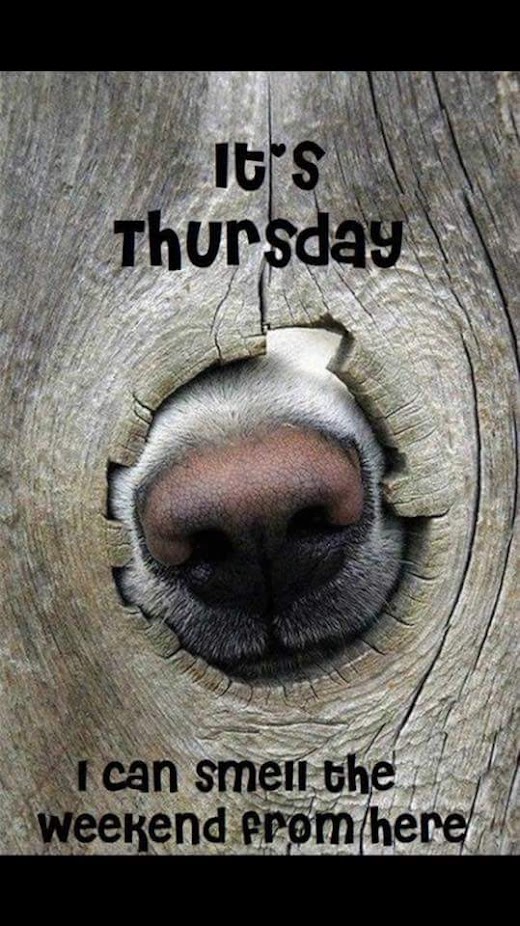
Paneer Paratha

An alternate picture- because I didn't
really hit it up with the toasty smell
of parathas. At least, we can smell
the weekend!
I tried making Paneer Parathas today, because its recipe seemed way too simple to not try. However, the result was a little different from what I had expected. Let me tell you how I made it!

What you need: atta, oil, paneer, onion, ginger, garam masala, cumin powder, chillies (if you prefer), coriander leaves, salt.

1. Prepare chapati dough (take the required quantity of atta, add salt, add a spoon of oil, mix it well, and slowly knead it by adding small quantities of water every time until it becomes a dough)
2. Grate paneer; finely chop onions, ginger, and coriander leaves. Put them all in a big bowl. Add garam masala, salt and cumin powder to taste. You can add finely chopped green chillies to this if you prefer. Toss them all well so that the masala and salt coat well.
3. Divide the stuffing and the dough into corresponding equal amounts. 
4. Roll out the dough, then keep the stuffing in the centre and fold the sides to cover the stuffing. 
5. Flatten out the dough again as much as you can- to the point that the stuffing doesn't come out. 
6. Cook them well on the tawa. Add generous amounts of ghee to enhance taste.

I did all of these steps, and it was great while doing it- seemed right. But I think the amount of stuffing that we prepared versus how it tasted was kind of misleading. We used 300g of paneer and one big onion primarily for the filling, and it definitely looked like it was more than enough for 4 people, and in fact it looked like there was a lot more than we needed. But, in the end result, I had only one feeling while eating it: where did all the filling go?! Somehow the filling wasn't at all enough to feel the taste well, I thought. 

Factoring in today's experience, the amount of paneer that seems to be required takes me by surprise. Probably, we're better off doing a paneer dish to pair with rotis, rather than making a paneer paratha. Anyway, doing it was still fun, and it looked really nice while doing it. My dad was just telling me today: appearances are deceptive! Also, I don't have a picture to show you. But, you have another picture up- a happy reminder!

But I am sure, that with the right quantity (which seem to be a lot) of stuffing, the dish would have been very, very tasty. So, if you wanna try- you know what to look out for! 

Wednesday, August 12, 2020

A Solution for the Woes of Packing (Light)

In the last three years, I have frequently flown between college and home every semester. And, the first thing that anyone faces when they fly is baggage! There is a "student" allowance that most airlines give for extra baggage, but it still is a big deal to get all you want in place, within the allowance. 

When you come home every time, you are sent back with a host of things apart from what you brought in the first place. Moms have a separate list of 'essentials' that they will definitely pack and send along. So, how do you pack it all in the suitcase you get and how do you make sure you're within your allowed baggage weight? Sadly, there seems to be no magical shortcut to this. 

1. I had to plan and get the stuff from college to home- only what I absolutely need.
2. There is a way to pack. I think the best way is to apply the well-known rocks-pebbles-sand story in practice! 

For those of you who don't know, here's the story, just in case: You have rocks, pebbles, and sand that need to go into a jar. How do you put them in so that all of them can go in? If you put the sand in first, then it would occupy most of the space, and you will not have space for all the bigger rocks and pebbles. So, you put in the rocks first- meaning you put the bulkier, heavier clothes first (jeans, pants, skirts, shoes, etc.). Then you put the pebbles- which are smaller than rocks but bigger than sand. They tend to fit into the bigger gaps between the rocks- like your shirts, tops, and other things. Then you put in the sand, which can go and occupy every other space available- and these are all the rest small things that you need to pack. While the story is said in a metaphorical and philosophical sense, it makes our job much easier to actually use it for filling up the suitcase! That's what I do every time.

3. If you have a bulky shoe, or anything else like a jacket, carry it on you. Wear it for the journey. It gives so much space for other things to fit in without increasing your load, too. 
4. Don't fill up the suitcase to it's maximum capacity while going home because you are bound to carry more things in the same suitcase when you leave home. 

These are some of things that I always do. Do you have a hack that you follow? Let me know in the comments!

Thursday, August 6, 2020

Black Beauty

Title: Black Beauty: His Grooms and Companions, the Autobiography of a Horse
Author: Anna Sewell

An old, retired Black Beauty, a gentle, high-bred horse, narrates his story to the readers, and takes them through the ups and downs of his life from the days he pulled carriage for the elite society, through the days he was made to do hard labour just because a scratch on his knees made him unsuitable to be presented as a carriage horse for the elite anymore, to when he lived a life of peaceful retirement in the countryside. The story journeys through with interesting characters that Black Beauty meets at various points in life, highlighting both kindness and cruelty but making sure to leave the readers with a moral to take home from every chapter of his story. 

Narrated in first person by Black Beauty, Anna Sewell gives the readers a simple account of a horse's life filled with much-needed learning and understanding on kindness to animals, and how to treat everyone and everything with sympathy and respect, in general. The book captures both the sights and plights of erstwhile London, with interesting flashes in the lives and experiences of the London labour class, especially about the carriage-men, giving a glimpse of their hardships.

It is a very simple book, and it was written by Sewell on her last days. The book is known to have created institutions of change in the way people treated animals, by touching their hearts through the simple story of Black Beauty. The book has a strong moral attachment that it brings to the readers when it comes to dealing with animals, and that was the original purpose that Sewell wrote this book for. 

A quick read- this enchanting, sweet tale of a horse is a must read for all!

Wednesday, August 5, 2020

Clothesline by Charlotte Druitt Cole


Washing clothes is a necessary part of all our lives, and so is hanging them to dry on the clothesline. They are a thing of daily observation to many of us. Here is a poem by Charlotte Druitt Cole- a sweet one that brings us a well-known picture of the clothesline from a cheery angle. 

We had this poem in school as a part of English classes, and we had to recite it without looking for our internals. I still remember every word of it, and tried to write it from memory (verified it later, though). Poems like these- simple, in observation and in rhyme- stay with us forever.
Hand in hand they dance in a row,
Hither and thither, and to and fro,
Flip! Flap! Flop! and away they go—
Flutt’ring creatures as white as snow,
Like restive horses they caper and prance;
Like fairy-tale witches they wildly dance;
Rounded in front, but hollow behind,
They shiver and skip in the merry March wind.
One I saw dancing excitedly,
Struggling so wildly till she was free,
Then, leaving pegs and clothes-line behind her,
She flew like a bird, and no one can find her.
I saw her gleam, like a sail, in the sun,
Flipping and flapping and flopping for fun.
Nobody knows where she now can be,
Hid in a ditch, or drowned in the sea.
She was my handkerchief not long ago,
But she’ll never come back to my pocket, I know.
I also remember that this was the first time we were introduced to alliterations as a figure of speech, for the phrase 'flipping and flapping and flopping for fun'. Alliterations were an instant hit with students, and we constantly tried to make alliterations in posters and other projects to make them sound more catchy. I think that is why grammar was always introduced to us through poetry or a story. Long after it is gone, we still remember what we learnt and why. 

Hope you liked the poem! Do you distinctly remember anything you learnt in school that you can still reproduce? Share your story in the comments!

Tuesday, August 4, 2020

The Chemistry Book

Title: The Chemistry Book: From Gunpowder to Graphene, 250 Milestones in the History of Chemistry
Author: Derek B. Lowe

Elements and their interactions with each other make up every single thing in this Universe, including us. Their properties, abilities, and the various conditions for their states of stable nature are fundamental to our existence, and the existence of the entire Universe. Every material is made up of some chemical element. The world functions as an integral of all sciences, the most fundamental of which can be called Chemistry. Chemistry is what is called the 'central science', and for good reason!
"Chemistry really does occupy the middle ground between physics and biology, claiming territory from each of those sciences as well as its own."
From a period ranging from c. 500,000 BCE with the discovery and understanding of the phenomenon that creates Crystals, to a projection into the future expected results in 2030 when the world is on a steady way to understand Artificial Photosynthesis, Derek Lowe has you covered in an exciting and simple chronological narration of milestone discoveries in the history of chemistry. 

Lowe says, "The study of chemistry is older than human writing.Humans have been playing with fire, understanding how a spark can be created, making weaponry from metals- and all of these are essentially "chemical explorations", as the author shows you in this book! Every chapter of this book is small, concise, and very interesting. It shows you how a compound, or an element, or any chemical substance or process came to be- including when it was discovered, who all worked on it, what it is used for, and any interesting story associated with it. Every chapter runs for around 2-3 pages, making it an easy and insightful read that any beginner in Chemistry needs. 

This book is for all of us. We all breathe oxygen, exhale carbon dioxide, use vessels made of aluminium, use aspirin for headaches, wear nylon clothes, decorate our homes with pretty porcelain flower vases, and the list can go on and on- but how much do we know about any of these chemical substances? That is essentially what this book helps in- you get to know how a chemical substance came about, and why we use it the way we do. 

Derek Lowe is a professional chemist himself, and has an expert blog In The Pipeline. Chemists like him are part of the processes for the next important discoveries that the world is to see in the upcoming decades. 
"The story continues. I myself am a professional chemist and wrote this book on nights and weekends. During the day, I’m in the lab, as are thousands of chemists around the world, helping to write the next chapters. Readers are welcome to visit my website, In the Pipeline, where I talk about the kind of work I do and give updates on the field’s cutting-edge advances."
It's the kind of book where you can read one or two chapters a day, and that is what I have been doing! The information that you learn, bit by bit, about the things around you makes you understand this world much better, and gives you a good perspective behind why things behave the way they do. Do check it out, it's an interesting read! 

Monday, August 3, 2020

Coelho In Alchemist, And Tagore In His Poetry: On Where The Treasure Is

Time and again, through books and poems, and old tales that people narrate to others, there is one constant theme- finding your treasure of happiness. People seek things, and where do they end up finding what they seek for? Many philosophers, authors, poets, thinkers have shared profound tales of their experiences spun in a creative lesson for us all, hidden in their stories and poems. 

Alchemist by Paulo Coelho follows Santiago, a sixteen year old boy, looking for his treasure. The novel takes you through his highs and lows, and his desperate search as he travels far and wide, only leading him to the truth that the treasure he sought had always been with him- back at home, with himself. It captures a journey of self-realization, and drops the truth that what you seek is always with you, in your home. And, that is where true happiness lies. 

When Satyajit Ray, the Oscar winning Bengali filmmaker and one of the greatest we have seen, was a young boy, he approached Rabindranath Tagore with a piece of paper to get the legendary poet's autograph. What Ray got along with the autograph was a small, yet significant poem with a hidden message for life itself. Here is a translated version of that poem:
I have travelled miles, for many a year,
I have spent a lot in lands afar,
I've gone to see the mountains,
and the oceans I've been to view.
But, I haven't seen with these eyes,
just two steps from my home lies,
on a sheaf of paddy grain,
a glistening drop of dew. 
Every inspiration, every treasure, and all the happiness we seek is always with us- as these timeless books and poems tell us. But, it seems like we have to go around to other places before we realize that and find it, justifying the well-quoted phrase: "experience is the only source of knowledge"!

Saturday, August 1, 2020

The Buyerarchy Of Needs

Photo credit: Sarah Lazarovic
A couple of years back, a famous illustrative hierarchy on the trends and needs of consumers, and the consumer behaviour, was created by Canadian illustrator Sarah Lazarovic, who is also a creative director and a visual journalist specializing in info-graphics and illustrations. 

Sara Lazarovic's The Buyerarchy of Needs is a creative twist to Abraham Maslow's famous "Hierarchy of Needs". Maslow created a pyramidal classification on the necessities of survival when he found some necessities taking precedence over other necessities.  He laid out five levels of needs:  the physiological needs, the needs for safety and security, the needs for love and belonging, the needs for esteem, and the need to actualize the self- and the levels are arranged in the order that pushes the instincts, with psychological needs placed at the base and self-actualization at the top of the pyramid.

Lazarovic's innovative twist in this pyramid gives a similiar structure for consumers buying goods, the ultimate aim being to save money and use it when needed. The 'buyerarchy' moves from using what you have at the base to borrowing, swapping, buying in thrifts, making as levels through the alternate intermediate layers (in that order), and finally buying at the apex of the pyramid. This hierarchy of levels, when kept in mind while buying, not only help save money, but also help save the environment. 

It is important to utilize resources judiciously, and help create a sustainable change. The illustrative Buyerarchy of Needs is a beautiful way to capture the essence of saving both money and natural resources. Its levels reinforce that the panacea to all environment ills is to use the well known principle of 5 R's- refuse, reduce, reuse, recycle, and rot! 

It is an inspiring and creative illustration, and so is its illustrator! It is such a pleasure to discover the mind behind creativity, and where such ideas are inspired from. Next time you spot an interesting picture/photograph/illustration/quote/any artistic expression that catches your attention, and makes you pause and think, take that little effort to find out who is behind it! I'm sure we'll all have a lot more to learn and gain that way!