Hey!

Welcome, and you can check out my posts. But, I don't write here anymore. So, if you are interested, come on over to https://sandhyavaradh.com/
Showing posts with label India. Show all posts

Thursday, August 13, 2020

Paneer Paratha

An alternate picture- because I didn't
really hit it up with the toasty smell
of parathas. At least, we can smell
the weekend!
I tried making Paneer Parathas today, because its recipe seemed way too simple to not try. However, the result was a little different from what I had expected. Let me tell you how I made it!

What you need: atta, oil, paneer, onion, ginger, garam masala, cumin powder, chillies (if you prefer), coriander leaves, salt.

1. Prepare chapati dough (take the required quantity of atta, add salt, add a spoon of oil, mix it well, and slowly knead it by adding small quantities of water every time until it becomes a dough)
2. Grate paneer; finely chop onions, ginger, and coriander leaves. Put them all in a big bowl. Add garam masala, salt and cumin powder to taste. You can add finely chopped green chillies to this if you prefer. Toss them all well so that the masala and salt coat well.
3. Divide the stuffing and the dough into corresponding equal amounts. 
4. Roll out the dough, then keep the stuffing in the centre and fold the sides to cover the stuffing. 
5. Flatten out the dough again as much as you can- to the point that the stuffing doesn't come out. 
6. Cook them well on the tawa. Add generous amounts of ghee to enhance taste.

I did all of these steps, and it was great while doing it- seemed right. But I think the amount of stuffing that we prepared versus how it tasted was kind of misleading. We used 300g of paneer and one big onion primarily for the filling, and it definitely looked like it was more than enough for 4 people, and in fact it looked like there was a lot more than we needed. But, in the end result, I had only one feeling while eating it: where did all the filling go?! Somehow the filling wasn't at all enough to feel the taste well, I thought. 

Factoring in today's experience, the amount of paneer that seems to be required takes me by surprise. Probably, we're better off doing a paneer dish to pair with rotis, rather than making a paneer paratha. Anyway, doing it was still fun, and it looked really nice while doing it. My dad was just telling me today: appearances are deceptive! Also, I don't have a picture to show you. But, you have another picture up- a happy reminder!

But I am sure, that with the right quantity (which seem to be a lot) of stuffing, the dish would have been very, very tasty. So, if you wanna try- you know what to look out for! 

Wednesday, June 17, 2020

Dal Bati: A Modest Attempt


I first saw this semi-brown hard bread served with dal in my college. I neither knew what it was, nor knew how to eat it. And so, the first several times that I found this in the mess, I just skipped it because I couldn't understand at all how we were supposed to eat it (after a few weird attempts of trying to bite it or just dip it in dal and eat it). A friend saw me struggling once, and actually taught me how it is eaten. And, from then one, this has been one of the most satisfying, tasty dishes I have ever had. 

Dal Bati is a delicious Rajasthani dish, most typical in the arid areas of Rajasthan. In fact, it is the dish that the Rajasthani cuisine is most famous for. The popular combination to eat this is dal-bati-churma. The bati is the hard bread that is crushed while eating and is mixed with the tasty and spicy dal, while also accompanied by the semi-sweet churma. I absolutely love this wholesome combination that I got introduced to during my semesters. With the college shut down for a couple of months now, a conversation with a friend about dal bati made me try it out today!

Traditionally, batis are made in the fire and ashes of wood and cow dung- which gives it the authentic smoky flavour. However, in other places and at home, it is usually made in a grilled oven or tandoor. The hard knead dough is made into even-sized smooth, round-ish balls of dough which are then placed in the oven till they are baked inside out! But today, I've tried to make them without an oven, as I don't have one at home, and the recipe for making batis without an oven can be found here! I am not discussing the process of how it is made, so those interested can look up on page that I have linked. 

Considering that doing it on a stove was basically a substitute for oven, which in itself was a substitute for the traditional cow dung fire, I was skeptical as to how it would turn out. But, the pictures speak for themselves! Even if may not be as great as the authentic ones, for a first time it was as good as the my college benchmark. I feel really happy that it turned out well!

While preparing, kneading the dough thoroughly is very important. Simply put: better the keading, better the batis. The secret to batis that taste and smell absolutely delicious seems to be the ajwain/omam (carom seeds). They made them smell wonderful and made them feel like how batis should be. Heavily doused in hot, molten ghee, and with a tasty dal to eat it with, batis are sure to steal your heart! 

I had fun preparing it, and felt really happy eating it! If you are skeptical about trying without an oven, don't be- it turns out just fine!

Monday, March 9, 2020

The Power Of Coalition

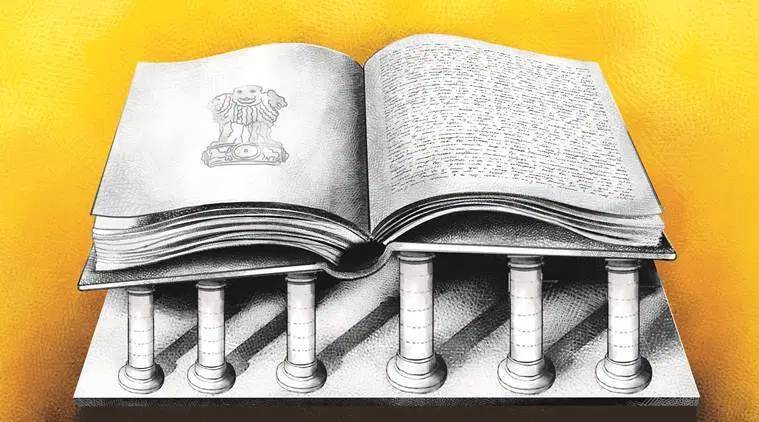
Image from Indian Express
India is a vast country accommodating an abundance of sociologically variant groups, co-existing in glaring inequalities. It is an indisputable fact that one of the key factors to bring a change towards the positive direction, in terms of lifting the seeming parlance of equality into something that actually exists, is the nature of the government, playing an important role in steering the country towards development. And, it resonates clearly that a coalition is much more effective in creating a change that is harmonious to development. 

Why is it right to think that a coalition government possesses the potential to reconstruct the steep pyramid of inequality into a platform of equality accessible to all? There are a numerous reasons to the same, but considering the scope of this essay, two concerns that very important for India shall be analysed. 

The first concern where the coalition government walks over a single party government is the field of economic development. The economy of India can be characterized as a developing mixed-economy. The 1990s in India is rightly termed as the ‘Era of Coalitions’. The ex-RBI Governor Dr. Venugopal Reddy, in a speech to the audience from Hudson Institute, Washington, USA, said that the highest growth in India from 1990 to 2014 was clearly during coalition governments. The consensus-based decisions that happen in a coalition government greatly help in the Indian context. A coalition produces better economic results than a single party with a strong majority. When the economic status of the country progresses, it is an empirically proven point that gender equality is promoted and the gender gap is reduced, with the right policies in place. Thus, the country inches closer to, not one, but two prominent ideals- economic development and gender equality. 

The second concern addressed by a coalition, better than a single party, is that of social stratification. The fact that a coalition government is an amalgam of multiple parties with widely varying ideologies is often considered a defect. It is seen as a hurdle to progress because of the long-drawn process of framing policies, incorporating all their ideologies. But, it is important to note that the same may be seen as one of the greatest strengths of this form of government. The varying ideologies bring out balanced policies, and ensure that they do not act as a boost to just one or few sections of the society. By framing policies that are less discriminatory and more accommodating, it is only a natural consequence that the gaps of social stratification will begin to close slowly but steadily. 

All systems have their own merits and defects. So, how do we decide which system is better? One method is looking into the matrix of risks versus benefits. When benefits outweigh risks, it is upto us to step up to the challenge of deciding to create a positive change. For a country like India, equality is still a far away goal, and a coalition government might be the first little right step towards it.

I wrote this essay for an event, but eventually did not send it through. Arguments for and against a coalition government is clearly possible, and this essay was written from the standpoint of the topic we were given: The Power of Coalition.

Monday, February 24, 2020

"We, The People Of India"


The most significant and beautiful part of our extensive and elaborate Constitution of India is its Preamble. We, the people of India, gave to ourselves a wonderful, forward-thinking, and progressive nation when we imbibed the fundamental traits of being a sovereign, socialist, secular, democratic republic nation that will forever strive to uphold justice, equality and fraternity in our Preamble to the Indian Constitution. And, "we, the people" gave all of this to ourselves, according to the preamble itself. And, are we sure we all know the preamble well?

We, the people, have committed to ideals that we will hold on to as citizens of India. We, the people, still can't be sure that all of us know what the preamble actually says. What a shame! My law school has a huge display of the preamble in our campus, and it is one of the most favourite spots of all in the University. On to one side, there is the library that holds the wisdom beyond, and under the preamble, is a humble space for all to think, act, and imagine freely true to the ideals of liberty and justice enshrined in the Preamble. 

The Preamble serves as a guiding light for the Constitution and judges interpret the Constitution in its light. It indicates the sources from where the constitution has come: the people of India. It declares the freedoms which the people of India intended to secure for all citizens, and the basic type of government and polity which is to be established. In another words, preamble as such is widely accepted as the quintessence and spirit of our Constitution, as it embodies the fundamentals as well as the vision and commitment of a newly liberated nation, after its passing through the inevitable birth pangs of national independence from an oppressive and colonial regime. 

Kesavananda Bharti v. State of Kerala is an important, landmark judgement in India. D.G. Palekar, J. held that that "the Fundamental Rights are an elaboration of the Preamble, as an overstatement and half- truth". Undoubtedly, the Constitution is intended to be a vehicle by which the goals set out are hoped to be reached. In the opinion of H.R. Khanna, J. "the preamble is a part of the Constitution and walks before the Constitution”. S.D. Dwivedi, J. expressing his concurrence with the conclusion arrived at by A.N. Ray, J., held that the "Preamble was a part of the Constitution because the heading “The Constitution of India” was placed above the Preamble". It is also helpful to note that Justice Dwivedi has held the Preamble to be a part of the Constitution and then also referred to it as a provision of it.

Such is the importance of our Preamble, and it places upon us a self-assigned duty to uphold India's constitutional values as its citizens. It is also sad truth that most barely know what the Preamble says, and what those words mean in their true spirit. The Preamble is not a legal document for just lawyers to quote, judges to refer, and law students to study. It is, in fact, everything that the Indian nation is, and should be. 

Feeling a little doubtful about the Preamble after reading this post? Let's go back, and read it once!

Friday, February 14, 2020

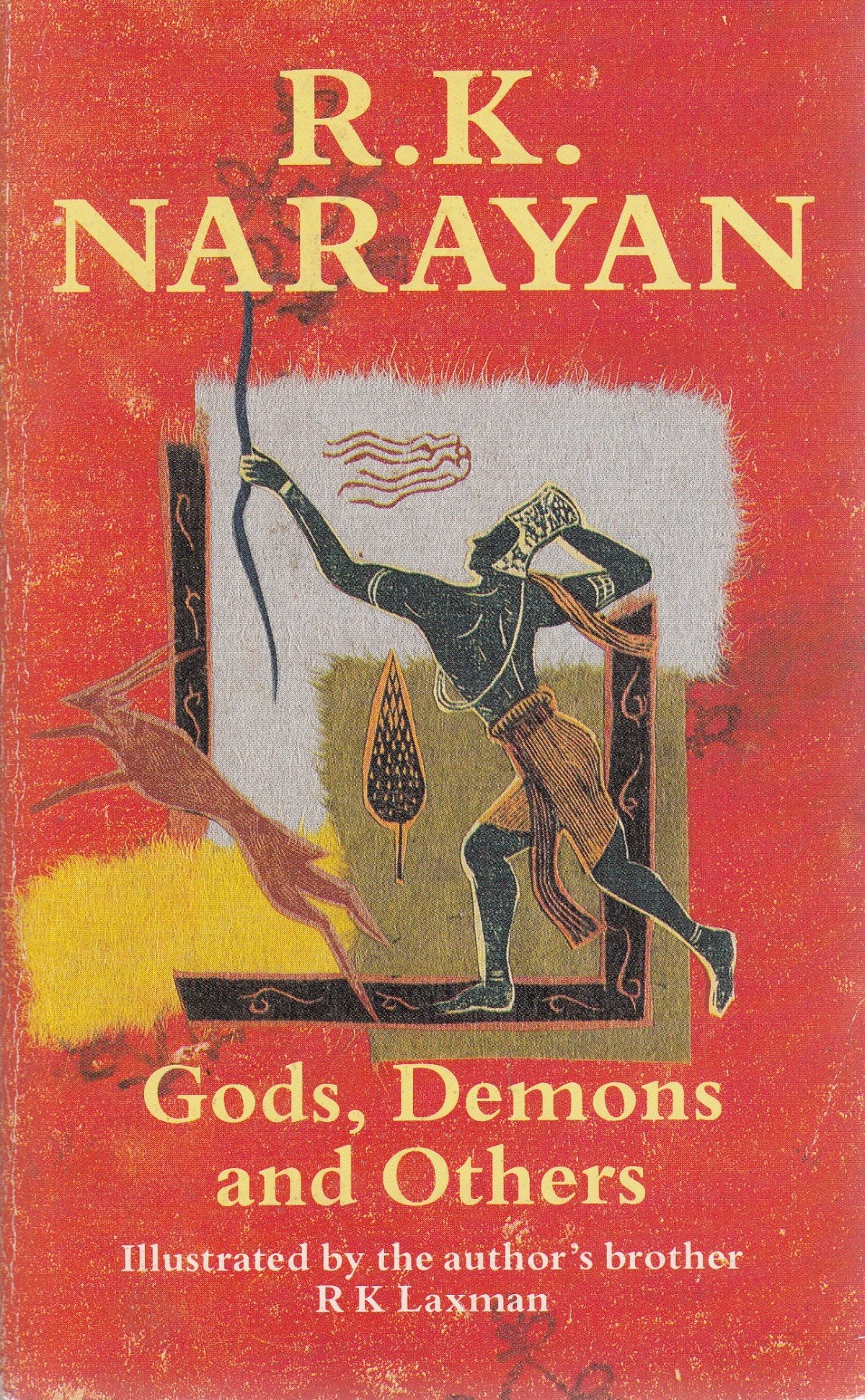
Gods, Demons, And Others

Title: Gods, Demons, and Others
Author: R. K. Narayan

India is home to some of the greatest legends and epics. With an abundance of philosophical significance, these myths, legends, and epics are an important part of the identity of India. They are of common knowledge to the people in our country, as we have heard them get passed on through the ages. So, when a contemporary author gives a retelling, it really needs to stand out to appeal to the readers. 

Usually, poets retell epics reveling in the brilliance of their language, and the tones of rhythms. But, Gods, Demons, and Others by R. K. Narayan is one of the most delightful prose retelling of some great Indian mythological stories. The stories capture some of the significant characters and personalities in the epics and myths. The stories cover fifteen main characters across different mythic stories, and are grouped into five parts in the book according a common theme of relevance their stories share. They include stories of Yayati, Vishwamitra, Ravana, strong female characters such as Savitri, Draupadi, Shakuntala, and others.

It is a brilliant, and delightful book that can serve as a great introduction to all about the Indian mythological stories. Though, the stories are in line with the original narratives, but they are not a translation. Simple and beautiful, R. K. Narayan's lucid writing captures the passion of various incidents and emotions such as war, marriage, celebrations, virtues, births and deaths through the various stories. 

It is a pleasure to read if you are familiar with the stories. And, if you're not, then it may be a wonderful start!

Sunday, January 26, 2020

Sri Pingali Venkayya- The Man Behind Our Tiranga

I wrote this essay for a competition when I was in school. I did not know who Pingali Venkayya was before that, and felt pretty ashamed when I came to know that he is the man behind our national flag- Tiranga. I thought that I might have already put it up on my blog, and wanted to share the post today. But when I found that I hadn't, I wanted to share the essay, on account of India's 71st Republic Day, today! Happy Republic Day, and happy reading! Jai Hind!

Every free nation of the world has its own flag. It symbolizes the ideals that a country fundamentally stands for. At all national meetings, festivals, and occasions, it is the national flag that flies high. It is by the national tricolour, the tiranga, that India has its identity. Waving the national flag creates a sense of unity and patriotism in the country. Be it a cricket match, or a national event, the tricolour flag of India flies proudly. It is hoisted in the Red Fort every year by our President and Prime Minister during Independence Day, 15th August, and Republic Day, 26th January. And, this flag is a slightly altered form of Sri Pingali Venkayya’s design of the Indian National Flag.

Sri Pingali Venkayya was born in the village of Bhatlapenumarru, Krishna district, near Masulipatnam, Andhra Pradesh. After finishing his schooling at Machilipatnam, he went to Colombo for further studies. He first met Mahatma Gandhi while he served for the British in the Anglo-Boer war, fighting for the British, in South Africa. He was kindled and inspired by Gandhi, and was also greatly influenced by his ideas. He became a Gandhian.

During the duration of five years that Sri Pingali Venkayya stayed in North India, he actively participated in politics. After the 1906 Congress session with Dadabhai Naoroji, Pingali Venkayya manifested himself as an activist. 

During the National Conference of the Indian National Congress, Sri Venkayya came up with the proposal of having a unique flag for the Indian National Congress. Mahatma Gandhi liked and approved of Pingali Venkayya’s idea. He asked Venkayya to design a flag himself. Sri Pingali Venkayya proposed the tricolour(tiranga)- saffron, white and green- with a chakra or spinning wheel in the centre. This design was the basis for the National Flag of India. 

Our National Flag, in the form that it is now flown, was adopted during the meeting of Constituent Assembly held on the 22 July 1947, a few days before India's Independence from the British on 15 August, 1947. It served as the national flag of the Dominion of India between 15 August, 1947 and 26 January, 1950, and became the flag of Republic of India after that. The term "tricolour" or “tiranga” refers to the Indian national flag.

What do the three colours, that Sri Pingali Venkayya created for the Indian flag, represent?

The saffron colour represents courage, the white colour represents truth and peace, and the green colour represents faith and Prosperity. The saffron represents the Hindus, the white represents the Christians, and the green represents the Muslims, creating a unity among the three major religions of the Indian population. The Indian National flag is a perfect model representing an “Independent”, “Republic” and “Secular” India. It is the pictorial representation of the Nation.

Sri Pingali Venkayya definitely has to be attributed for creating the idea and design, on the basis of which our present National Flag of India has been created. It has been so many years since the adoption of our Indian flag, and still the flag is hoisted up creating a strong bond among the Indians. The tiranga unites the diversity of India.

Knowing about Pingali Venkayya’s contribution to the nation, and the important relevance it has in our nation today, will serve the purpose of institutional memories of the nation and the Freedom Struggle, to keep the youth of India motivated and inspired to stand up to basic values. This will help the youth to participate actively in Indian politics, and also be responsible citizens of India, upholding the constitutional values that India's flag stands for.

Sunday, January 19, 2020

How Accountable Is A Bank For What You Keep In The Bank Locker?

Most, if not all, of us have bank accounts. And, one of the most common facilities that a customer opts in the bank where he/she has an account is availing the "Locker" facility. But, what if one day, somehow mysteriously your stuff in the locker go missing? Can you hold a bank accountable? Can you ask them to compensate you? Or, are you left to cry in a corner?

A banker and a customer share many types of relationships depending on what type of service the customer avails. When you have a locker in your bank branch, the locker is treated as a fixed, immovable property, thus creating a lessor-lessee relationship between a banker and a customer. A lessor is someone who leases or lets out a property to another. To put simply, bank is like the landlord for that cubical space of the locker you keep your stuff in, and you are just using the leased out property. 

Section 105 of the Transfer of Property Act defines the term "lease". There are four key criteria for an act to qualify as a valid lease.

1. Lease can be with respect to ONLY immovable property. Here, as already said, the vault/locker is treated in law as a fixed and immovable property. 

2. Possession of the immovable property must be transferred from the lessor to the lessee. Now, how is this happening in the case of the bank locker? All of you who have a locker facility in a bank, or have seen the locker of a bank, would be aware that when you avail a locker facility, the bank provides you with a vault wherein there are two keys, or a double lock which has to be opened. One, is a key that you would possess, and the other is a key that the bank will keep. It is virtually impossible for the bank to open your locker without you and your key. Thus, this is qualified to be called a "transfer of possession" under law as you have the access to the vault and the bank does not. 

3. Possession is transferred for peaceful enjoyment for a specific duration. Simple enough. When you have a locker, you are allowed to keep whatever you wish so long it is not anything illegal. And, this facility is not forever. You are bound by a specific duration as agreed by the contract signed between you and the bank at the time of availing such facility. 

4. Possession can be transferred only in favour of some rent/premium. The bank doesn't offer their locker for charitable purposes. Nor do they give it to you for free because you are their valuable customer. If they did, it wouldn't qualify as a lease. The bank charges the facility usually through premiums, or periodical rents. 

Satisfying all the conditions required by the Transfer of Property Act, there is no question or doubt on the fact that the locker facility is a lease. Then, if there is anything missing from what you kept in your locker in the bank, is the bank responsible?

The law says no. A lessor is not responsible for anything that happens in the immovable property when the possession and enjoyment of the property is with the lessee. Unlike a pawnor-pawnee relationship, or a bailor-bailee relationship, the lessor-lessee relation gives more freedom to the lessee to do what he/she wants with the property, but at the same time reduces the liabilities of the lessor. So, if there is something gone missing, what is to be done? An FIR or stolen/missing property can be filed by the bank and the customer, and wait for the investigations to come. But, a customer can't proceed with any action against the bank, unless negligence from the bank's side can be proven. If, for example, the bank had allowed access to your vault negligently without confirming identity to someone who is not you, then maybe there is a chance to make a case against the bank. Unless you can pin on something that is under the bank's control and which the bank ought to have done, there is no way a bank would compensate for your loss.

Then, why do so many people avail the bank locker facility? I guess it's because there is a general feeling that the property you keep in bank lockers are definitely more safe than keeping at home, because of the additional security there, which makes sense as the banks account and keep track of every move of those accessing lockers. 

To conclude, it is important to know the various different rights you have with your bank, and also know what rights you don't have. 

Tuesday, January 14, 2020

Trying "Lapet!" Instead Of Pongal-o-Pongal

Image from Businessworld
Today was the festival of Makar Sankranti, as known in most parts of India (Uttarayan in Gujarat, Bhogi Pongal in Tamil Nadu, Bihu/Lohri/ and a bunch of other names given in various other parts of India). These festivals are the harvest festivals celebrated all over India by different names, and are celebrated over two or three days. 

Studying in Gujarat, a popular practice in Northern and Western parts of India during Uttarayan or Sankranti is kite flying, and I got to try that. My University had a stock of it, and they gave us all the kites and the thread as a part of celebrations on-campus. 

All you need to do is get your kite up in the air, pull or leave the string of the kite at the right time, and see it soar! Sounds simple? Not really, take my word. Conceptually, I felt pretty strong and seemed to understand what those expert-kite-flying-friends made look simple. But, when I tried on my own, my brain just forgot what I understood, and I swear it was just frantic pulls at the string that sent it crashing down. Oops. But, I wasn't alone, so yay we tried, and it so much fun! 

One of my friends was teaching me where to make the holes, and how to tie the thread. That part is easy. Then you get the kite up in the air. This is by far the most difficult, and I should say it requires practice. 'When the kite is looking up, you pull. That's how it goes up,' I told myself while trying to get the kite up and also remember the rules. But, somehow my brain always got it wrong and pulled it when the kite is looking down, and within no time the kite was on the ground. 

Kite flying is not just about flying. They also try to cut off others' kites. It's a game. And, it requires a lot of skill. So, when you want to cut someone's kite, you take your kite and the thread above theirs, and let them roll it, until their thread gets caught in yours and then you pull it sharply. It's not simple at all. And, there it goes, as they shout "Lapet!", meaning "wind it up" to signify that the opponents have to just roll back their threads! My friends cut 5 other kites with a loud, cheerful cry of Lapet!

It was so much fun. And, the kite flying ended with a special lunch in the University mess with Undhiyo, Jalebi, Gujrati Dal and Pooris. And, tomorrow there is an offer near my college at a Tamil Restaurant for a special meal of VenPongal, SakkaraiPongal, Medu Vadas and Payasam, which I can't wait for! 

Wish you a very happy Pongal!

Monday, December 16, 2019

Vatha kuzhambu

Image from ticklingpalates.com
After living two and a half years in college with a friend circle that predominantly consists of people who are not from the South, I got a fair insight into what they actually know about Tamil food. Idli, dosa, sambar, uttappam and medu vada seem to be widely popular. But, others like paruppu vada, masal vada, keerai vada, bonda seems to be in the shadow. Some people know of rasam. One day they made aviyal in college, and I was so excited. It was made nicely and a lot of my friends really enjoyed it.

Every time, I hear one of them talk about Tamil food, I feel really tempted to not only tell them how many beautiful dishes they have no clue about, but also make them taste it. However, it's very difficult to find good South Indian places around my College, and even if we do find one I'm always skeptical about making them try the pongal or rasam or adai, in the fear that they would consider that to be the standard of the dish.

My love for thayir sadham (curd rice), or generally most South Indians', is something unheard of there. How would I ever make them understand the happiness that a "thalicha thayir sadham" can give? It is an experience that needs to be had. And, my favourite side to have with curd rice is the vatha kuzhambu. 

There are many south Indian dishes like sambar and rasam. But only one dish can make a cup of curd rice disappear instantaneously. This one dish is the golden drop Vatha Kuzhambu. Vatha Kuzhambu is a broth made with thick tamarind pulp. The best way to eat it (obviously, according to me) is to take a handful of curd rice and top it up with a couple of drops. The subtle taste of seasoned curd rice topped by a drop of the spicy and tangy vatha kozhambu is so soothing and tasty that we wouldn’t mind another cup of curd rice for it.

None of the other side dishes can match the home-made Vatha Kuzhambu which tickles the taste buds and leaves you wanting for more. Vatha Kuzhambu can be used as a side-dish or can be mixed with rice and eaten. There are two reasons for it to be called the golden drop. One, it has a deep, slightly brownish colour of gold. Second, it is supremely favoured by all tamil foodies. A drop of this dish takes you to the seventh heaven.

And, there are so many more dishes I would want to make them eat- idiappam, set dosa, adai, morkozhambu, all our karis and kootus, and so on. I hope one day they get to taste it all, for it is an experience in itself!

Monday, December 7, 2015

#Chennai #Floods- When Essay Topics Became Reality!

It started like this
Varuna Varuna Varuna (Varuna is the rain god)
Varuvai Varuvai Varuuvai! (Come! Come! Come!)
Varuvai Varuvai Varam Arulvai (Come! Come! And give us a boon!)
Arulvai Arulvai Mazhai Pozhivai (Bless us! Bless us! Make it rain!)
Aruludan Maa Mazhai Pozhindiduvai (Bless and make it rain heavily!)
Manithar Thuyaram Theerave (So that worries of humans get over!)
Maa Mazhai Pozhindiduvai Arulvai! (Bless and make it rain heavily!)
Varuna Varuna Varuna…


We sang this song, written in Tamil, in Amritavarshini raga everyday in school! Why? Because two months before, all that anybody saw in Chennai streets was water lorries providing water to houses and people trying to manage the water scarcity! I think we were all a little too sincere while praying for rains!


Flooded street
What will you do when you don’t have internet for a week?
What will you do if there is no electricity for one whole week?
What activities will you engage in if there are no gadgets for a week?


I never saw any of these questions as anything more than common essay topics, especially living in a city! Yet in the past ten days many people of Chennai, including us, saw all of it come true. No gadgets. No electricity. No internet.


On the first of December, it rained heavily in Chennai. The intensity was very high. The streets were already inundated, and this made it only worse. But even then, we didn’t have any problem in our house though we were in the ground floor. Our house is raised a good four feet from the road, so no water came in. The next day, the rain stopped. We were already running two days without any power supply. They had shut it down for safety purposes due to water logging in our street. It was the third day.


A car parked on a
speed breaker:
It later submerged!
On December 2nd, it only drizzled but the water level kept increasing. Eleven thousand cusecs of water was being opened into the city from the Chembarambakkam reservoir. The water level in the street was quickly rising. It started climbing up the slope of our parking dangerously fast. Anytime a vehicle passed, the water surged into the parking lot with a swoosh.  We weren’t very sure as to what to do. Should we pack up all the books and other goods in the house? Will the water come in? Or will it stop rising and recede? We got the signal to pack up things to safety by 1.30 pm that day when the water had completely encroached our entire parking, and was slowly making its way up the house stairs to the entrance.


A brave man taking his chances!
We started clearing everything in the hallway of our house and dumping it in the bedroom upstairs (our house is a duplex model, thank God!). It took us just one and half hours to pack up everything! My dad asked us to imagine and think as to what would get spoiled if there was  hip-level water inside the house. Only our refrigerator couldn’t be shifted anywhere. We couldn’t do anything about it. We left it that way. When we checked again, the water was in the last step. It would be a matter of minutes before it would come in! So, we gobbled up our lunch, took the essentials, and shifted to our neighbour’s place in the first floor. And at three in the afternoon on December 2nd water entered the house. We looked down anxiously from the neighbour’s balcony as it started raining again. A transistor of our neighbour’s helped us know some news. But it was bad news! From eleven thousand cusecs, they had increased the flow to sixteen thousand cusecs!


Car parked on a
pavement
The water level kept rising! My mom was terrified. It rose from knee level to hip level to chest level to neck level! Water was flowing at a terrific speed. By the evening, it was pitch dark. We couldn’t communicate to anybody because we had very little saved battery. Even when the battery was there, there was no cellphone tower and the calls simply failed! By the night, the news from the transistor informed that 30,000 cusecs of water was being released! We just prayed and went to bed early after dinner. I fell asleep. My parents told me the next morning on December 3rd that the water had been flowing at its peak around 2 am that morning. But by the time I woke up, it had receded. It was still in the parking area but had receded from the house.   


My mom and dad went down to our house and started cleaning as our neighbour, who has experienced two earlier flood situations, advised them to clean the house while the water was receding and not let it go dry with dirt. It was a laborious job! The water had brought along with it fine mud and a all species of insects, both dead and alive! There was the smell to be taken care of too! They cleaned the house with salt and Dettol over and over again. It also took a long time to dry since there was no fan!


Not just Kundrathur plots
advertised...
Even the city was so!
In between all this, there was the shortage of milk! We couldn’t lay our hands on milk packets at all! Even if we managed to get a few packets, they got spoilt real quick and couldn’t be used. Amulya milk powder helped us a little. Also, bread packets and milk packets from Shree Mithai, delivered at our doorstep, helped us greatly! Drinking water that we had stored was also getting used up.


We shifted back to our house on 4th December. All of Chennai seemed to have got electricity but not us! We suffered for three more days, and finally, we got it today- December 7th- ninth day from when we last had power!


I never believed it could rain so much in Chennai as to bring water into my house! Most part of the  mornings were spent staring at the flood water and debating if it was receding or rising, or when we would get back power. The mornings passed quickly and easily. Only after five in the evening, time was difficult to while away. We would look at the clock at 5:40, and look at it again at 5:43! Evenings were the most difficult part.


Anyway, it’s all getting better now. Thanks to all those relief volunteers for their work! Thanks to all my friends who offered their help! Thanks to everybody!


Half the gate flooded was
just a start!
From water scarcity to not knowing what to do with so much water, it has taken nature barely two months to change Chennai from a parched water-scarce land into an island! Let us better be respectful to Mother Nature and not wag our naughty tails by polluting her! This is the important lesson that we have to take back from this experience.

Thanks to all, again, for their support to flood affected areas. Let us all #PrayForChennai!