Hey!

Welcome, and you can check out my posts. But, I don't write here anymore. So, if you are interested, come on over to https://sandhyavaradh.com/

Thursday, December 12, 2019

The Fountainhead

Title: The Fountainhead
Author: Ayn Rand

The story begins with a brilliant and naturally-talented Howard Roark, the protagonist, being expelled from the architecture department of the Stanton Insitutute of Technology, as he refuses to conform to the classical and historical styles of the subject, and finds the need to constantly innovate. He goes to New York and works for Henry Cameron, an architect who tried to be individualistic in perspective but failed due to the public backlash. Together, Cameron and Roark make some buildings using their innovation, but it does not pay them much.

Meanwhile, Peter Keating, Roark’s flatmate and fellow-student from the architecture department, graduates with a the top rank and joins the prestigious firm of Francon & Heyer. By establishing a great rapport with Guy Francon, he creates himself an edge over all the other colleagues. When Heyer dies, Francon invites Peter to take Heyer’s place. After the death of Cameron, Peter hires Roark to work under him, but Guy Francon soon fires Roark for not conforming to classical styles. Roark moves out to start his own company but is forced to shut it down when it does not receive any commissions. Roark joins work in Guy Francon’s quarry where he meets Dominique Francon, the daughter of Guy Francon. They are attracted to each other, but Howard moves back to New York soon in search of work from the money he made in the quarry.

Ellsworth Toohey, a talented architecture critic and a socialist, sets out to make Roark pay for his idealistic ideas. Toohey, in the name of socialism and collectivism, seeks to control the minds of people and reign power over them. Toohey sets out to destroy Roark’s image and reputation in social standing. He influences a wealthy man who wants to build a ‘Temple of Human Spirit’ to hire Roark for the same. Roark, in his idealistic structure, does not conform to any historical rule and also makes a nude statue modelled on Dominique to be placed in the Temple of Human Spirit, to everyody’s shock. Toohey, persuades the wealthy man to sue Roark for malpractice. Roark is shunned by all during the trial for not appreciating and conforming to the architectural practices in society. Dominique supports Roark and defends in his favour, but Roark still loses the case.

Dominique realising that men like Roark are never going to be supported, decides to stick to the general ways of the world, and marries Peter Keating. She does everything for Keating and completely dedicates herself to him. She even goes to the extent of convincing clients not to hire Roark, to support and ensure Keating gets all the attention. Gail Waynand, a tabloid newspaper publisher, is irrevocably in love with Dominique and pays Keating to divorce her. Wanting to build a home for himself and his wife, he employs Roark to build his house. Roark and Wynand become really good friends during the period of construction of the house.

One day, Peter Keating approaches Roark to help him design the construction of Cortlandt, the famed contract that Keating had acquired through influence. Roark agrees to help him on two conditions- anonymity at all costs, and constructing exactly according to his design plan. On agreeing, Roark designs the same for Keating. Wynand and Roark decide to take a long vacation. On returning, Roark finds that Keating could not ensure that his design was executed without tampering, and major changes were being made to Cortlandt’s construction. So, Roark dynamites the entire project to prevent a subversion of his ideal design. Roark is arrested, and his act is condemned by one and all in the society.

Wynand decides to use his newspaper to support his friend, but the tabloid quickly gains a bad reputation for supporting Roark. Toohey, an employee under Wynand, tries to persuade Wynand to run against Roark, but Wynand disagrees. Without Wynand’s approval, Toohey publishes statements defaming Roark, which leads to Wynand firing him, realising the dangerous nature of a man like Toohey. In the pressure of a dwindling tabloid supply, resigning employees and the rejection of his newspaper’s contents by the public, Wynand betrays Roark and publishes a column denouncing Roark, in the hope of regaining public support.

In the trial, Roark gives a speech on ego and integrity, and wins the sympathy of the jury, and thus is found not-guilty. Dominique leaves Wynand to be with Roark, and Wynand realizes his weakness, of how his success depends on the mass, of which he was often warned by Roark. Finally, he closes down his tabloid, and commissions Roark for a final construction project of the Wynand Building. Months later, Roark and Dominique meet on top of the steel construction of the Wynand Building.

All the characters, right from the very beginning reflect the idea by which they stand on. Howard Roark is the individuslistic, ideal man who refuses to partake where there is no innovation, and hates the idea of a subversion of his ideal state. Peter Keating is a comformist, whose decisions are based on the the response to be expected from the society. Ellsworth Toohey, the socialist architecture critic uses the concepts of collectivism for his own political and social agenda. Rand portrays the spirit of Toohey in wanting to destroy Roark as the personification of evil, making him the ultimate antagonist, and the most self-aware villain. Gail Wynand is a man who can appreciate and understand the likes of Roark, his only weakness being that his success depends on the favour of the public. Dominique Francon, the most bizarre and conflicting character in the novel, destroys herself throughout the novel with the idea that non-conformity will never be accepted, but finally settles with Roark, indicating the acceptance in being true to self, as projected by Rand.

All the characters are depicted in the extreme sense of the idea they represent, to paint the picture in line with the philosophy of objectivism as the concept of rational individualism, propagated by Rand.

It was, most definitely, an absorbing read.

Wednesday, December 11, 2019

Perry Mason Mystery: The Case Of The Queenly Contestant

Image from Goodreads
Title: The Case Of The Queenly Contestant
Author: Erle Stanley Gardner

In this classic Perry Mason mystery, Mason is faced with the case of a woman who wants to reveal absolutely nothing to him, but badgers him with legal questions.

Ellen Adair, a woman with an air of a Queen, visits Perry Mason with an earnest doubt about her right to privacy and when it may be considered as violated. When asked by the lawyer what her situation was, she decides to be vague and ambiguous, and requests Mason to just advise her on her queries. In a pique of interest, Mason does a background check on the queenly lady.

Ellen Adair was a contestant and had bagged the first prize in a local beauty contest that happened twenty years before. After her prestigious win, there seemed to have been many offers for her from Hollywood. She went looking for opportunities, but never came back to her town. There were rumours that Ellen had an illegitimate child with the son of a rich business tycoon.

Now, the local newspaper wants to run a column on her titled ‘Where Are They Now?’, but Ellen Adair is more than determined to remain anonymous. In a sudden turn of events, after a few days, Ellen Adair comes barging into Mason’s office with the exact opposite request, because the death of the man she had an affair with leads to the possibility of a multimillion dollar inheritance for her son. She wants the whole world to know the rumours about her illegitimate son, and also wants to have it proved.

With a simple set of queries turning into a murder case, every turn of the page, every chapter has a lie countering a fact, and Perry is forced to do some sleuthing and uncovering of the woman’s tale in order to save her from conviction for murder, because every word of Ellen Adair is a calculated lie until the very end.

The story with so many unexpected twists and turns and bumps, leave you wondering how such a solid mess could be sorted even by Perry. As a slight off-shoot from the regular Perry Mason mysteries, Perry relies on evidence, logic and his gut feeling rather than the usual skillful courtroom gimmicks that he pulls to wrap up the case successfully.

It was an unputdownable read that kept me on the edge wondering where it’s going before a straight-forward court scene revealed a classic Gardner-style ending.

Tuesday, December 10, 2019

Whiplash

Movie: Whiplash
Directed by: Damien Chazelle
Written by: Damien Chazelle
Starring: Miles Teller, J. K. Simmons, Paul Reiser, Melissa Benoist
Music by: Justin Hurwitz
Running time: 106 minutes

Whiplash. How it left me feeling, as the credits rolled in the end, can be accurately summed up in just two words: absolutely exhilarated.

Terence Fletcher is a jazz instructor and Andrew Neiman is a young, ambitious jazz drummer. The tension between Terence Fletcher's undying urge to push people's limits and Andrew Neiman's daunting attitude, that involves both condescending arrogance and impeccable confidence, to prove he is capable of taking Fletcher's push and much more, makes the crux of the movie.

In truth, there's nothing pleasant about most of the scenes in the movie. I feel the scenes can be best described as raw. Neiman's drive to become 'one of the greats', and seeing him being extremely unforgiving and hard on himself to try and earn credit from Fletcher, would leave you wondering how much farther one could go to prove oneself. Fletcher's brash tone stays intact throughout the movie. And, the clash of these two minds just seems like a bloody warfare.

Even scenes that by normal circumstances one would consider as exaggerated (like when Andrew meets with a car accident but still drags himself to stage all bloody and hurt to perform in a show where he has "earned his part", or the general excessive abusing of Fletcher) fit in magically well with the movie, and just adds to the rawness that the film oozes with in every shot. Be it the passion-driven jazz drumming, the intensity of Andrew Neiman's insane dedication, or Terence Fletcher's ruthless passion towards perfection, by pushing his students 'beyond what is expected' through his aggressive swearing that both motivates and demoralizes them, not one scene feels overdone, and it ensures that the eyes do not wander.

The music track is great. It has a gravity that can hold the attention, even of those illiterate to jazz or western music (like me). The music is one of the primary expressions in the film, and it contributes to the story as much, if not more, as the script and acting, to the varying emotions in the film. The actors have clearly done justice to the script and the tone of the film. Every main and side role has displayed the passion that the story-line commands. The director's slight and just-about-adequate focus on Andrew's love interest, and the relationship he shares with his father, gives the movie that essential tinge of the lesson of empathy without diluting the passion.

Overall, the movie was an intense display of powerful feelings that guide the way to success. It held my focus till the last individual beat of the drum, after which it let me sit still for a while, exhilarated.

Monday, December 9, 2019

The Next Sci-fi Plot?

Image from Clipart

I have a habit of sitting in class, and connecting the laws I learn to weave a story, a fantastic legal thriller. Perry Mason and John Grisham have fed in too much imagination. I remember sitting in the Contracts class in my second semester in law school listening to the lecture. Our subject of discussion that day was s. 10 of the Indian Contract Act which talks about the validity of a contract or an agreement. Our professor casually threw at us a statement- what if in the future intelligent computers make contracts? Will the same validity criteria hold good then, too?

Of all that he said that day, my mind took fancy to this single statement. A simple, amusing thought: fast forward into the future and see through the lens, to observe two computers placed royally in a five-star meeting hall negotiating and entering into a contract for their respective parties. Good plot for a sci-fi novel, with a villain and a few twists and turns?

Jargon like AI, Machine Learning, Deep Learning, and over-exaggerated threats of an army of computers taking control and wreaking havoc on humans, are all very popular. But how many of us actually know what they mean? I did not, though I was well aware of all the jargon in use. To further explore and understand if this is even possible, I did a small introductory course on AI.

AI can be broken into two parts Artificial Narrow Intelligence (ANI) and Artificial General Intelligence (AGI). While there has been tons of progress in ANI, with all the self-driving cars, speech recognition, visual inspection devices, spam filtering applications, etc., there has been next to no progress in AGI.

So, here’s an imperfect rule I learnt during my most basic quest to understand these terms: anything, any job that we do under a second of thought, is automated or will soon be automated. So, where there is a series of tasks one after another which takes an hour to complete, where each task only requires a second of our thought, it can be automated to be efficient in time, resources and produce an almost-error free result. For example, in speech recognition, though translation of a 15 minute podcast may take us sometime, every word we hear takes us less than a fraction of a second to be understood and written. So, it has been successfully automated considering other factors such as language, accent, etc.

Now, connecting these aspects to law, we need to ponder on two important things.

- What can technology do and what can’t it do in the legal field?
- What proportion of the lawyer’s roles does it take over?

Most clerical jobs such as calculation of stamp duties, searching of case laws, etc. has already been automated and there are a numerous menial tasks through the day of a lawyer that can be further automated.

But can two computers make a contract? The general clauses that exist in a format in every deed of a particular type may be automated, but the negotiation of clauses cannot be done under a second of human thought. Also, there are several unknown extraneous situations that come up between the two parties. And, since there is no progress in AGI, it may be next to impossible for computers to gauge such aspects as of now or in the near future.

But, in a hypothetical situation, if the computers were able to make contracts in representation of their human parties, what would be the criteria of a valid contract? Seems like a question that I’ve thought real less about, as I set around understanding if that is even possible. I can at least say that I do know what the terms mean and their most basic logic. But some good food for thought, isn’t it?

Endnote: I think it would be an interesting sci-fi plot. Should I unleash the imaginative writer in me and give the world its next bestseller?

Sunday, December 8, 2019

#DayOne


There is a constant question that I have been encountering for the last two years from all who know me- why aren’t you writing anymore? Fair question, and yet a tough one to answer, because I do not have one. Be it my parents, my school friends, the closest friends who have constantly read my writings and encouraged me with feedback, the college friends who have discovered my blog which feels stagnant for want of new content- all of them want to know why I stopped writing at some point in the past. Though, I answer to my defense, unconvincing for both me and the questioner, that I will start soon, that I am busy, that I lack the time after a busy day, and a hundred other useless excuses, I have reached that point where I take away the people and just take in the question.

Why am I not writing anymore?

Ten year-old me would frown highly disapprovingly at this almost twenty-year old me letting go of something that was so dear to her childhood. It makes me smile fondly at the thought of how this blog began as a small, unconscious journey in the summer vacations of 2010 to simply write about what I loved doing. Our school had the concept of writing reviews for the books read in our school library. It was a simple, and interesting format. My father, seeing me read one book after another, lost in the classic world of fiction, introduced the concept of a blog to me. It was new, it was fascinating and it was brilliant. I did not have to restrict my narration of what I loved in those books to just my parents, but could share it with the whole world. And, I could record every book I read!

I remember the pre-condition laid by my father when I agreed to the exciting idea of a blog- to get twenty-five posts written and ready before creating a blog. And, then I started writing a review in the same format as my school library provided, and within no time, I had twenty-five posts ready. It all started with a very sincere, childish review of The Wizard of Oz by L. Frank Baum. And, then, there was no stopping the enthusiastic girl for the next five years. Until even 2016, I had my blog going with at least a couple of posts a month, even during my high school years.

What was expected was that, my writing would grow again and reach a peak after I enter college. Did that happen? Nope. What happened, why not? No reason. Or maybe there were reasons. One, my utter laziness? Two, my disinterest in writing? It makes me shudder to think of the second reason, because if you take writing away from me I’d sit wondering of what else I have.

Looking through my blog, I can see me grow. Be it my writing, the books I read, the activities I did, the blog reflects the gradual growth in age and skill. Reflecting, I realize that the writing was that of a 10 year old, obviously childish and filled with heart-warming errors, but the effort was not. And through the years, my writing shaped into something much finer, but today I realize that 10-year old me was a thousand times better in her efforts.

Pause. Let’s not spiral down a path of self-pity as to what has become of the last two-years. There’s still a chance to reach that ‘peak’ within my college years. And, that is by starting. Not today, not tomorrow, but now.

A post a day, is a challenge that my dad has been proposing to me for years now. And, I think 2020 is a good year to see that materialize. Since, I seemed to have no reason to have stopped writing, I decided to give myself a heads-up and get into the habit. So, here’s my #Day1 with a little bit of self-reflection.

Thanks to all those who constantly embarrass me by badgering on what happened to my blog. Thanks to my Dad for introducing me to something brilliant, and also warning me not to lose it.

An optimistic Sandhya (do I see a faint smile on the ten-year old?), wrapping up with a smile, and looking forward to #Day2.

Tuesday, January 2, 2018

For Love Of Good Books!

1 January, 2018: I wake up to hear the sad news that Eloor Libraries is shutting down. It takes some time for me to even grasp, as I look at the facebook post, by another member who loves the library, announcing the same.

Eloor: that’s the name that reverberated the walls of my house since when I was five. I remember going there every weekend, and picking up four or five books to read through the week. In fact, that is the library that has literally seen me grow into the reader I am today. From the Beetle series, that had just a big picture and a single small line in a page, to binge reading series like the Famous Five, Amelia Jane, Sleepover Girls, Harry Potter and Hardy boys, to slowly exploring H G Wells, Robert Stevenson, and the children’s classics section that held Heidi, Hans Brinker and Silver Skates, Treasure Island, Little Women and the likes, to obsessing over the racks of Agatha Christie, Perry Mason, Robin Cook and Dan Brown, to graduating into Shaw, Dickens, Tolkien and the likes, as I grew older, the library has given me everything!

I remember jotting down random title names from various sources, and pestering the staff to find those odd titles for me. I remember how those Uncles who work there, smiled knowingly everytime I walked into the library. I remember how they bought copies of the books that the library didn’t have, because I wanted to read those titles. I remember when my brother picked up the same books that I had earlier read, and the member number 6066 was still scrawled in the vertical, rectangular white piece of due date paper, since when I had issued it some years back. Being very regular visitors, my brother and I used to call them up everytime there was a new book realeased by some author, and we wanted it to be issued to us first, or kept without being issued until we could come and collect it. To suddenly realize that the library is not going to exist anymore is painstakingly sad.

Eloor was a library that did justice to its tagline: for love of good books. The staff in the library, who we grew to call Uncles, have been there as long as I can remember, and were one of the best librarians, helping us with books and suggestions.

But, like my dad says, the shutting down of Eloor was not something unforceable. One major reason was that the number of people signing up and subscribing to lending libraries was coming down. Only people like us, who were members since a long time knew the real value of this place. I just didn’t expect to wake up one random day and hear that it’s going to be gone.

Anyway, I wrote this post in an urge as I really had to do something to hold on to the memories of this favourite place in Chennai that made my childhood wonderful.

I’ll miss reading books on the 6066 member ID, that gave me 14 days to finish the books I had issued and then come back for more.

Saturday, December 30, 2017

Idea

https://goo.gl/VobLMG
I look for her, but where is she?
Is she hiding away behind that tree?
But the oak can't hide her
'cause she's too bright!
And yet, I can't find her
'cause she's too shy!

Last time she came, she was early gone
Before I could play her my little song
But I can't stop thinking
'cause she's in my every cell!
And yet, I can't hear her
Well, I couldn't tell!

You might be musing: oh, what's her name?
I call her idea, and she's insane
But when she comes back,
she'll help me through!
Hey, hey Idea! I'm calling
Out to you!

Sunday, November 19, 2017

The Laws Of Perspective

I started with the course “Lectures On Digital Photography” by Marc Levoy. It is a course which was initially taught at Stanford for interested on-campus students, and then later at Google. Now all the lectures are available for free completely on Google Sites. Here’s the link: https://sites.google.com/site/marclevoylectures/home

Fifteen minutes into the first lecture, Mr. Levoy talks about one of the most important aspects of art- perspective. He talks about perspective in a scientific way. When you capture an image of a real object on a plane, be it as a painting, one of the earliest forms, or photography, which came much later, there are two important ways to look at it.


One was the natural perspective that Euclid explained in his book on Optics. The natural perspective discusses the distance between the eye and the object, and the angle the object subtends to the eye.

In simple terms, the natural perspective tells you that farther objects subtend smaller angles.

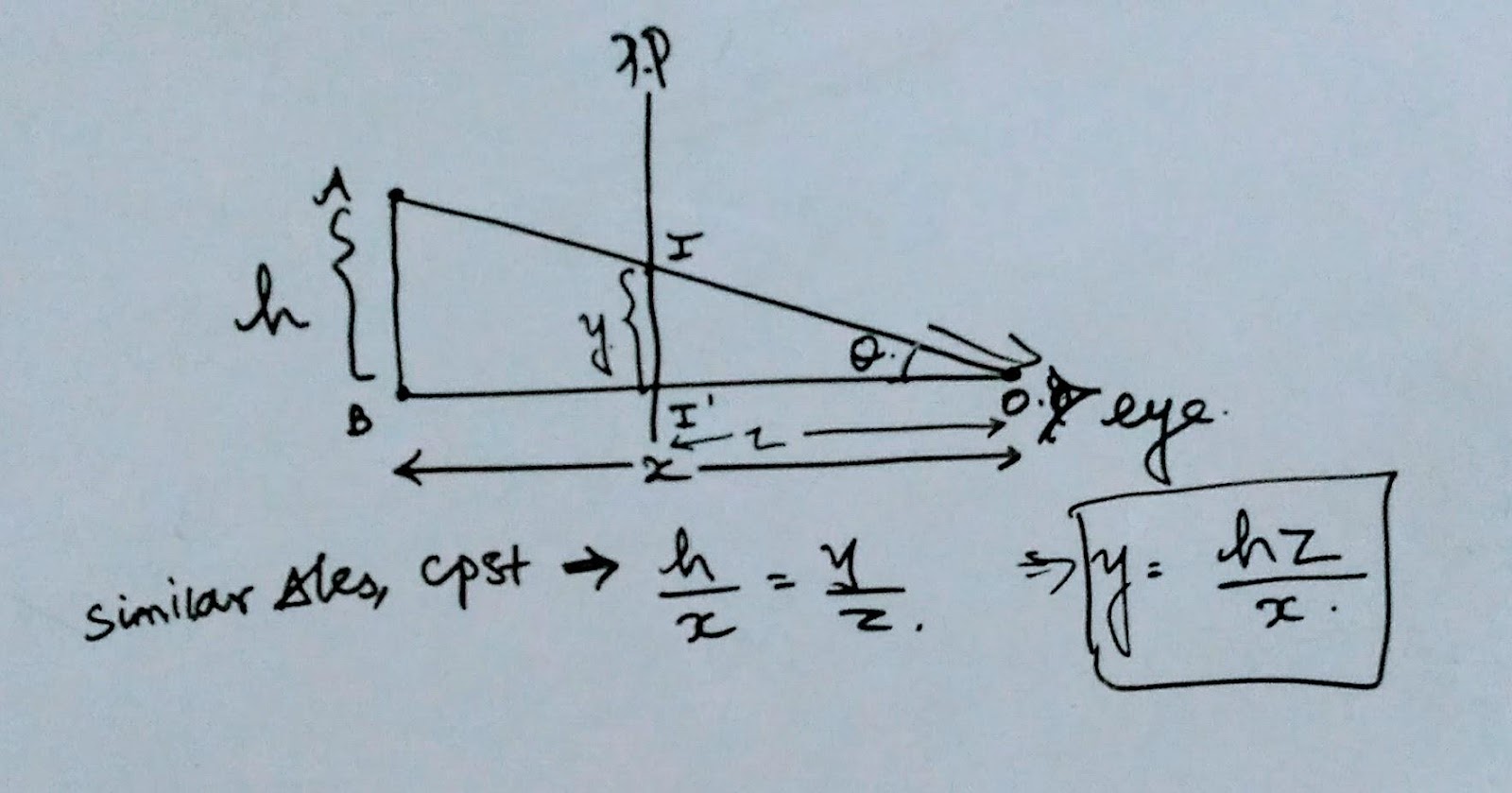
The other type is the linear perspective theory created by Filippo Brunelleschi. This basically tells you that closer objects are projected larger on a picture plane.


Using this simple mathematics as derived from the linear perspective theory, the approximate size of the projection on the plane as compared to the actual size of the object can be determined. In the above picture: y is the height of the projection; h is the height of the object; x is the distance of object from the eye; and z is the distance of the picture plane from the eye.

This was of key importance in the paintings during the Renaissance as the painters attempted to produce or showcase depth on a plane sheet. It was generally concluded from the linear perspective theory that all objects away from the painter must converge at a farther point.

So, how is this theory of perspective related to photography? Well, for photographers to choose an optimum focal length for the right aperture that would capture the scene, the way they envision, it is necessary that they have a general sense of perspective. It is not required, and is not possible, to do mathematics every time. But it is necessary to rather have a ‘feel’ of the right perspective that they need for a particular shot.

There is a tamil saying that translates into “Your hand doesn’t measure what your eye doesn’t”, which sums up the the topic of discussion here: perspective.

Tuesday, August 29, 2017

Why I Did Not Get My Hogwarts Letter


I was introduced to Harry Potter, and the world of wizards and witches when I was eleven. And ever since, I’ve always waited for my Hogwarts letter- most sincerely. People thought it was fiction but I knew it wasn’t just that. What I couldn’t understand though was why I did not receive my Hogwarts letter. Years on end, I peeped through the window to see if I could spot an owl approaching. No such luck.

Now, while pursuing B. Sc., LL. B., I finally found a convincingly probable answer to the question that has bothered me for the last seven years.

This semester we have a paper on Microbiology and Genetics. And, today, while winding up with the genetics topic, our professor showed us a video by National Human Genome Research Institute- Harry Potter and the Genetics of Wizarding.

Thanks to Prof. Eric P. Spana's wonderful lecture in the video, I got the reason why I might not be the one. For all those out there wondering why you didn’t get your letter- read this! The answer lies in your genes.

Let’s look at it this way: Why does Hermione Granger get the letter, but not us?
Brief answer: de novo mutations.

Let ‘W’ be the representation for the alleles of wizards/witches.
Let ‘M’ be the representation for the alleles of muggles.

To be a wizard/witch you need to have at least one dominant wizard allele ‘W’ or a recessive allele ‘ww’ gene.
Mr. and Mrs. Granger both are pure muggles(non-magical human beings).
So, both Mr. and Mrs. Granger are homozygous muggles: MM

Doing the Mendelian Cross:

Parents:                                   MM            x            MM
                                             (muggle)                  (muggle)
Gametes:                                  M                             M

Filial Generation 1:                                  MM            -----------------------> (Muggle)

So, how did Hermione, who was supposed to have only MM genes and be a muggle, become a witch?

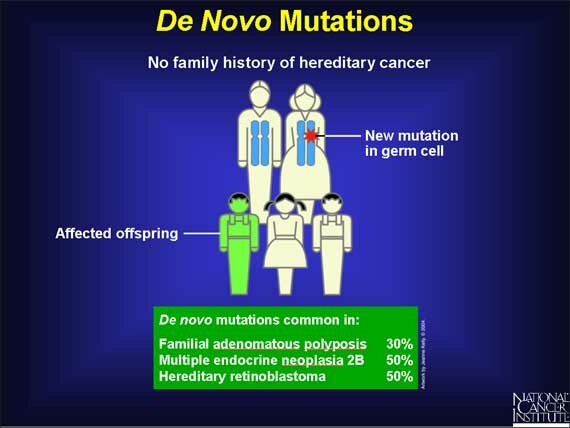
De novo mutations are mutations that occur in an egg or sperm cell before fertilization or immediately after fertilization. ‘De novo’ literally means ‘of new’ in latin and refers to such new mutations.


De novo mutations may explain genetic disorders in which an affected child has a mutation in every cell in the body but the parents do not, and there is no family history of the disorder. Thus, even if there is no hereditary history whatsoever of magic use, the offspring can have a mutated gene affecting it, thus making the progeny magical.

Hence, Hermione got through to Hogwarts thanks to the mutation in her genes. This answers why she’s a mudblood.

But why not us too?

Well, de novo mutations occur at a frequency of ~77 per generation but only one of them occurs in a gene. So, analysing the past year students of Hogwarts we find just one person who is a mudblood in a given year. So for a wizarding or magical trait the frequency of de novo mutation in that gene is approximately 1 in 750,000 (considering the population of UK since Hogwarts is in UK).

That is a really slim chance. And, most probably we aren’t that 1 in 750,000 if we still haven’t got our letter.

That is why Hermione is a witch and we aren’t.

To know that our seven years of faith can be broken in one class of genetics with a little help from pure statistics is terrible. I can’t still stop waiting for the letter even after knowing the harsh truth.

And to conclude, and console myself for the rest of my life, I just figured a new argument:
Maybe, my letter was tied to Errol.

Sunday, April 30, 2017

The 39 Steps

Title: The 39 Steps

Author: John Buchan

Richard Hannay is bored and disgusted with the city life in London. Initially, it had been a sort of Arabian-Nights-come-true to live in the Old Country. But the pleasures of London had worn off well before a single month. As if in answer to his growing boredom, one day, he finds a man named Scudder in his house, who seeks refuge from dangerous enemies in Hannay’s place.

Scudder tells Hannay an elaborate tale of how he was being followed and why his followers want to kill him. Hannay, happy that something exciting was happening to him, agrees to shelter Scudder till he was safe to leave. While coming back home from outside, a few days after, he finds Scudder murdered brutally in his house. When everybody assumes that he is the murderer, Hannay sets off on a escape-adventure posing as many different people and exploring the mountains and moors of Scottish terrain and fleeing from two different sets of pursuers- one, the London Police for whom he is a murderer on the run, and two, the Black Stone(the murderers of Scudder) for whom he is a man who knows the deadly secret that Scudder knew. Along the way, he unravels Scudder’s real mission with the help of Scudder’s black notebook full of coded clues. With the timely aid of many innocents such as a milkman, a literary innkeeper, a radical candidate and a spectacled roadman, he continues with his mission to accomplish Scudder’s job.

I loved the part where he first meets the bald archaeologist and realizes that he is the dangerous man that Scudder narrated in his story. Hannay's shock at the realization and the desperate attempt to conceal his shock is most entertaining.

The 39 steps is a fast-paced book and is unputdownable. It is packed with action, adventure and thrill. The roller-coaster ride from Hannay’s monotonous life to one packed with suspense and mystery, is an amazing read!

Friday, May 6, 2016

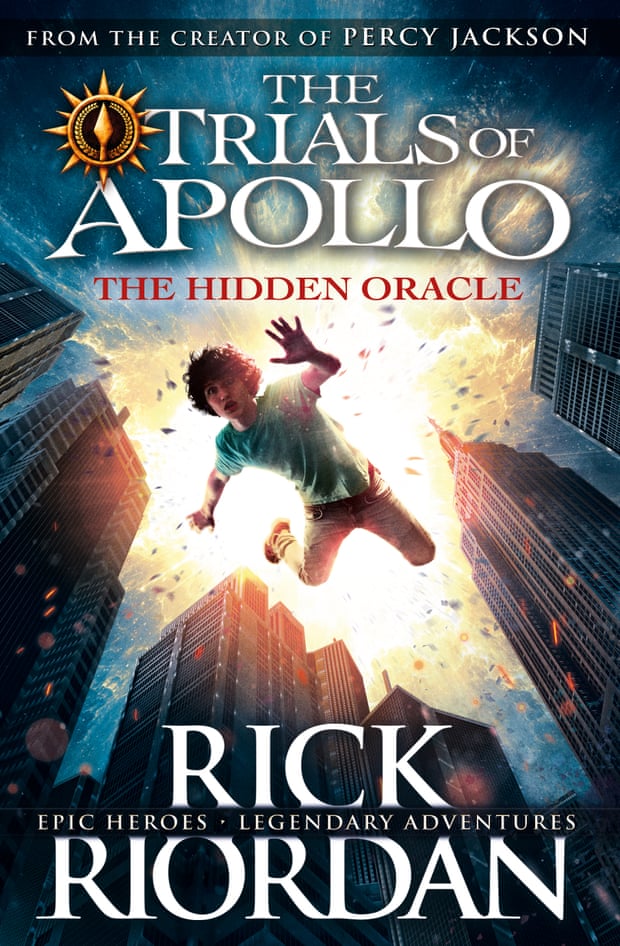
The Trials Of Apollo: The Hidden Oracle

Title: The Trials Of Apollo: The Hidden Oracle

Author: Rick Riordan

After the previous five-book-series of The Heroes Of Olympus, Rick Riordan is back again to give his readers a story from Greek myth - The Hidden Oracle- the first book in the next saga The Trials Of Apollo.

Since the book has been released only this week, I am not detailing the story. No spoilers!

The story revolves around the Greek God of Sun, Music, Archery and a “bunch of other stuff”, the Lord Apollo, who falls to the Earth after being punished by his father Lord Zeus to undergo several trials and prove his worth before getting restored in his godly form in Olympus again.

The book starts with the heroic landing of the sun God in a pile of garbage in an alley in West Manhattan as a dorky sixteen-year-old mortal named Lester Papadopoulos. The mortal, powerless Lester is forced to serve Meg(Margaret), an untrained demigod in of the Manhattan streets. Their bonding, and their adventures before they reach Camp Half Blood, and an unofficial quest to find the hidden oracle of Dodona is the crux of the story.

This book brings us back many of the characters whom we adore like Percy, Chiron, Will, Nico and even Mrs O’Leary. And towards the end of the book, there is an amazing entry of Leo Valdez with his pet metal dragon Festus. But somehow, when I read the book, I did not feel the same charm that Percy or Leo used to bring, back in the old series. I felt Percy was less cool. He was not the Percy I knew six months earlier(time period according to the book), and I didn’t know Percy can become such an all-time-worried chap from the happy go lucky guy that he was within such a short time. Leo, too, had changed too much. And in all parts that they appeared, I was telling myself: There is something wrong with them. What is it? Probably nothing is. But I don’t know.

The new characters are charming as ever. I especially loved Meg and her pet karpoi named Peaches. Apollo in the form of Lester is also super cool. One other character whom I loved was Harley, son of Hephaestus.

I liked the parts when Apollo was not able to accept and come to terms with the fact that he wasn't a God anymore but a mere mortal. The parts in which Apollo forgets that he is in mortal form without any powers, but talks like a God in his mortal voice, is very funny, and for poor Apollo- it is pathetic!

The book was totally cool. The plot was amazing and there was a very unexpected twist in the end. It was an awesome read!

Thanks, Riordan!

Now, the wait for the next book- The Hammer Of Thor in the Magnus Chase series- begins!

Monday, March 28, 2016

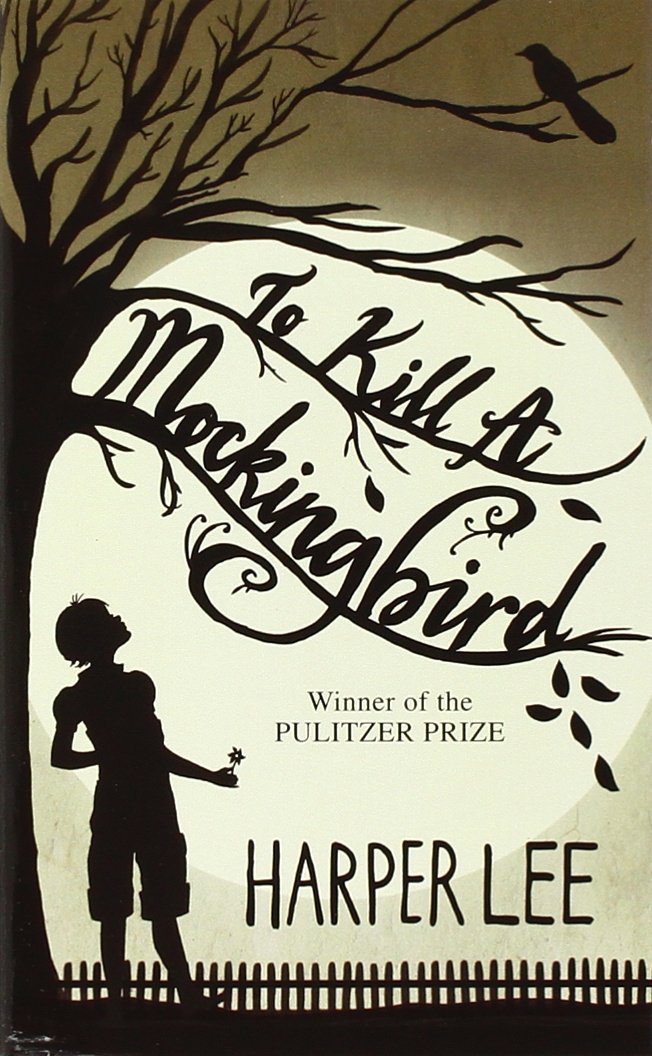
To Kill A Mockingbird

Title: To Kill A Mockingbird

Author: Harper Lee

Six-year-old Jean Louise Finch, fondly known as Scout, and her elder brother Jeremy Finch, or Jem for short, live with their father Atticus Finch, a lawyer, in the tired old racist town of Maycomb, Alabama. One summer, they get introduced to a boy named Charles Harris Baker, who shortly called himself Dill. Dill, Scout and Jem start playing and spending a lot of time together. They are terrified, but also amazed, at their neighbour Arthur “Boo” Radley whom they have never seen and who hasn’t come out of his home for many years. Once, Dill dares Jem to touch the wall of the Radley mansion just to prove he wasn’t afraid. They do many things and work out many plans to make Boo Radley come out of his house. After the summer, Dill goes back to his family and, Scout and Jem are left to themselves.

While walking back home from school, Jem and Scout discover small  gifts like bubblegum and wrappers in a tree-hole in the Radley’s place. Deciding that those who discover things are the owners until somebody else’s ownership is proven, they start taking the gifts. They get a packet of bubble gums, a small figurine of themselves, a wristwatch and many other assorted gifts. Jem writes a letter to the person thanking him for the gifts. The next day, they see Mr. Radley, Boo Radley’s father sealing the tree hole with cement. They are disappointed that they can’t get any more gifts, but in time forget about it.

Meanwhile, Atticus is posted to defend innocent Tom Robinson, a black man, accused of raping a white woman, Mayella Ewell.  Atticus fights his best and proves why Tom Robinson hadn’t done it. But, Maycomb, steeped in racism, had never delivered a case in favour of the coloured and is also not prepared to do so. Tom Robinson is unfairly convicted. Atticus and Jem completely lose faith in the law of the country. But Atticus destroys Ewell’s last thread of public pride. Due to this, Ewell swears to kill Atticus. Jem, Scout and Atticus fear the attack but it does not happen for many days. Also, the town of Maycomb starts abusing Atticus as a "nigger-lover", and blames him for letting his children mix even with the coloured. They blame him for setting a bad example.

On Halloween night, sly Mr. Ewell attacks Jem and Scout in the dark while they return from a party. Jem gets badly hurt and Scout does not understand what is happening. At that point, a mysterious man saves Jem and Scout and take them home. After going home, Atticus calls the doctor to check on Jem’s broken hand. They go back to the place of attack and find Ewell dead. Meanwhile, Scout finds out that it was Boo Radley who had saved Jem and her. She immediately stops fearing Boo Radley, goes up to him and thanks him. She gets to know that it was Boo who left them all their small gifts.

Atticus is under the assumption that Jem killed Ewell, while Atticus’s friend Mr. Tate believes Boo did it. But finally, they conclude that Ewell fell on his own knife and killed himself: like what happens to those who kill a mockingbird!

Scout goes to drop Boo Radley in his place. Boo Radley goes inside his home, and that is the last time they see him. The story ends by Scout feeling bad to have not given Boo anything even after he has given them so much.

I like Dill and Scout the best. They are really charming and insane with their ideas. I love them. The best part in the book was when Scout met Boo Radley in the end. I like Boo Radley very much too. 

The book is all about respecting people because they are people and not on the basis of colour. It talks about overcoming the stereotypes and fighting the right battle. The book was really nice. I loved it.

Friday, March 25, 2016

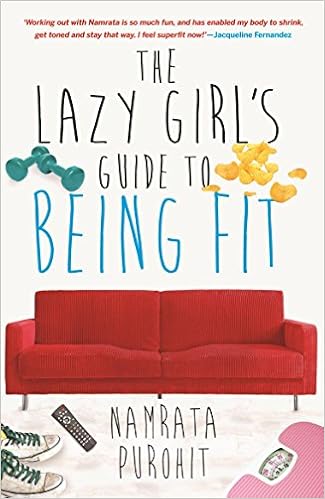
The Lazy Girl's Guide To Being Fit

Title: The Lazy Girl’s Guide To Being Fit

Author: Namrata Purohit

Do you pick the fattest book from the library so that you can just sit and read all day? Do you feel lazy to pick up a glass of water for yourself even when you are a little thirsty? Do you look at the mirror and know that you are going a little extra in some places but just ignore them, convincing yourself that you will slim down once you start working out? And do you always resolve that you will start working out regularly from the next day onward? Well, Namrata Purohit’s ‘The Lazy Girl’s Guide To Being Fit’ basically asks you to stop thinking too much about it and rather start moving. That would show better results, really, and then you can still read your fat book!

So, what should we be doing? The first thing, the book says, is start! Dance, jump, run, kick, play, walk, squat, stretch- just do something! You won’t and can’t lose all your extra fat in a month. But you surely will- gradually. Namrata, in the book, asks us to have SMART goals: simple, measurable, achievable, reasonable and time-bound.

The book discusses various exercise routines, and also talks about a healthy balanced diet and the benefits of exercising. It talks about motivating yourself. Start, and you won’t stop, the book says. It gives tips as to how to continue some workout routine even on long holidays.  

At the end of the read our motivation is renewed. And, we decide to start our exercise regimen from the next day onward…

Oh gods, no! Let’s start today. Let’s start now!